










One-year-old AI unicorn Unconventional acquires Israeli chipmaker NeuReality
Valued at $4.5 billion just two months after its founding, the startup is buying a team with years of experience building AI chips and infrastructure as it pursues a 1,000-fold improvement in computing efficiency.
Unconventional AI, which raised $475 million at a $4.5 billion valuation just two months after its founding, is acquiring Israeli AI chip startup NeuReality in a deal expected to deliver a return above the roughly $105 million invested in the company. The acquisition adds an experienced team of silicon and systems engineers to one of the AI industry’s most ambitious newcomers, whose goal is to radically improve the efficiency of artificial intelligence computing.
The transaction’s financial terms were not disclosed. The deal is understood to include cash and shares in Unconventional, giving NeuReality’s investors a potential return on their investment as well as exposure to a young AI company that attracted an unusually high valuation almost immediately after its launch.
That would distinguish NeuReality’s outcome from several recent Israeli semiconductor exits, including those of Pliops and Hailo, where sale prices were reported to have fallen short of the total capital invested. For NeuReality’s backers, the acquisition offers a potentially profitable exit while allowing them to retain an interest in Unconventional’s future through shares in the buyer.
1 View gallery
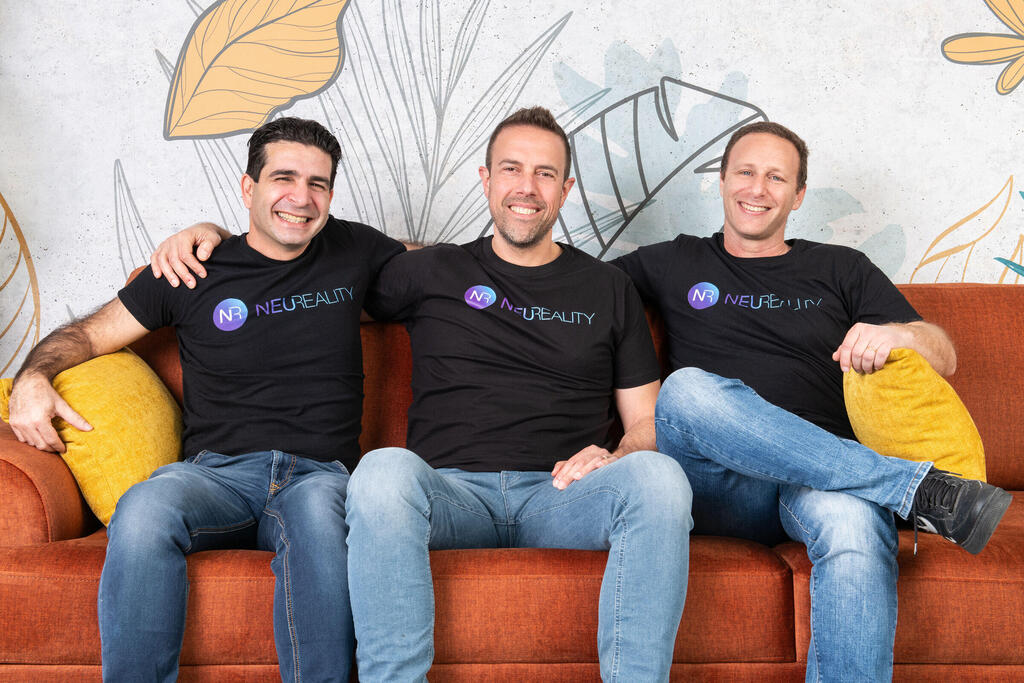
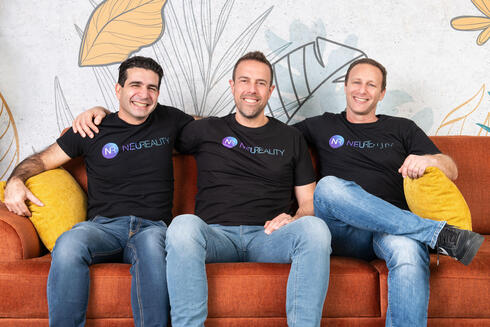
NeuReality founders Yossi Kasus (from left), Moshe Tanach, and Tzvika Shmueli.
(Aviv Kurt)
NeuReality was founded in 2019 by Moshe Tanach, Zvika Shmueli and Yossi Kasus, semiconductor industry veterans whose experience includes Intel, Marvell, Mellanox and Habana Labs. The company has raised approximately $105 million from investors including Arm, Samsung Ventures, Varana Capital, Cleveland Avenue and OurCrowd.
The deal comes less than a year after Unconventional emerged from stealth in December 2025 with a $475 million seed round co-led by Andreessen Horowitz and Lightspeed. The company was valued at $4.5 billion despite being only about two months old. Sequoia, Lux Capital, DCVC and Amazon founder Jeff Bezos were also among the investors, while CEO Naveen Rao invested personally. The initial round was described as the first part of a broader financing plan that could reach $1 billion.
Rao previously led AI at Databricks and founded two companies that were acquired. His earlier ventures included Nervana Systems, which Intel acquired, and MosaicML, which Databricks bought in 2023.
NeuReality’s acquisition gives Unconventional a team with years of experience building the hardware and software needed to run AI models. The Israeli startup focuses on AI inference infrastructure, the systems and silicon used to operate trained models. Its technology targets bottlenecks that can limit the speed and cost efficiency of AI computing, including data movement and system orchestration.
“The hardest thing in this industry is assembling a team that can build real silicon and the systems around it, and Moshe has built one of the best,” Rao said in the announcement. “We are chasing a 1,000x improvement in AI compute efficiency, and that is a systems problem as much as a physics problem. We think unconventionally about computing, and the accelerating pace of our research calls for an unconventional approach to growth. Bringing NeuReality's team into Unconventional accelerates our roadmap significantly.”
Unconventional is developing a computing architecture it describes as a “4-dimensional compute substrate,” with a target of improving AI computing efficiency by 1,000 times compared with conventional architectures. Achieving that goal, the company says, will require the coordinated design of device physics, silicon architecture and AI models. The 1,000-fold improvement remains a target, rather than a demonstrated result.
Tanach and NeuReality’s founding team will join Unconventional, while the company’s engineering presence in Israel is expected to remain in place. The acquisition gives Unconventional a team experienced in chip design, system architecture and AI software as it seeks to turn its ambitious computing vision into a working platform.
“We built NeuReality because we believed the economics of AI inference were fundamentally broken, and that the answer had to come from rethinking the system rather than tuning it,” Tanach said. “Unconventional is taking that conviction further than anyone else in the market. With demand for AI computation growing against finite energy and semiconductor capacity, this mission has never been more essential. This is the next chapter of the mission we started with: fixing the economics of AI, now with the platform to do it at full scale.”
The acquisition has been approved by the companies’ boards and is expected to close in the fourth quarter of 2026.



