










Iron Dome and Iron Beam developer Rafael was hit with a $422 million bill. The court rejected it
The Haifa District Court ruled that Kiryat Yam can collect development levies from Rafael but canceled the NIS 1.245 billion demand after finding that the municipality's calculations were flawed and produced an unreasonable result.
The Haifa District Court has ruled that the Kiryat Yam municipality is entitled to collect development levies from Rafael, but canceled its NIS 1.245 billion ($422 million) payment demand after finding that the calculations underlying the bill were flawed and produced an unreasonable result.
The dispute arose after approximately 6,000 dunams of the roughly 6,800-dunam Rafael complex were incorporated into Kiryat Yam's municipal boundaries in 2018. Until then, the area had been defined as a "Galilean area", land that did not belong to any local authority.
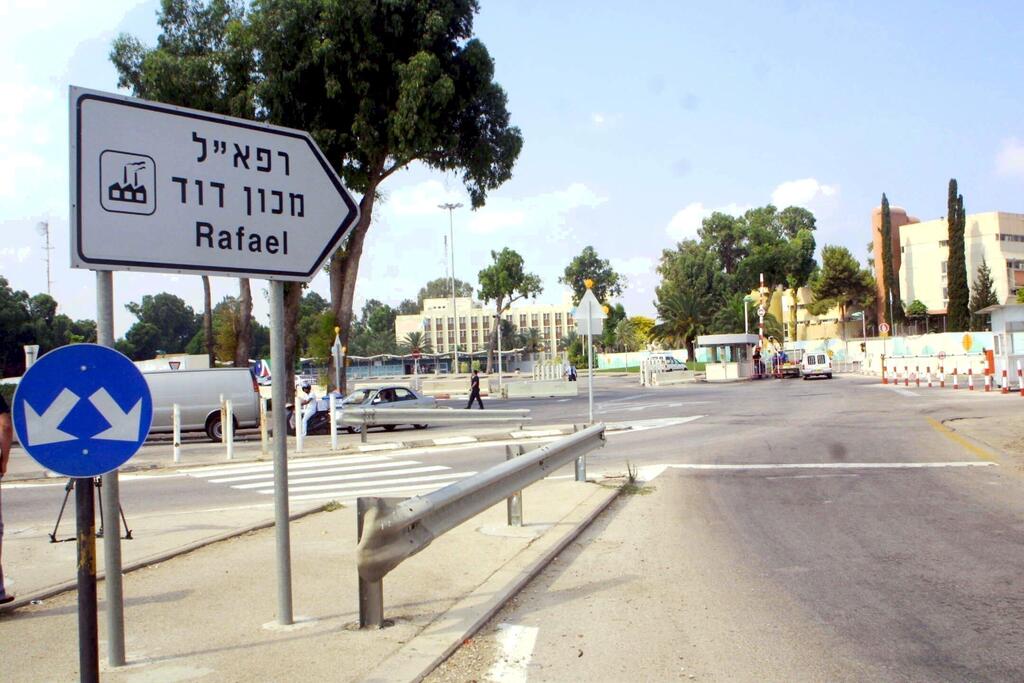
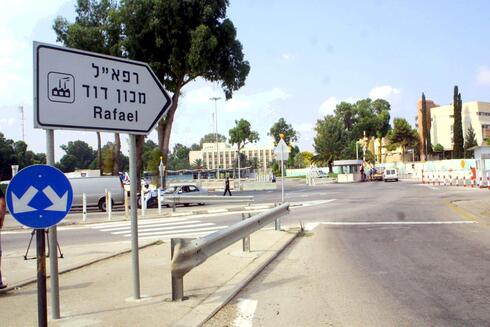
Rafael's property in Kiryat Yam, also known as the David Institute, is the company's largest property in Israel. Its area is larger than the city itself was before the industrial complex was incorporated into its boundaries. Since Rafael was established shortly after the founding of the state, however, the site had remained outside the jurisdiction of any local authority until 2018.
Three years after the annexation, the municipality sent Rafael a demand for development levies totaling NIS 1.245 billion ($422 million). The bill included levies for roads, drainage and open public spaces.
Rafael strongly opposed the demand and petitioned the Haifa District Court, sitting as an Administrative Court, arguing that it had never benefited from Kiryat Yam's municipal infrastructure. The company also argued that there were procedural flaws in the municipality's effort to impose the levies.
Among other things, Rafael pointed out that Kiryat Yam collects approximately NIS 2.7 million ($915,000) a year in development levies, while the amount it was seeking from Rafael was equivalent to more than 400 years of such collections. Rafael argued that this raised questions about whether the municipality actually needed such a sum to finance municipal infrastructure.
Judge Ron Sokol ruled that the municipality's calculation was based on an examination of four densely built neighborhoods, without taking into account the fundamentally different characteristics of the Rafael complex. Only a small portion of the Rafael site is actually built up, about 270 dunams out of the approximately 6,000 dunams incorporated into the city.
"The use of a sample based on residential neighborhoods to determine the levy rate for the Rafael complex is unreasonable, and does not align with the purpose of conducting a calculation that will only enable the financing of municipal infrastructure, without enriching the municipality's coffers," Sokol wrote.
The judge added that "even without expertise, it is possible to see that the development levy demand from Rafael, based on the calculations prepared in accordance with the sample, leads to an unreasonable result."
He concluded that the demand should be canceled because "the calculations according to which the rates and the levies were calculated were flawed."
The ruling does not, however, exempt Rafael from development levies altogether. Rather, it establishes that the municipality may collect them, but must recalculate the amount using a methodology that takes into account the unique characteristics of the Rafael complex.
The Kiryat Yam Municipality said: "For us, the ruling establishes the most important principle: Rafael is not a separate island within Kiryat Yam. Even a large and unique complex must participate in the development and infrastructure costs of the city in which it is located.
"The municipality stood up for the rights of its residents and succeeded in establishing the liability for development levies. We will now work to correct the calculation in accordance with the court's instructions. At the same time, we will work to fully enforce the city's right to collect development levies. This is public money, and we intend to continue acting resolutely so that everyone who uses the city's infrastructure participates in its development costs and pays their share."
Attorneys Malka Engelsman and Ariel Ben-Bassat of the Firon Law Firm, who represented Rafael, said: "The ruling does justice to Rafael and clarifies the unreasonableness of demanding levies of an unprecedented scale that do not reflect the unique characteristics of the complex or the infrastructure actually required for it.
"In fact, the municipality did not carry out development work for the Rafael complex. The road leading to the factory from Highway 4 was financed by the Ministry of Transportation.
"In the discussions of the Border Committee that preceded the annexation of the complex to Kiryat Yam, the parties discussed in detail the expected property tax revenues from the factory and how they would be divided among the neighboring local authorities. The issue of development levies came up only on the sidelines of those discussions, and no one imagined that the annexation would lead to a demand for more than NIS 1 billion.
"The ruling analyzes in depth the method used to calculate the levies and explains why calculations based on 40% of the areas of old residential neighborhoods cannot simply be applied to the entire city, whose characteristics have changed completely, particularly following the annexation of a complex as large and unique as the Rafael site."



