










Defense tech is taking over Israel's office towers
From Tel Aviv to Haifa, military technology companies are emerging as the fastest-growing tenants in a market once defined by software startups.
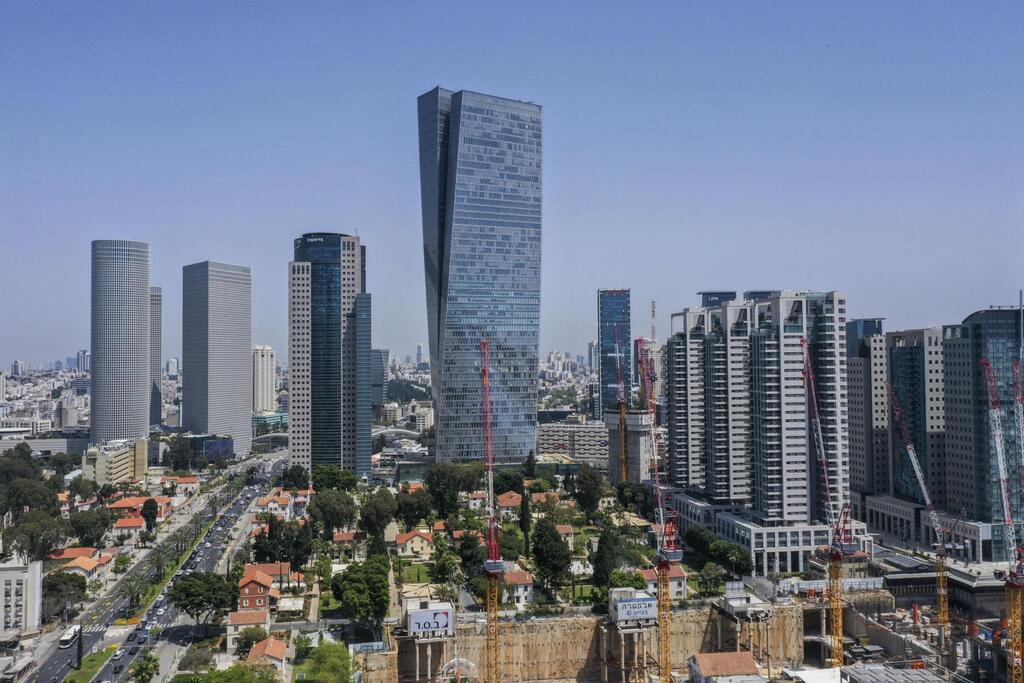
The Israeli office market, particularly in Tel Aviv and the central region, has served as a barometer of the country's high-tech industry for the past two decades. Technology companies generated the bulk of office demand, and developers designed towers accordingly: gyms, baristas, showers, bicycle and scooter parking, and green building standards, all aimed at attracting high-tech companies and their employees. Large tenants often paid more than NIS 150 ($50) per square meter for office space, leasing tens of thousands of square meters.
But high-tech has also proved to be a volatile tenant. Waves of layoffs, cost-cutting measures, and decisions made at overseas headquarters quickly reverberated through the office market. During the pandemic, companies downsized, hybrid work became the norm, and lease terms that once typically ranged from five to 10 years shrank to as little as three years in some cases.
Now, a new trend is emerging: defense and security technology companies are increasingly replacing traditional high-tech firms as the market's main source of demand.
Against the backdrop of wars around the world and rising defense spending, companies such as Rafael, Elbit Systems, and Israel Aerospace Industries have significantly expanded their operations. At the same time, dozens of startups developing defense, cybersecurity, intelligence, and military technologies have also grown rapidly.
According to data from Colliers Israel, office leasing by defense and security companies rose 32% in the first half of 2026, reaching more than 140,000 square meters, up from approximately 106,000 square meters in the second half of 2025.
The momentum continues. Companies in the sector are currently seeking an additional 145,000 square meters of office space, accounting for roughly 30% of all active demand in Israel's office market.
According to Sarit Itzhakov, CEO of Colliers Israel, the defense technology sector has become the dominant force in Israel's commercial real estate market over the past year.
"Unlike the waves of downsizing that have swept through the high-tech sector, defense companies have consistently expanded their real estate footprint," she said.
About 62% of leasing transactions completed during the second half of 2025 and the first half of 2026 were concentrated in the Tel Aviv metropolitan area, primarily in Tel Aviv, Petah Tikva, Ramat Gan, Bnei Brak, and Holon.
Itzhakov said the region has evolved into a hub for cybersecurity firms, AI-powered intelligence companies, and developers of advanced battlefield technologies.
In northern Israel, stretching from Haifa through Mevo Carmel to Hadera, more than 38,000 square meters of office transactions were recorded, driven mainly by the expansion of research and development centers and the establishment of new facilities.
At the same time, small and medium-sized defense startups are increasingly leasing offices of 2,000 to 4,000 square meters, particularly in Petah Tikva and the Sharon region.
According to Zachi Agassi, CEO of 770 Offices, the October 7 attack marked a turning point.
"We are seeing contraction among SaaS and gaming companies, while companies such as Rafael, Elbit and Israel Aerospace Industries have become some of the largest tenants in the market," he said. "Defense technology is not a passing trend, it is the result of geopolitical shifts. Around a third of investment in Israeli high-tech is already flowing into this sector."
Guy Amosi, CEO of Avison Young Israel and a board member of several defense companies, points to Elbit Systems' long-term lease of approximately 40,000 square meters in Ness Ziona as a clear example of the changing market.
According to Amosi, there is an inverse relationship between the slowdown in traditional high-tech and the expansion of cybersecurity and defense technology companies.
A senior executive at a company that owns office buildings said defense companies are also fundamentally different tenants.
They typically lease larger spaces, require little or no hybrid work because of security restrictions, and invest hundreds of thousands, or even millions, of shekels per floor to build laboratories, clean rooms, and advanced security infrastructure. As a result, they also seek significantly longer lease terms.
"In the past, they mainly operated from campuses outside Tel Aviv," the executive said. "Now they are moving into the city to compete for talent. In that sense, they have become the local equivalent of Google and Amazon."
Despite the surge in demand from defense companies, industry executives emphasize that Israel's office market remains favorable to tenants.
The existing and planned supply of office space continues to exceed demand, and even in the most sought-after areas of Tel Aviv, substantial amounts of newly built office space remain unoccupied. As a result, landlords continue competing aggressively for tenants, even as defense companies emerge as the market's primary growth engine.



