










“The era of immunity for high-tech workers is over”
Study links AI to rising unemployment in programming and sales roles.
Artificial intelligence is beginning to affect the labor market and contribute to rising unemployment in professions exposed to it. It is estimated to account for about 15% of the increase in unemployment recorded in recent years among software developers, and about 18% of the increase among telephone sales representatives. This is according to a new study by economist Michael Debowy and economics professors Gil Epstein and Avi Weiss from the Taub Center for Social Policy Studies.
The impact of artificial intelligence is concentrated in professions that previously enjoyed very high demand, low layoff rates, and significant difficulty for employers in filling open positions. These include software development, content creation, and lower-paying roles such as telephone sales. These professions had particularly low unemployment rates in 2022 and are now experiencing some of the sharpest increases.

According to the Israel Central Bureau of Statistics Business Trends Survey, as of June 2025, employers of approximately 3% of workers in Israel reported a decline in demand due to the adoption of artificial intelligence. Roughly half of this decline is reflected in reduced hiring, while the other half stems from layoffs. The impact is particularly pronounced in the high-tech and financial sectors, where employers reported a 5.5% reduction in headcount.
The findings also show that the share of unemployed individuals coming from professions at high risk of automation has risen significantly. While between 2019 and 2022 such workers accounted for about 14%-16% of total unemployment in Israel, by 2025 their share has increased to between 20% and 25%. At the same time, job vacancies in these professions have declined.
Debowy noted that “the professional composition of the unemployed in Israel is changing before our eyes. We are seeing more and more people who previously worked in high-tech, finance, sales and customer service, content creation, and other areas where artificial intelligence is beginning to play a significant role.”
The researchers emphasize that the rise in unemployment in high-tech is not driven solely by AI. Other factors include a broader slowdown in the sector and a growing share of at-risk professions within the labor market. Among software developers, AI explains between 12% and 20% of the increase in unemployment recorded between 2022 and 2024-2025. Among sales representatives, it accounts for between 10% and 26% of the increase.
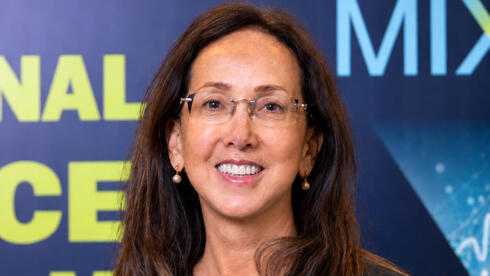
Prof. Gil Epstein, head of the Labor Market Policy Program at the Taub Center, said: “The era of immunity for high-tech workers is over. Our data shows that AI is reshaping the rules of the game.”
One related trend is a growing preference for experienced workers, alongside increasing difficulty for junior employees to enter the workforce. AI enables more experienced workers to become significantly more productive. A study conducted in the United States found a 13% decline in employment among young workers (aged 22-25) in professions at risk of automation, while more experienced workers were largely unaffected. In Israel, this trend is particularly evident among software developers. “Juniors are the first to pay the price,” Epstein said.
Prof. Avi Weiss, president of the Taub Center and co-author of the study, added: “We are seeing a process in which technology is not only replacing labor, but fundamentally changing the rules of the game. For job seekers, this means tougher competition, and those who fail to adapt their skills to the AI era may find themselves pushed out.”



