










Opinion
Israel's quantum moment: Government action must be matched by global investment
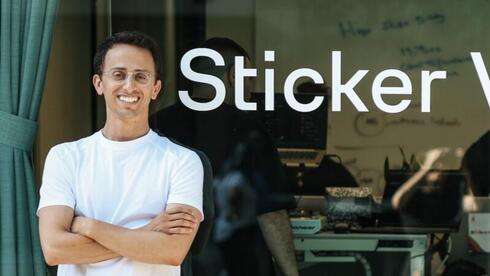
According to Joab Rosenberg, Partner at Deep33 Ventures, Israel needs to work hard on international export control limitations on quantum technologies, to convince global leading companies to open quantum facilities in Israel and make sure the talent pool is big enough to grow the quantum industry.
The Israeli government's decision to launch national tenders aimed at strengthening the country's quantum and AI capabilities is exactly the kind of strategic move Israel needs. It reflects a growing recognition that quantum computing is no longer just a long-term scientific pursuit. It is emerging as a strategic technology that will shape economic competitiveness, national security and the future of computing. At Deep33 we believe that by the end of next year quantum advantage will emerge, meaning commercially valuable use cases will be introduced in production. We, and other VCs, are already helping founders build private quantum companies in Israel: it is one of the very few countries in which one can find funded startups in all leading quantum computing modalities (Ions, Superconducting, Photons, Neutral Atoms and NV centers), in quantum software and error correction and in quantum sensing and communication.

But a comprehensive and well-coordinated approach is still very much needed: Israel needs to work hard on international export control limitations on quantum technologies, to convince global leading companies to open quantum facilities in Israel and make sure the talent pool is big enough to grow the quantum industry.
Timing is of essence because the global conversation has already shifted. The question is no longer whether quantum computing will become commercially relevant, but where will the companies, infrastructure and investment behind it be built. Quantum is considered a strategic asset, both because of its future capability to decrypt all leading commercial codes, but even more so because of its huge value to the market which is estimated at around $2 Trillion dollars by 2035. Governments around the world have already poured over $65B into quantum technologies and more will come in the near future.
Around the world, governments are no longer funding research alone. They are partnering with industry to accelerate commercialization and build long-term competitive advantage. The U.S. Department of Energy's Quantum Genesis initiative illustrates this approach. Its goal is not only to advance quantum science, but also to create the capabilities needed to translate research into commercial and industrial impact.
Israel enters this race with considerable advantages. It has world-class researchers, exceptional engineering talent, experienced entrepreneurs and one of the world's strongest deep-tech ecosystems. It has repeatedly demonstrated its ability to transform breakthrough technologies into globally competitive industries. But scientific and engineering excellence alone will not determine who leads the quantum economy. We need to be able to enjoy the non-dilutive money being created overseas. Israel’s budget could never compete with the billions of dollars the US, Canada, UK and Europe can invest. G2G negotiations should be in place to find a way to divest a small percentage of this money to Israel, allowing Israel to help with local talent.
The competition is already underway. IBM, which has maintained a significant research presence in Israel for decades, is helping shape the next phase of quantum computing through Quantum Genesis. Google, Microsoft, Amazon, Nvidia and Intel are also making substantial investments in quantum computing, while their flagship quantum hardware programs and much of the supporting infrastructure are being developed outside Israel. Those decisions influence where expertise accumulates, where supply chains develop and where future companies are established.
Israel has already shown that it can produce world-class innovation. All of the hyperscalers have for years now big teams working in Israel on a diverse set of technologies, from software to hardware to fabrication facilities. But in quantum, only a small group in IBM and Amazon are currently working in Israel. Google, Microsoft, and other leading private and public quantum companies do not yet have groups in Israel. Israel should offer tax benefits to companies building FABs in Israel, as it did with Intel in the semiconductors industry. Superconducting and spin qubits will require similar but new facilities. A joint venture with the US government will allow building one in Israel. Export control needs to be controlled: today’s limitations on exporting chips with more than 100 qubits may become a huge limitation very soon.
The “talent gap” is another common theme in the discussions around the quantum revolution: there are just not enough physicists, and other engineers required to develop quantum technologies suffer from a “fear factor” and knowledge gap which is difficult to close. Hence, Israel should also work hard to bring back physicists who left Israel to study or work abroad in the fields relevant to quantum technologies. Tax benefits, scholarships and other means should apply to this rare community of experts. Universities are already growing the degrees and courses offered to STEM students, but more needs to be done on the business side and humanities. Following statements by Elon Musk and Jensen Huang who recommended studying physics in the age of AI rather than computer science, a shift is already recognized in the choices of young students all around the world.
The private sector must be an equal partner in that effort. Startups, venture capital funds, national quantum institutions and multinational technology companies each have a role to play in building a competitive industry. The success of today's government tenders should ultimately be measured not by the size of the initial investment, but by the companies they help build, the capital they attract and the long-term industrial capabilities they create.
Israel has built globally competitive industries before by recognizing technological shifts early and creating the conditions for innovation to scale. We may have been too slow with the AI revolution and working hard to close the gap at the moment. Quantum presents one of the biggest opportunities humanity has ever witnessed. We should not miss the train again. The initial effort looks very promising, but much more needs to be done. The capital needed for this revolution requires a coordinated effort from the Israeli government, local and global VCs, and the hyperscalers and leading quantum-focused companies. The work has just begun, and quantum is coming soon.
Joab Rosenberg is a Partner at Deep33 Ventures.



