









"The SpaceX IPO looks like one giant bubble"
Meitav chairman Avner Stepak warns that retail investor enthusiasm and AI hype are driving valuations to unsustainable levels, raising the risk of a broader market correction.
The SpaceX IPO was not just another capital markets event, but a defining moment for both U.S. and global markets. Elon Musk's company raised $75 billion at a valuation of $1.8 trillion, an all-time record, becoming a focal point on Wall Street and helping set the tone for the broader market. The offering represented an extreme example of investors' expectations for future revenue and profit growth in the technology sector.
SpaceX may have shattered records in terms of IPO valuation, but the company reported a loss last year. Its net loss in 2025 totaled $4.9 billion, compared with a net profit of nearly $800 million in 2024.
The company's revenue grew 33.5% year over year to $18.7 billion in 2025. That implies a revenue multiple of roughly 100 times sales, a valuation typically associated with much smaller companies that are expected to deliver exceptional growth. SpaceX debuted on Nasdaq under the ticker SPCX at $135 per share. After several days of trading, the stock surged 56% to $211 before reversing course. As of this writing, it is trading at around $155 per share, much closer to its offering price.
Founded by Musk in 2002, SpaceX operates the Starlink satellite network, which includes more than 10,000 satellites providing internet connectivity in regions with limited communications infrastructure. The company also runs a major space-launch business, carrying satellites, cargo and astronauts for commercial customers, NASA and the U.S. Department of Defense. In addition, it is developing Starship, the spacecraft intended to enable future missions to the Moon and Mars.
In recent years, the company has expanded into communications, defense and artificial intelligence-related activities. Its revenues are derived primarily from launch services, the Starlink satellite network and government and defense contracts.
"The Pricing Seems Inflated"
In Israel, the offering was generally well received by institutional investors, many of whom argued that "it is difficult to price a dream." They viewed the company as a unique combination of an established business and significant future growth opportunities.
One notable exception was executives at investment house Meitav, Israel's largest investment firm. Even before the offering, sources within Meitav's investment division argued that the valuation was inflated and that participation by many institutional investors was driven largely by FOMO, fear of missing out, and by intense competition among investment managers, which they said was encouraging excessive risk-taking with clients' money.
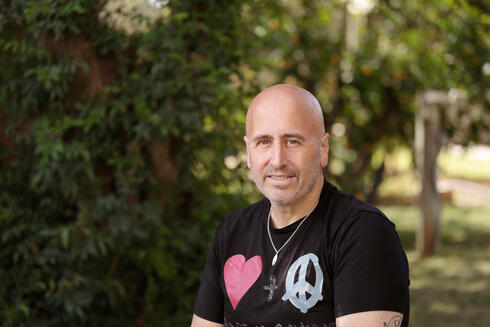
Particularly striking was the public criticism voiced by Meitav chairman and controlling shareholder Avner Stepak. In a video obtained by Calcalist, Stepak described the SpaceX IPO as "delusional" and warned that it could signal broader risks building in financial markets.
According to Stepak: "SpaceX's IPO is one of the largest offerings in U.S. history. The amount raised itself, $75 billion, is not enormous relative to the company's valuation of $1.8 trillion. This is a delusion. The company is valued at 100 times last year's revenue. At that kind of pricing, it looks like one giant bubble."
Stepak added: "This is one of the three major AI-related offerings, the three gorillas: SpaceX, Anthropic, which is perhaps the most reasonably valued of the three, and OpenAI. They're all happening within a short period of time. Let's be honest: this is one of the most dangerous developments for the stock market."
"The Entire Sector Is Already Inflated"
Stepak also explained why he believes the risks extend beyond SpaceX to other highly anticipated technology offerings: "Why is this IPO so risky? And not only this one, but the others that may follow? First, because of the extremely inflated valuation. Second, because it is largely a retail-investor story. We are not seeing only institutional investors. We are seeing many private investors, including Elon Musk followers who believe in the man and are not necessarily focused on financial metrics or business performance. They assume that everything he touches turns to gold. I am not at all sure that is the case.
"When private investors dominate demand, alongside institutional investors that may be required to buy the stock because it enters major indexes, there is a risk that retail investors, who tend to be weaker hands, will eventually sell. In that case, they may sell not only SpaceX but other AI-related stocks as well, many of which are already trading at elevated valuations. That could be a negative signal for the broader market."
Stepak's comments are particularly noteworthy given his position. Meitav Trade is Israel's largest retail trading platform, with more than 120,000 active customers. In a sense, Stepak is criticizing one of the very trends that helps drive activity in his own industry: the tendency of retail investors to chase momentum and amplify market bubbles. For that reason, his remarks may carry additional weight, reinforcing the impression that they reflect a genuinely held investment view rather than a position motivated by commercial interests.



