










Israel committed to $24 billion in U.S. arms purchases before aid agreement was secured
The Ministry of Finance warns that the end of American security assistance could leave the state budget facing an annual shortfall of $3.8 billion. Officials say they are still trying to understand what Netanyahu agreed with Trump.
A discussion held by the Knesset's interim Finance Committee has revealed the scale of the budgetary gap Israel could face following the end of the $3.8 billion annual American security aid.
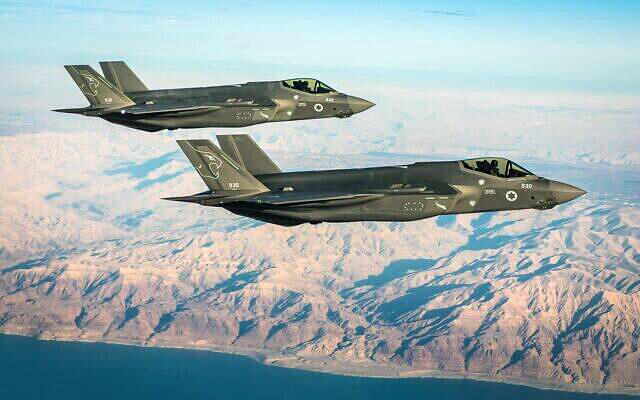
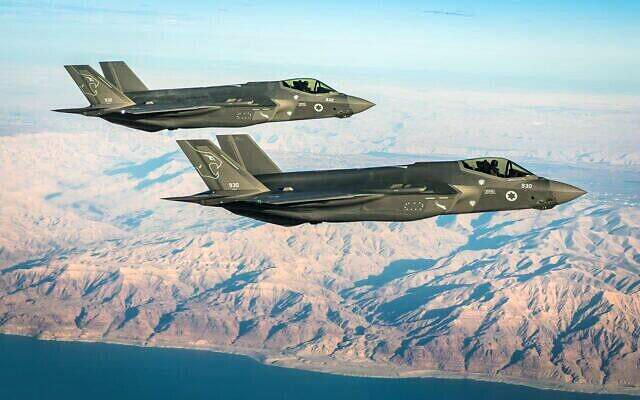
Data presented during the session by Shira Amiel Ben Abba, Deputy Director of the Budget Department at the Ministry of Finance, showed that Israel has already placed orders with the American defense industry worth approximately $24 billion. These procurement commitments were made on the assumption that a new security aid agreement would be reached to replace the current one from 2029.
News of the planned halt to U.S. security assistance to Israel emerged earlier this month. Amid the U.S. midterm election campaign, President Donald Trump dropped a bombshell by claiming that he had reached an understanding on the matter with Prime Minister Benjamin Netanyahu several months earlier.
Nearly two weeks after Trump's statement, however, the defense establishment and the Ministry of Finance still lack clarity about the details of the understanding reached between Netanyahu and the U.S. president, particularly regarding when the transfer of funds to Israel is expected to end. "We were not informed of the US President's announcement in advance, and we are currently trying to understand it, as well as its implications for the years 2027 and 2028," Amiel Ben Abba said.
She added that in recent years, the defense establishment had made procurement commitments to U.S. suppliers totaling approximately $24 billion, based on the assumption that a new aid agreement would be reached. Most of these commitments fall outside the current multi-year budget framework, known as the "numerator," and were made about five years ago for the acquisition of aerial platforms, including fighter jets, refueling aircraft and helicopters.
"If there is no new aid agreement, the burden will fall on the state budget, either at the expense of various government ministries' budgets or through increased taxes," she said.
During the Knesset discussion, MK Shaul Meridor said the outgoing government had yet to explain to the public the nature of the understanding reached between Netanyahu and Trump, describing the situation as a "massive failure."
"The failure lies not only in whether the funds were forfeited, but in how the parties reached this decision. It was a decision made without any organized staff work. Just imagine a scenario where the Minister of Finance decides, on his own initiative, to cut the VAT by a mere 1%. In this case, Netanyahu has effectively given up tens of billions of shekels," he said. "This is an unprecedented low."
MK Noam Tibon also criticized the secret understanding between Netanyahu and Trump, calling the situation improper. "A country cannot function this way, with only one person making all the decisions. The outgoing government is a corrupt one, and we must figure out how to bridge the resulting budget deficit without placing the burden on the shoulders of Israel's citizens," he said.
The discussion was also disrupted by MK Almog Cohen, who alleged that committee chair Avishar Ben Horin had a conflict of interest. Cohen claimed that her partner, public relations consultant Itay Ben Horin, provides consulting services to NextVision. After repeatedly interrupting the proceedings, Cohen was removed from the session by ushers.
A representative of the defense establishment who appeared before the interim Finance Committee declined to say whether the Ministry of Defense had known in advance that American aid was to be halted.



