











“AI hasn’t created anything in gaming we couldn’t do before”
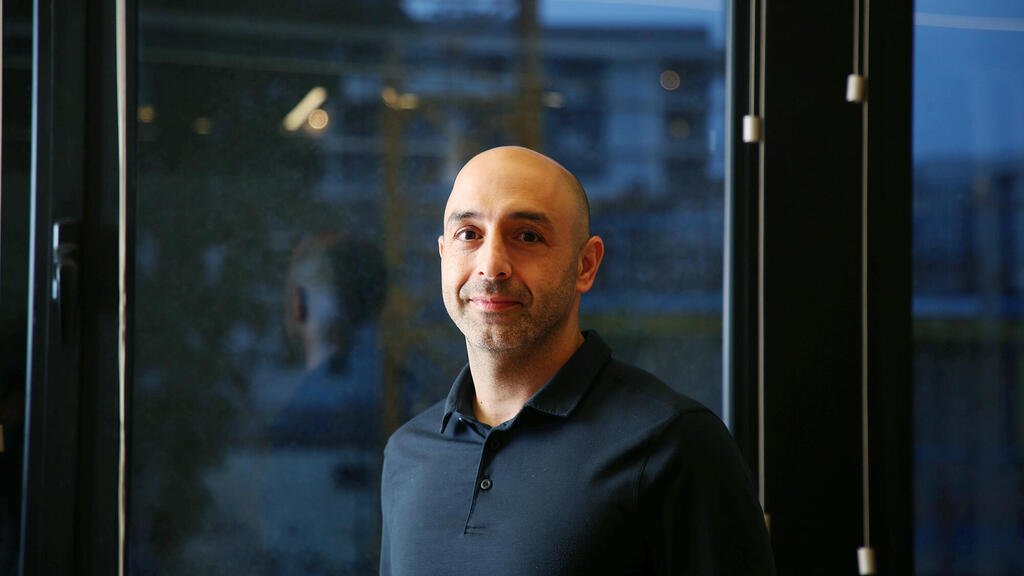
Yaron Leyvand, executive vice president and head of mobile studios at gaming company Zynga, says AI is delivering efficiency gains, but not yet new creative breakthroughs in gaming.
One of the most prominent industries targeted by the AI revolution is gaming. With every kid now able to generate a game with a few simple prompts, and with models becoming more sophisticated on a regular basis, the industry is under significant pressure not only to integrate AI into its operations, but also to prove that the technology does not make it, and its employees, redundant.
Yaron Leyvand knows this challenge firsthand. As executive vice president and head of mobile studios at gaming company Zynga (acquired in 2022 by gaming giant Take-Two) and the company’s senior Israeli executive, he is at the forefront of efforts to weave AI models into its operations. “We need to break down AI in games into two things,” he says in an interview with Calcalist. “One is: can I do things faster, more efficiently, and more cheaply. And the second is: can I create content that I couldn’t create before without this AI tool. As for the second thing, we haven’t seen anyone succeed there yet. No one has done anything with AI that couldn’t have been done before without AI. But as for doing things faster, cheaper, and more efficiently, we’re completely there. You see it in marketing, of course, but also in much more than that. Every routine action you do, AI probably does it faster and maybe even better.”
Is it not possible to create content with AI that we couldn’t create before?
“I’m not saying it doesn’t work, I’m saying no one has done it. Creating an experience, finding something that I couldn’t do that is now possible thanks to AI, is something new. Meanwhile, no one in the industry has been able to find anything that is a game changer in the game itself. In terms of efficiency, you can absolutely see it in many places: design, marketing, analysis, product, engineering. Each team uses AI as a force multiplier.”
Can you give a more specific example?
“I have a game being developed in a studio in Turkey. A special game for the Turkish market. But there is also a Turkish-speaking market in Germany that was difficult to reach. We did all kinds of very specific creative work, which used to cost a lot of money and would not have been possible, or justified, without AI, all in an effort to target the German market for a niche game for Turks. Before AI, there was no justification for spending $200,000 on this.”
How exactly does it work?
“You can use AI-based creative tools to produce ads that are not low quality at all, and of course there is still a guiding human hand. The goal is to reach a micro-segment that would have been very difficult to reach without it, or that could have been reached, but at very high cost and likely without justification. The marketing world now has a much better ability to focus on very niche and limited audiences and tailor something specific to them, as opposed to generic messaging.”
What about using AI in game development?
“In game development, the main use is for prototyping new games, when what you want to do is see if it is fun. A big part of what we do when we start developing a new game is understanding the reaction to its core mechanics, will you play it tomorrow? To test that, we use internal AI tools we’ve developed to create the core experience of the game. Is it the cleanest code? No. Is it code that can later support millions of players at scale? No. But that doesn’t matter, because that’s not the test. I want to see if the game itself is fun. With AI, I can do that much faster now. I can also test many different game designs. Is it better to do a crime, farm, or dragons theme? I can test this very quickly with AI to see what works best.”
And when it comes to the actual programming of the game?
“When we get to production, we want to be more stable, but that also changes. The question is what risk-reward ratio you are willing to accept. If we are talking about a popular game like Words With Friends, I have to be conservative. There is a very large franchise here and we must be careful, so I will place great weight on stability and preserving the experience. But if we are talking about a new game that no one has played yet, then at the beginning, and this is essential, I am looking to constantly change and refine the experience to find the most fun version. Even if I sacrifice other things, everything is fair game. And there, with AI, we can do it very quickly, orders of magnitude faster than it was two years ago, or even a year ago. This is really possible today, not only in design but across the entire gaming experience.”
“Games you can play for years”
My five-year-old and his mother sat down together with Cursor, and in 15 minutes they created a cute game of a cat jumping over obstacles. These are things you couldn’t do so easily two years ago, and the models are only getting better. Could it be that in five years they won’t need Zynga anymore?
“All AI tools take existing information and use it to produce a new interpretation or experience. But no real innovation comes from only looking backward. You could say, make me another game like Candy Crush, and you’ll get something similar. How good will it be? I doubt it will come close to Candy Crush. But even if it does, it will be very difficult, if not impossible, from a business perspective to compete with Candy Crush. You will still need innovation.”
But maybe I don’t want to compete with Candy Crush, I just want to play for free, without ads and without paying Zynga for upgrades?
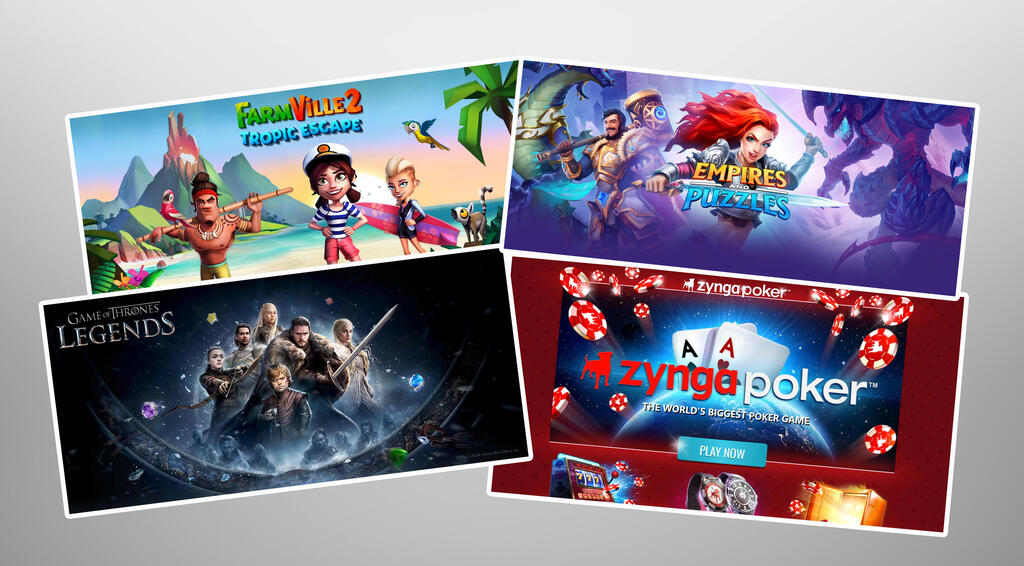
“That is far from what most users are looking for. All the games we develop, and most leading mobile companies, include a social element. Without it, the experience is much less enjoyable. I’ll give you an example of Empires & Puzzles, a great game from our team in Helsinki. They innovated within the hero battle genre. Without its social element, alliances and teams playing with and against each other, the game is much less interesting. Even if you could generate a similar game with a reasonably good level of AI, you would lose a large part of its value without the social layer.”
The value is not necessarily only in the creative aspect of the game, but in the ecosystem around it, and that cannot be recreated with AI, because you cannot recreate people and social networks in the traditional sense. That is something AI still does not do.
“There are solo games. Pixel Play, which was recently acquired by Scopely, is largely a solo game. But I agree there are categories where new innovation will be needed. I think that precisely because users will want to play games they themselves are building, there will be many games created instantly, and it will be hard for them to persist over time. Our direction is toward social games, the ones we discussed. Games that can be played for years, because you are not playing alone.”



