











AI didn't kill the junior developer, it changed the rules
Recruiters and executives explain what it now takes to land a first job in tech.
Entering the job market has rarely been more challenging.
For aspiring software developers, product managers and data analysts, the path into high-tech looks very different from the one previous generations encountered. A wave of layoffs across the technology sector, combined with the rapid adoption of artificial intelligence and broader economic pressures, has reduced entry-level opportunities and raised expectations for new hires.
Organizations increasingly expect candidates to create value from day one. Potential alone is no longer enough. Employers want people who can integrate quickly, learn independently, and contribute immediately.
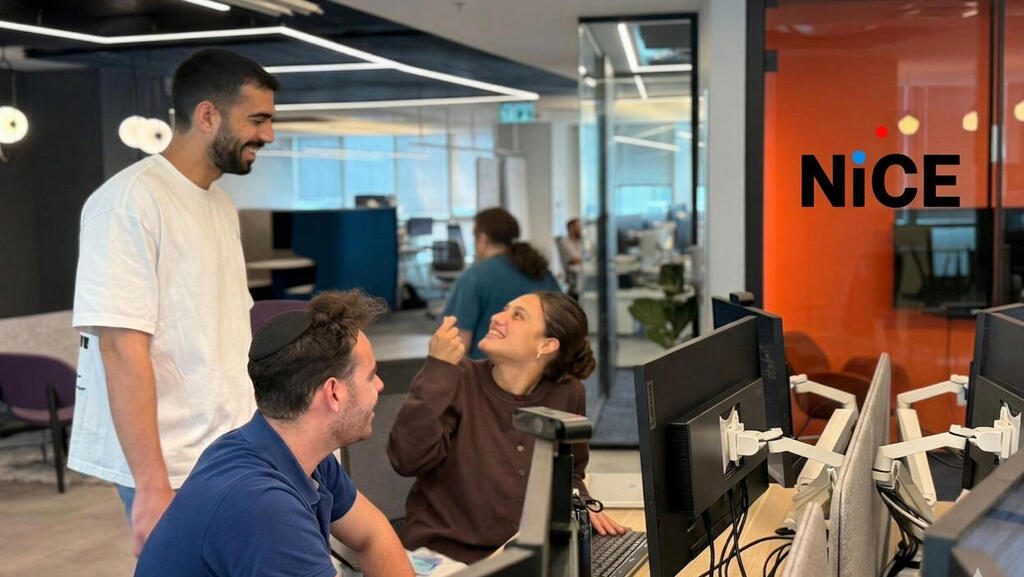
The numbers reflect that reality. According to Maor Spitzer, Head of Talent Acquisition at fintech company Earnix, every student position attracts hundreds of applications within hours of being posted.
"The biggest challenge for students is standing out and figuring out what can push them to the top of the pile," he says.
The rise of artificial intelligence has become one of the defining forces reshaping the labor market. Yet its impact is more complicated than the popular narrative that AI will simply replace workers.
A recent Deutsche Bank report examining AI's effect on the U.S. labor market suggests that young professionals are among the groups most affected by the technological shift. Job openings in professions highly exposed to AI, including software development and research roles, have declined faster than in the broader labor market over recent years, although the trend has stabilized somewhat in recent months.
Among bachelor's degree holders under the age of 27, unemployment remains elevated relative to historical norms, while other demographic groups have been less affected. In other words, a university degree is no longer the guaranteed ticket into the workforce that it once was.
At the same time, there is still little evidence that AI is directly causing widespread layoffs. Most organizations have not significantly reduced headcount because of the technology, and companies that have adopted AI tools generally use them to augment employees rather than replace them entirely.
That creates a paradox for junior candidates: AI is simultaneously making some jobs harder to obtain while giving newcomers powerful tools that can help them compete.
"Contrary to the prevailing perception in the industry, AI does not make juniors redundant—in fact, it can help them tremendously," says Oren Levitzky, Vice President of Research and Development at Fiverr.
According to Levitzky, AI tools allow junior developers to reach levels of productivity that previously required years of experience.
"The ability to use AI tools allows a beginner developer to bypass two to three years of traditional learning and experience on the path toward achieving the capabilities of more experienced developers," he says.
The new hiring formula
The criteria employers use to evaluate candidates are changing rapidly.
For years, hiring managers focused heavily on academic credentials, grades and institutional prestige. Today, recruiters increasingly want evidence that candidates can solve problems in real-world environments.
Salesforce has adapted its hiring framework accordingly. The company focuses on attracting talent through new experiences, evaluating candidates based on adaptability, problem-solving skills and AI readiness rather than experience alone, and accelerating development through continuous learning and rapid growth opportunities.
The company also promotes "reverse mentoring," in which younger employees help experienced managers learn how to use AI tools effectively.
"In the new world of work, the competitive advantage of early-career employees lies not only in the knowledge they have accumulated, but in their natural ability to collaborate with artificial intelligence," says Einat Frish, Director of Recruiting, EMEA Tech, CMO and Israel at Salesforce.
"The AI-native generation is not merely adopting new tools; it is reshaping how work gets done, treating technology as a strategic partner that enables greater focus on creativity, complex problem-solving and uniquely human contributions from day one."
Employers increasingly agree that practical experience now matters more than academic credentials alone.
"What organizations and recruiters will look at is not necessarily where you studied, but what you've actually done with what you learned," says Aya Lahmi, who leads organizational consulting at KPMG Israel.
A candidate who has built an automation tool using ChatGPT, developed an application independently, or completed a project that integrates AI into data analysis often stands out more than someone who simply lists coursework and academic achievements.
The ability to write code is no longer enough to differentiate candidates.
Instead, recruiters increasingly look for AI literacy, adaptability, curiosity and business understanding.
"If until recently employers mainly looked at the academic institution and transcript, today candidates must highlight two key areas on their resumes: curiosity and hands-on practical work," says Spitzer.
That means showcasing independent research, side projects, applications built outside academic requirements, or experiments conducted using AI tools.
According to Levitzky, AI proficiency has become a baseline expectation rather than a competitive advantage.
"I've reviewed hundreds of resumes, and many either don't mention AI skills at all or do so in very general terms," he says. "Just as candidates list programming languages, I now expect to see AI tools they are proficient in and projects completed using them."
He argues that the value of developers is increasingly shifting away from pure execution and toward strategic thinking.
"You have to let go of 'ego code' and understand that AI tools often write code extremely well. The value of the developer is increasingly shifting to understanding what needs to be built, how to break down problems, how to design processes and how to evaluate outcomes."
The most valuable professionals, he says, are those who understand how to work alongside AI systems rather than compete against them.
Beyond the resume
Recruiters say candidates often underestimate the importance of interviews and take-home assignments.
"The assignments are where you can see who thinks independently and who approaches a problem by asking how it can be solved better," says Lahmi.
Interviews increasingly focus on thought processes rather than technical knowledge alone. Hiring managers want to understand how candidates learn, how they make decisions and how they evaluate different solutions.
According to Spitzer, academic success remains important, but practical application is what ultimately secures a job offer.
"What gets people hired is demonstrating how they applied their knowledge, how much they explored independently, researched new areas and were willing to get their hands dirty," he says.
NICE Executive VP, Head of Human Resources, Shiri Neder recommends that candidates proactively demonstrate curiosity and initiative throughout the process.
"Asking smart questions, showing systemic understanding and presenting thoughtful analysis of products reveal a great deal about a candidate," she says.
She also advises applicants to present achievements in terms of outcomes rather than activities.
Instead of listing courses completed, candidates should explain what they accomplished: how they solved a problem, improved a process or built a useful solution.
While much of the discussion focuses on what candidates must do differently, employers face their own challenge.
Companies increasingly expect junior employees to arrive with more experience, independence and technical sophistication than ever before. But if organizations dramatically reduce investment in entry-level talent, they risk creating a shortage of experienced professionals in the years ahead.
"On the one hand, companies expect juniors to arrive with more capabilities and greater independence," says Lahmi. "On the other hand, they cannot ignore the need to adapt onboarding and training processes to the new reality."
Organizations that fail to develop young talent today may discover in a few years that they have weakened their own leadership pipeline.
The technology industry is undoubtedly becoming more selective. Competition is intensifying, hiring standards are rising and artificial intelligence is changing the definition of valuable skills.
Yet industry leaders insist the opportunities have not disappeared.
Instead, the profile of the successful candidate has changed.
The winners are increasingly those who learn quickly, experiment constantly, embrace new technologies and demonstrate the ability to create value long before they receive their first full-time job offer.
"The door is open to those who demonstrate curiosity, a high ability to learn and a willingness to run fast," says Neder.
For a generation entering the workforce during one of the industry's most disruptive periods, that may be the most important lesson of all.



