










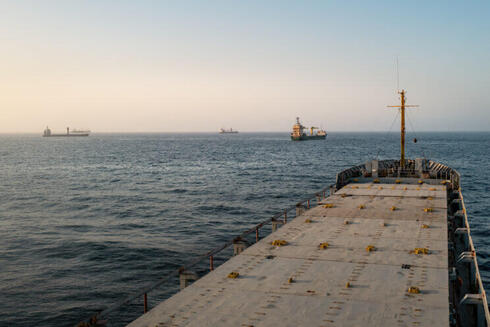
The battle over the Strait of Hormuz is now a battle over perception
Washington says the route is open, Tehran says it is closed, but shipping companies are making decisions based on risk rather than official declarations.
Is the Strait of Hormuz open or closed? The answer depends on whom you ask. According to the United States, the critical shipping route remains open to commercial traffic, a position reiterated on Monday by President Donald Trump and the commander of U.S. Central Command. Iran, however, says the opposite: the Islamic Revolutionary Guard Corps has declared that the strait will remain closed “until the end of American intervention” in the region.
On the ground, there is no complete physical blockade. Some vessels continue to pass through the strait, mainly along the southern route near Oman. But from a commercial perspective, traffic remains severely constrained, far below the levels expected after the signing of the memorandum of understanding.
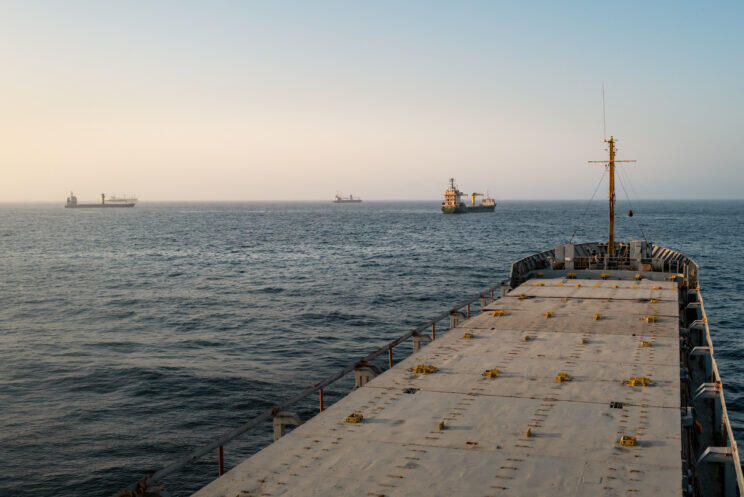
According to figures published in Iran, 11 commercial vessels passed through the Strait of Hormuz in the 24 hours ending Sunday afternoon, less than 10% of pre-war traffic. The figure is also significantly lower than during the brief period when implementation of the memorandum appeared to be taking hold on the ground, when 24 and 25 crossings were recorded on July 5 and 6, respectively.
It is important to note that even before the current escalation, accurately measuring traffic through Hormuz was difficult. Some vessels disable their automatic identification systems or alter their transmission patterns, making real-time tracking incomplete. The result is a paradox: geographically, Hormuz remains open; commercially, it is close to inaccessible for many shipping companies.
That distinction matters. Shipowners, charterers and insurers do not wait for an official declaration that the strait has been closed. The threat of attacks on vessels, possible seizures by Iran’s Revolutionary Guard Navy, or the risk of a U.S. military strike is often enough to halt operations. In practice, the market, not governments, determines whether the route is functioning.
Oil prices, the most immediate indicator of market concerns, have so far shown a relatively limited response. Brent crude futures closed Friday at $76.01 per barrel, following a weekly gain of approximately 5.5%, during a week in which U.S. and Iranian forces exchanged attacks and Trump announced that the ceasefire had ended. Regular trading was suspended during the weekend escalation, meaning the full market reaction will become clearer today.
The relatively moderate price movement reflects expectations that Washington will not allow a prolonged disruption, that negotiations may resume, and that some oil exports from the Gulf will continue even during periods of conflict.
Iran’s actions in recent days suggest that Tehran’s objective is not necessarily a total shutdown of Hormuz, but rather the ability to determine who can pass through, which routes remain available and under whose authority. Iran appears to be seeking to turn control over the strait from a military threat into a broader political and commercial lever.
That message was reinforced on Sunday by Mohsen Rezaei, a senior military adviser to Iran’s supreme leader, who described Hormuz as a route more important “than dozens of atomic bombs.” The statement reflects Iran’s view of the strait as its most powerful strategic asset, a tool capable of influencing global energy markets, Gulf states and Washington’s calculations.



