










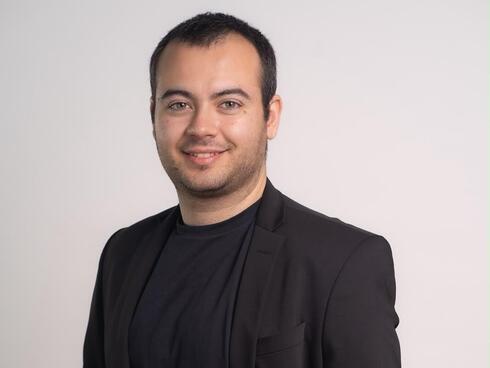
“If you get the people right, everything else becomes more possible”: Life lessons from Israeli tech leaders
Israeli tech industry experts give advice that offers a glimpse into the skills and mindsets they believe will matter most in the years ahead.
Years of building companies, investing in startups, developing products, and navigating rapidly changing markets often produce lessons that extend well beyond the tech industry.
CTech asked leaders from across Israeli tech one simple question: What's one piece of advice everyone could benefit from, based on your professional experience?
Many tech insiders arrived at similar conclusions. As artificial intelligence reshapes industries and workplaces, they argued that qualities such as curiosity, adaptability, trust, and a focus on solving meaningful problems are becoming more valuable than simply accumulating knowledge or mastering the latest tools.
Aryon Security
Ariel Litmanovich, Co-founder and CTO of Aryon Security
Industry: Cybersecurity
Surround yourself with the best people you can possibly find and never compromise on that. I believe this is true not only in business, but in every part of life, personally and professionally.
Building a company from zero taught me very quickly that no founder, no matter how capable, can do it alone. The people around me shape the quality of my decisions, the speed of execution, the culture, and my ability to keep going when things get hard. The same is true outside of work: the people closest to you influence your mindset, your standards, your energy, and the way you respond to challenges. Great people raise the bar, challenge your thinking, and make the impossible feel achievable. Talent matters, but trust, ownership, and shared ambition matter just as much.
Whether you are building a company, making a difficult personal decision, or simply trying to become better, the right people help you see more clearly and move with more confidence. If you get the people right, everything else becomes more possible.

SAP
Eliel Schurman, VP Engineering at SAP BTP Foundation Services
Industry: Enterprise Software
Stop trying to become irreplaceable by knowing more than everyone else. In the AI era, knowledge is increasingly available on demand. What remains uniquely valuable is your ability to ask better questions, challenge assumptions, connect ideas across disciplines, and make decisions under uncertainty.
The professionals who will thrive are not those who resist change, but those who reinvent themselves continuously. I've watched this play out firsthand, leading a large engineering organization of hundreds developers through exactly this shift: the ones who adapt fastest aren't always the most technical, they're the most curious.
The future won't reward the people with the most answers, it will reward those who keep learning the fastest.
Arieli Group
Eric Bentov, Co-Founder and Managing Partner at Arieli Group
Industry: Venture Capital
Focus on solving important problems, not on chasing the latest technology trend. Technologies will continue to evolve, but the world's biggest challenges - in healthcare, security, energy, climate and industrial productivity - will remain. The most valuable companies are built by founders who deeply understand a real problem and use technology as a tool to solve it. If you're building or investing, ask yourself whether your solution will still matter in ten years. Long-term relevance is a much stronger predictor of success than short-term excitement.
Deloitte
Galit Rotstein, Partner and Leader of Deloitte Digital Israel
Industry: Tech Professional Services
I always tell my teams that the talent of the future is a Wild Card. The most valuable people won’t be those who stay within the boundaries of a single role, but those who can step into adjacent domains and connect business, technology, data and execution. They don’t need to be the world’s best expert in everything, but they do need enough breadth to collaborate, adapt and solve complex problems quickly. AI is raising the value of versatility.
The professionals who thrive won’t be defined by a job title, but by their ability to continuously learn, reinvent themselves and create impact wherever it’s needed.
Sola Security
Ron Peled, Co-Founder and COO at Sola Security
Industry: Cybersecurity
As nearly everyone consumes and experiments with AI today, and we observe a real democratization that allows so many people to become builders, remember that getting from zero to one is relatively easy, but scaling it and maintaining it in an enterprise has its overhead and costs. Generally, when someone is selling you something with AI, don’t ask them how smart their AI is. Ask how well their AI actually understands your specific needs and organization, because the data foundation is what makes AI work.
Upstream Security
Roy Bachar, Chief Business Officer, Upstream Security
Industry: Cybersecurity
Build trust before you build autonomy!
Building intelligent AI is becoming easier every day. Building AI that can be trusted to operate safely in the physical world is the much bigger challenge. As AI moves into vehicles, humanoid robots, factories, and critical infrastructure, success won't be measured by the sophistication of the models. It will be measured by how securely, reliably, and predictably they perform in real-world conditions.
But trust isn't a vague concept or an afterthought. It is a technical requirement that must be engineered from day one. You cannot build a trusted autonomous system without a unified data foundation that can actively monitor behavior, catch physical quality degradation, and detect cyber threats in real time. If you don't have a clear, stateful view of operational reality, you cannot have trust.

Incredibuild
Shimon Hason, CEO of Incredibuild
Industry: Enterprise Software
Over the last two decades, I’ve learned that small delays compound into enormous costs when multiplied across thousands of people and millions of actions.
In technology, people often focus on visible activity. The coding, the meetings, the tools. But the biggest opportunities usually hide in friction that has become accepted as normal. A developer waiting for tests and builds. A customer waiting for a response. A team repeating work that should have been automated.
If you want to improve any system, start by identifying where people are waiting and why.
Related articles:
- "We don't know what we're doing": Tech leaders debunk the biggest myths about their industries
- "When you position yourself correctly in the value chain and quantify the impact in billions, investors understand immediately"
- "You must constantly test yourself against the market and determine whether there is real alignment"
Pulsenmore
Dr. Elazar Sonnenschein, CEO at Pulsenmore
Industry: Healthtech
My advice is to view technology as a tool that strengthens, rather than replaces, the relationship between patients and healthcare professionals. The most impactful innovations don't remove clinicians from the equation, they allow them to extend their reach, spend more time where they're needed most, and provide more personalized care.
When technology reduces barriers to access while preserving clinical oversight and human connection, everyone benefits. That's ultimately how healthcare becomes both more efficient and more compassionate.



