









HR The Next Leap
Quantum Art: “Employees value a clear mission and stability more than flashy perks”
Saray Ben-Meir, Head of HR at Quantum Art, discusses operational continuity when work from home isn't an option, and the myth of the employer's market especially in the field of quantum, as part of CTech's HR: The Next Leap series.
“In today's environment, I believe employees value a clear mission, sense of purpose, flexibility, understanding, and stability more than flashy perks,” says Saray Ben-Meir, Head of Human Resources at quantum computing startup Quantum Art. As the company's work involves physical quantum hardware and laboratory-based R&D, meaning they cannot operate fully remotely when the local security situation escalates, Ben-Meir says the company's focus has been "on creating a safe and supportive environment that allowed employees to continue working from the office when possible, while maintaining flexibility for individual circumstances.”
From active and looming war threats, to AI rapidly and constantly redefining what it means to be productive, running a company in Startup Nation brings with it its own category of challenges and rewards. HR: The Next Leap takes a glimpse into the heart of Startup Nation via the HR professionals shaping its culture. We survey the executives whose jobs are more demanding and more vital than ever, as they heed the future-proofing of their workforce, while simultaneously ensuring business continuity and employee wellbeing during relentlessly unprecedented times.
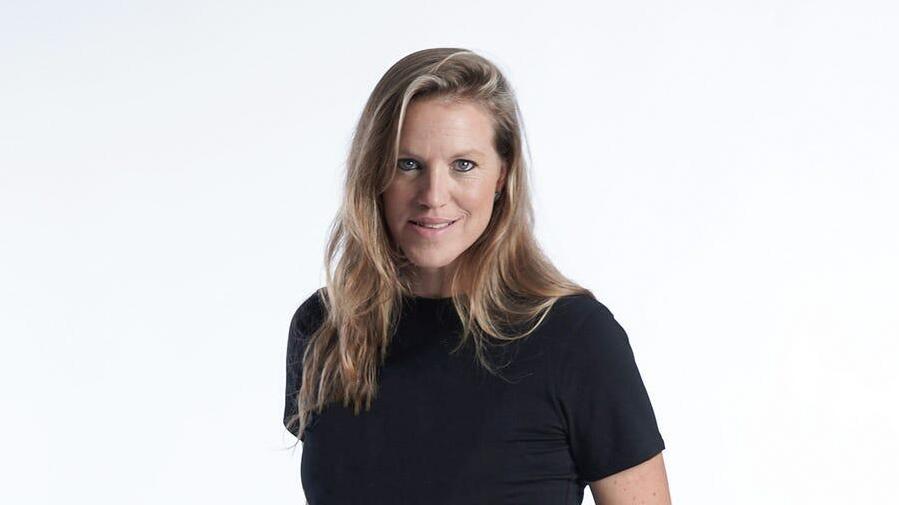
Looking at the broader state of Startup Nation, Ben-Meir admits that “the risk of brain drain is something we take seriously, particularly in a field like quantum computing where the talent pool is already very limited.” She describes seeing “cases where highly qualified Israeli researchers, especially post-PhD talent working abroad, choose to extend their stay overseas or reconsider plans to return to Israel.”
You can read the entire interview below.
Company Name: Quantum Art
Sector: Quantum Computing
Founders: Tal David, Amit Ben-Kish, Roee Ozeri
Year of Founding: 2022
Investment stage: Series A
Total investment to date: $165M
Investors: Bedford Ridge Capital, Battery Ventures, Amiti Ventures, StageOne Ventures, Vertex Ventures, Entrée Capital, Destra Investments, Lumir Growth Partners, Disruptive AI, Harel Insurance, Hudson Bay Capital, Poalim Equity, LIP Ventures and others
Current number of employees: 70
Open positions: Head of US Growth, QEC Theoretical Physicist, Electro-Optic Physicist, Experimental Physicist, SW Group Leader, Sr. Electrical Engineer, System Engineer
Website: www.quantum-art.tech
Social Media: LinkedIn
As of March 2026, the market officially shifted into an 'employer's market'. How have your screening criteria changed, and do candidates - including senior-level ones - still hold any leverage in negotiating salaries and terms?
While many industries are experiencing a shift toward an employer's market, we don't see that trend as strongly in the quantum computing sector. Our primary hiring focus is on physicists and other highly specialized technical talent, and the pool of qualified candidates is relatively small. At the same time, we're seeing a growing number of quantum and deep-tech companies competing for that same talent, which keeps demand high.
Even beyond physics roles, we look for people who can thrive in a highly technical, multidisciplinary environment where expertise across multiple domains is often required. These are typically top-tier candidates who remain in demand regardless of broader market conditions.
How have/are you managing operational continuity and recruitment while the economy navigates the emergency state triggered by the conflict with Iran? With the threat of escalation looming at any moment, how are you and have you been handling everything from interviews interrupted by sirens to managing teams thinned by massive, ongoing reserve duty?
Unfortunately, operating in a crisis environment is something Israeli companies have become accustomed to. When the conflict with Iran began, we quickly organized as a leadership team to ensure business continuity while also prioritizing the safety and well-being of our employees and their families.
Because our work involves quantum hardware and laboratory-based R&D, we cannot operate fully remotely. We therefore focused on creating a safe and supportive environment that allowed employees to continue working from the office when possible, while maintaining flexibility for individual circumstances.
What stood out most was the commitment of our team. Despite the challenging reality, people remained focused on our mission and continued to deliver. We also maintained our hiring plans, successfully recruiting and onboarding nearly ten new team members during the war, and continued progressing toward our key milestones and deadlines.
Beyond the role of empowering employees, which roles has AI eliminated over the past year, what percentage of your workforce was reskilled to avoid being phased out, and how has this impacted entry-level hiring?
AI is already helping us in certain research and operational areas, and we're actively exploring additional use cases across the company. That said, as a quantum computing startup, our primary focus over the past year has been achieving critical scientific and engineering milestones.
As a result, AI has led to elimination of roles within our organization only in a minor way, and we have not undertaken any large-scale reskilling efforts, currently. We view AI today primarily as a productivity and acceleration tool that helps our teams work more effectively, rather than as a replacement for talent. In addition, we are exploring advanced applications of AI in optical design, which could help accelerate our future design processes.
Against the backdrop of the unstable security and political climate, are you seeing an increase in relocation requests or 'quiet quitting' by top-tier talent moving abroad, and what is the most proactive step you are taking to retain them in Israel?
The risk of brain drain is something we take seriously, particularly in a field like quantum computing where the talent pool is already very limited. We do see cases where highly qualified Israeli researchers, especially post-PhD talent working abroad, choose to extend their stay overseas or reconsider plans to return to Israel.
Our approach is to stay closely connected with the Israeli scientific community around the world and actively engage with researchers who may be considering their next career move. We believe that offering the opportunity to work on world-class quantum technology, while helping build a leading deep-tech company in Israel, is a compelling proposition.
More broadly, we see attracting top talent back to Israel from leading research institutions in the world (like Stanford, Harvard and Max Planck) as part of our mission. Beyond building a successful company, we want to contribute to maintaining Israel's position as a global leader in science, innovation, and advanced technology.
In an era where stability has replaced flashy perks, how are you addressing the deep mental burnout of employees torn between the professional and security fronts, and what is the most critical benefit you offer today in place of the bonuses that have vanished?
In today's environment, I believe employees value clear mission, sense of purpose, flexibility, understanding, and stability more than flashy perks. We work hard to create a culture where people can balance the demands of work with the realities of family life and the broader security situation.
We offer flexibility in how people manage their schedules. Some employees choose to leave early to be with their families and complete work later in the evening, while others organize their time differently. We also make it a priority to step away from work periodically for team-building activities and company events that help people recharge, strengthen relationships, and celebrate what we've achieved together. What matters to us is trust, accountability, and supporting people in a way that works for them.
Beyond that, we are a very people-oriented company. We make a genuine effort to understand each employee's situation, listen to their needs, and create an environment where people feel safe, seen and supported. I believe that sense of personal connection is especially important during challenging periods.
Finally, our team is deeply connected to our mission, which creates a strong sense of purpose.



