










Israel ranks second globally in physical AI
One in five Israeli startups is building technology that brings AI into the physical world, putting the country behind only Germany. But an AWS study warns that slow customer adoption is holding back the sector's growth worldwide.
Israel ranks second globally, tied with Japan, in the share of startups building physical AI, with 21% of the country's startups active in the field. Germany leads the ranking at 24%, while Israel ranks ahead of the United States, where the figure is 20%, and India, at 16%. The findings come from a new study by Amazon Web Services (AWS), which examined the development of the sector across 20 global markets.
The report, titled “AI Gets Physical: The Global Startups Readiness Index,” is based on a survey of 4,420 technology startups, including 663 physical AI builders. It defines builders as startups developing physical AI hardware, embedding the technology into products or equipment, or producing the software and technologies that enable it. These include robotics, autonomous systems, drones, computer vision, perception systems, sensors, World Models and embedded intelligence.
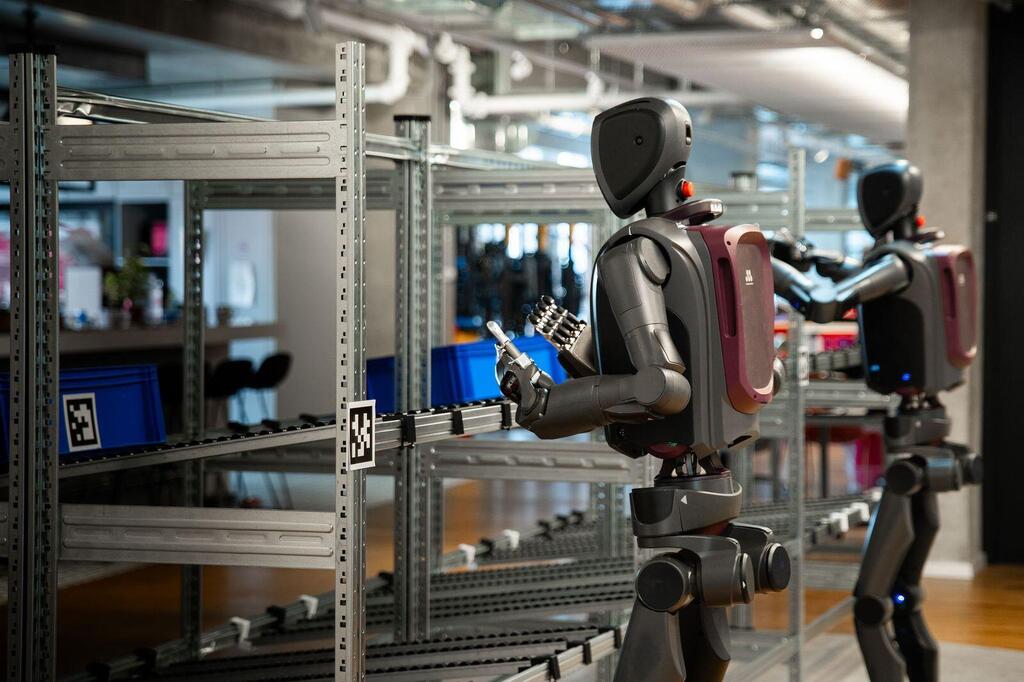
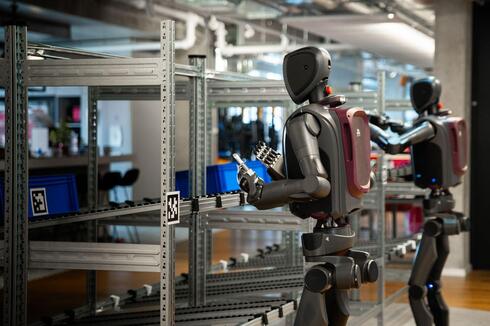
Physical AI integrates artificial intelligence with systems operating in the real world, such as robots, drones, autonomous vehicles and industrial machinery. Unlike traditional AI systems, which process information or generate digital content, physical AI systems must perceive their surroundings, interpret changing conditions and make decisions that translate into real-world actions. Despite the popular image of humanoid robots, only 12% of companies developing physical AI focus on fully autonomous or humanoid robots. Much of the activity is concentrated instead in technologies such as computer vision and perception systems, sensors and chips.
The gap between technological capabilities and market demand is one of the study's central findings. Only 26% of physical AI builders worldwide believe their local economies are ready to deploy the technology, while 70% say slow customer adoption is constraining their growth. AWS argues that the main obstacle is not necessarily the technology itself, but a lack of awareness among potential customers. Many businesses have yet to see what physical AI can do or understand how to integrate it into their operations.
The report recommends expanding pilot programs, live demonstrations and industry events to help businesses see the technology operating in real-world settings. It argues that markets able to close the gap between development and adoption will be better positioned to capture the jobs, revenue and industrial advantages expected to accompany the sector's growth.
The report also identifies several broader challenges facing physical AI companies. While 68% of builders globally say they can find the technical and engineering talent they need, 58% still identify talent shortages as a major challenge. Access to capital is another significant obstacle, with 66% of builders saying it is a major challenge. Physical AI development is generally more expensive and time-consuming than software development because companies must design, build and test hardware in real-world conditions.
Beyond the technological shift, the sector is also expected to affect the labor market. Some 70% of companies developing physical AI expect the technology to create more jobs than it eliminates. Meanwhile, 86% anticipate expanding their workforces over the next two years. Among companies expecting to grow, 59% estimate that more than half of their new hires will be in engineering, technical or skilled-trade roles.
The positions companies expect to recruit for include robotics and hardware engineers, maintenance and repair technicians, robot operators and supervisors, and systems integrators. However, finding qualified workers is already proving difficult: 48% of builders report struggling to recruit robotics and mechatronics engineers, while 40% have difficulty finding electronics and hardware engineers.
Looking ahead, 76% of physical AI builders expect the technology to become mainstream in their industries within five years, and 36% believe this will happen within two years. Manufacturing and automotive are expected to be affected first, cited by 55% of builders, followed by logistics, warehousing and retail at 52%, healthcare at 36%, and energy and infrastructure at 30%.



