










AI budgets are tripling, and executives are changing how they measure success
Executives from EY, Bank Hapoalim, HiBob, Check Point and Qumra Capital described soaring AI spend, a shift to business KPIs, and why the people side of transformation is the hard part.
Bank Hapoalim’s AI budget for next year is roughly triple this year’s, which had already tripled the year before. HiBob spent half a million on tokens last year and has budgeted $6 million for next year. What’s changing, executives said on a panel Tuesday, is how that spending gets judged.
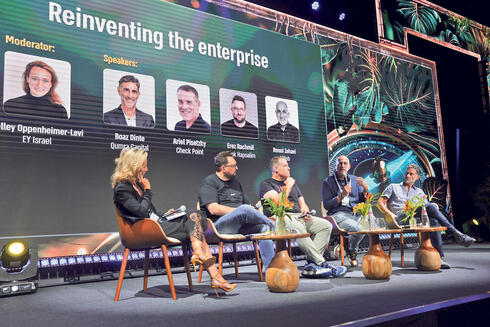
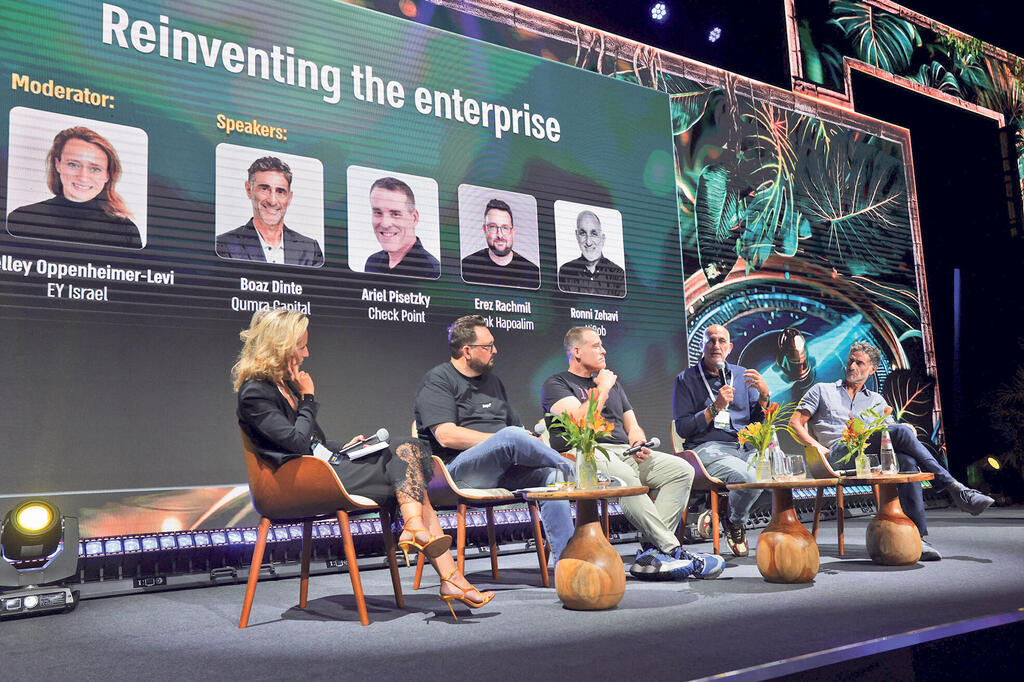
The panel, held Tuesday at EY Israel’s JOURNEY 2026 conference at the Hilton Tel Aviv, was moderated by Shelly Oppenheimer-Levy, partner at EY Israel. She echoed an earlier speaker’s point that the real challenge isn’t building an AI startup but transforming an enterprise. “As part of an enterprise, I know how painful and how difficult it is,” she said, before asking the panel what has actually changed inside enterprises over the past two years.
EY tested that on itself, checking this year whether AI had cut the hours its people work. “We essentially sell services, so obviously we have a lot of man hours, and we learned that we don’t have fewer hours per employee,” she said. Where AI did help depended on experience: “If you have young employees, AI is not going to help a lot, because they don’t [have the knowledge] yet.” The payoff, she said, comes with mid-level employees, who know enough to put the tools to work.
She also argued that “buy versus build has a completely different angle today.” The question used to be whether to acquire a company. Now it’s whether to keep paying for an outside service at all, when the same thing could be built in-house. From there, she turned the panel to budgets: how much is going to AI, and how anyone measures what it returns.
HiBob co-founder and CEO Ronni Zehavi listed “psychological readiness” among the forces reshaping work. Leaders push employees to adopt AI, he said, and the next thing those employees think is “will I lose my job if AI can do my job better than me?” HiBob concluded in 2024 that “without changing our culture and our mindset internally, we’ll never be able to adopt AI.” Its token spend went from half a million last year to 2.5 million this year, with “$6 million on tokens” budgeted for next year.
Erez Rahamiel, head of the technology and IT division at Bank Hapoalim, framed AI first as a way to hold on to what a bank’s people know. “I’m coming from banking now, knowledge was a big thing, it’s still a big thing,” he said. Business processes and “the knowledge accumulated over the years” have always been hard to preserve, and “AI enables us now to maintain knowledge, manage it, and spin it on a large scale.”
The most valuable lesson he’s learned, he said, is that partial fixes fail. “Just taking a small portion of the business process and injecting AI into it, I don’t think that’s enough,” he said. “It doesn’t provide the expected 10x outcome that everybody is talking about.” Instead, the bank rebuilds the process end to end and attaches KPIs it tracks, which he called “the most valuable thing about AI that I’ve learned.”
That has turned AI budgeting into a conversation with the business rather than an IT exercise. “When we are now investing in AI, we are having a discussion with our business partners,” he said. He described the wider debate as swinging between fears of “a catastrophe of overspending” and worries about not investing enough. At Hapoalim, the AI budget for next year is roughly three times last year’s, which itself tripled the year before.
“It’s no longer a technology KPI. For us, definitely going forward, it’s a business KPI,” he said. The questions put to each initiative have changed accordingly: “How fast it’s going to be shipping a product? How much we will gain in new business in doing that?” The old IT habit of asking how many years it takes to recoup an investment is gone. “It became kind of VC-style. We want to see major gains back.” Check Point CIO Ariel Pisetzky agreed that incremental returns no longer cut it: “It needs to be transformative.”
Rahamiel looks for the same thing in the startups pitching the bank, pointing to Wonderful and Reindeer AI as companies that “are able to come into the core business processes and to help transform them.”
Boaz Dinte, co-founder and managing partner at Qumra Capital, put the responsibility at the top. Transformation is “the CEO’s number one priority and responsibility,” he said. “It’s not like I’ll bring in a VP of AI and he’ll solve the issue.” He also urged companies to rework incentives still tied to revenue and margins, because “people stick to what used to be done... Things have changed. The cheese has moved and you need to move with it.”
Dinte concluded the panel by noting that the SaaS days of comfortable three-year contracts are in the rearview mirror. “The churn here happens every month, very easily. So you’ve got to be innovating and being relevant all the time.”



