










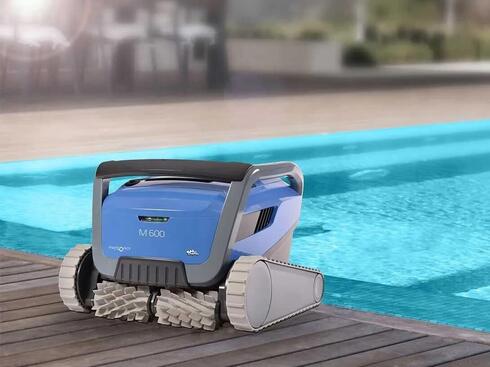
Currency headwinds push Israeli pool-robot giant Maytronics into the red
The pool-cleaning robot maker, which is negotiating with FIMI fund over the acquisition of control, posted a 15% decline in quarterly sales.
Maytronics continues to see a decline in sales, but excluding currency effects, it appears the decline has eased somewhat. The pool-cleaning robot maker from Kibbutz Yizre’el states that it estimates it will be able to meet its debt repayments in the coming year.
Amid talks over an investment from Tel Aviv-based FIMI Opportunity Funds and its planned acquisition of control of the company, Maytronics published its second-quarter report, in which sales stood at 437 million shekels, a 15% decline compared with the corresponding quarter; however, excluding shekel strengthening, this represents a 0.7% increase. In the first half, the company brought in 747 million shekels: a 13.3% decline, but excluding currency effects, a 0.1% increase.
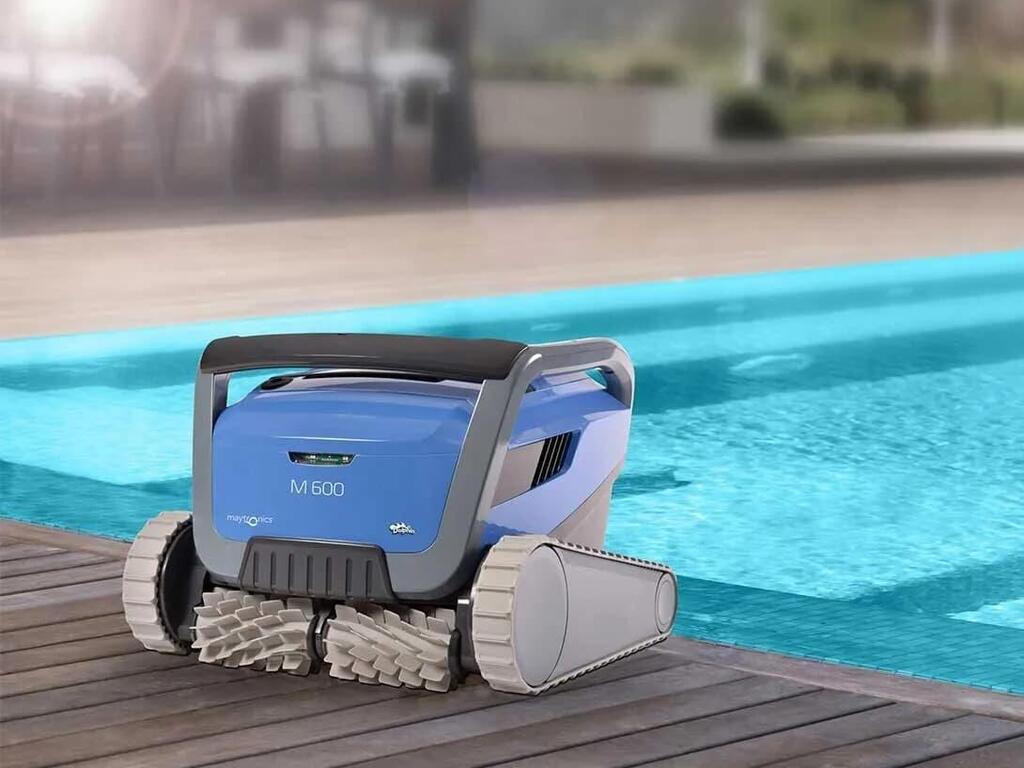
The company manufactures in Israel, pays its employees in shekels, and sells in foreign currency abroad, mainly in dollars and euros. The strengthening of the shekel is hurting its results.
Less good news came on the operating profit line, which fell to just 8.3 million shekels in the second quarter compared with a profit of 33.8 million shekels in the corresponding quarter. For the half, Maytronics posted an operating loss of 2.5 million shekels, in light of the catastrophic first quarter it went through, compared with an operating profit of 68.7 million shekels in the corresponding half of 2025. On the net profit line, the company posted a loss of 8 million shekels in the second quarter compared with a profit of 14.5 million shekels in the corresponding quarter, and a loss of 34.5 million shekels in the first half compared with a profit of 30 million shekels in the corresponding half.
Currency rates hurt Maytronics' revenue by 81 million shekels in the second quarter, and by 116 million in the half. Thus, in the US, the weakening of the dollar against the shekel hurt Maytronics' sales, which fell 9.8% in the quarter and 6% in the first half of 2026. However, excluding currency effects, the company posted sales growth in the US of 9.6% in the quarter and 12.4% in the first half.
Against the relative recovery in US sales, Europe continued to weigh on results. Sales in Europe plunged 29.5% in the quarter and 28.6% in the first half of the year. Excluding the euro's decline against the shekel, revenue in Europe fell 15.3% in the quarter and 20.1% in the half.
The US and Europe constituted, in the second quarter, the hot pool season. Maytronics attributes the decline in Europe to internal operational challenges but also to the diversion of Chinese products to the continent in light of the high tariffs in the US.
In Oceania too, where it is winter (the early pool season there), sales growth was recorded. Sales there rose 0.8% in the second quarter and 2.3% in the half, and excluding exchange rates, 11% in the quarter and 9% in the half. The company is seeing strong demand for its products, which is encouraging news for it.
Sales eroded mainly in private pool-cleaning robots, the company's core product, with revenue of 301 million shekels in the quarter: an 18.6% decline compared with the corresponding quarter. The company managed to supply only part of the demand, and also suffered from the erosion in currency rates. In public-pool robots, by contrast, sales rose 13.7% and totaled 32 million shekels, mainly thanks to North America.
It should be noted that FIMI, which is interested in investing in the company, is counting on increasing sales in this segment. In the first half, by contrast, there was an erosion of 2.5% in sales to public pools (53 million shekels) and of 14% in private pools (532 million shekels).
Maytronics' equity eroded to 366 million shekels compared with 426 million at the end of 2025. Cash flow fell to 65 million shekels compared with 182 million shekels in the corresponding quarter, due to a worrying increase in the customer balance. Somewhat jarring is the rise in general and administrative expenses from 33 to 35 million shekels in the quarter, due to an increase in salary expenses from one-time hours related to changes at the top of the company.
Maytronics has debts of 600 million shekels to banks and is in negotiations with FIMI to inject 300 million shekels into the company in exchange for control.



