










Mapping the hidden job market of Startup Nation
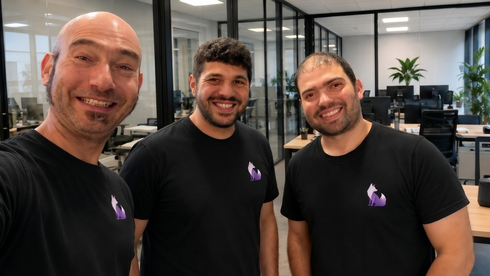
After watching his talented friends lose their jobs and struggle over next steps, Nir Kosover and his ScaleFox co-founders bootstrapped a side project to create a first-of-its-kind, comprehensively indexed view of the Israeli high-tech job market to counteract the anxious narrative surrounding the state of Startup Nation.
"We want to show everybody that there are still close to 6,000 companies that are looking for people in Israel," says Nir Kosover, Co-Founder and CPO of Scalefox.ai, an automated marketing platform for founders and business owners, who recently embarked on a mission to counter the layoff anxiety stirring Startup Nation. "There are about 16,000 positions in Israel, including remote. People need to cheer up, right? The market isn't gone. Everything is okay.”
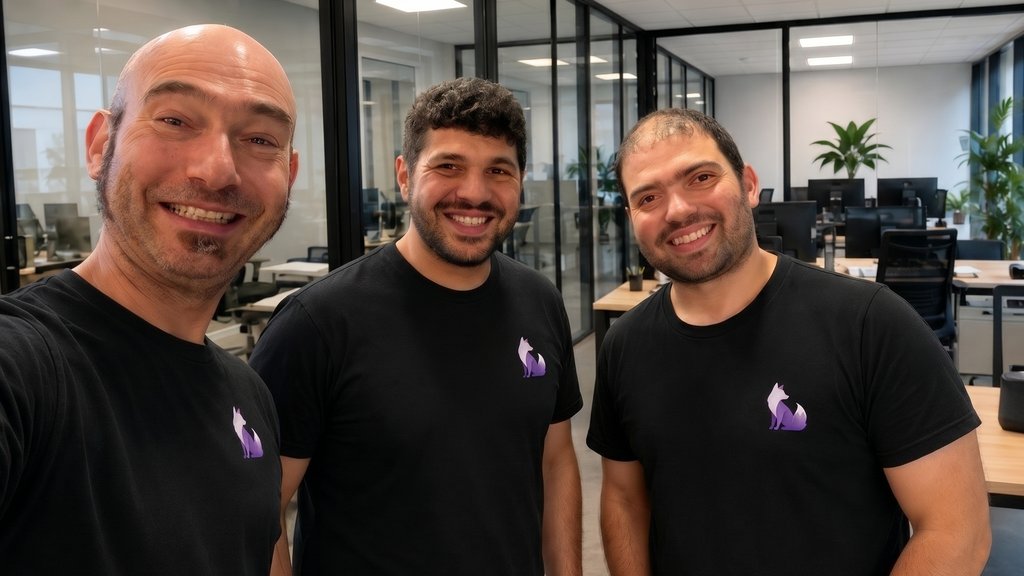
Amid a torrent of headlines decreeing the widespread layoffs across Israel's high-tech sector, Kosover, along with his co-founders Ido Meroz (CEO) and Roi Shterenberg (CTO), recently launched a side project to properly index the job market, which up until now has seemingly lacked a comprehensive map. "Plenty of companies don't post all the jobs to LinkedIn," Kosover points out. The platform, JobFox, is a first-of-its-kind hub that bridges this gap. "We have close to 16,000 jobs already," he says.
The initiative comes amid a slew of reports of Israeli high-tech companies slashing their workforces, with many citing restructurings spurred by funding challenges and the AI revolution, from Wix reducing its workforce by 20% to former unicorn Hailo announcing a 50% staff cut.
In fact, the catalyst for the project came largely from Kosover’s own network at Wix, where he spent six years as a founding member of the UI team, a period he describes as a "big chapter" of his career. "I remember waking up one morning and starting to see all these posts on LinkedIn of people I know from Wix and the old days that were losing their jobs,” he recalls. “And we thought, what's going on with the industry?"
After speaking with friends who had lost their jobs and were struggling to properly gauge the market, and thus their next steps, Kosover and his team felt a compulsion to step in. “We just wanted to make some kind of an impact,” he says. Given ScaleFox's usual remit, "we became pretty good at collecting and indexing information with what we did," Kosover continues. Naturally, then, “we said maybe we can do this side project in which we collect and index everything properly." And so, funded out of pocket, the team built the platform in their spare time.
The immediate response to the newly launched platform has proved quite encouraging in its positive reception. "We've got like about 1,000 new signees on the site," says Kosover. "Even more exciting for me, a few companies reached out and said that we aren't posting all of the jobs on our site. A few VCs reached out to me as well about their portfolio companies."
“For me as a product person, when you hear people signing up and stuff like this, you don't get too excited about it because sometimes it's like vanity metrics,” he continues. “But I actually see people using it. They're searching, they're saving searches, saving positions."
Still, the rather sobering reality that led to the creation of the index is hard to ignore as the high-tech job market faces disruptions that are increasingly hard to predict and, dare it be said, unprecedented, with AI being a primary driver that shows no sign of slowing.
While he maintains that he is "no HR expert," Kosover argues he "disagrees" with "a lot of smart people that are saying that we're going to have at least as many jobs as we do now."
"We can all imagine where it's going," he continues. "What we're experiencing now is the worst AI [disruption] that we're going to experience in the future... And it's not even linear, right? Like every once in a while, like [on June 9] when they released Claude Fable 5, then maybe we stole another job."
On the other hand, the hard statistics show the state of the industry is far from as dismal as one might think, which is exactly what Kosover sought to prove through this undertaking. According to the site’s newly launched interactive Market Map, there are over 17,000 jobs available. Each is visually depicted by a dot in the metaphoric galaxy of job opportunities, serving as a sort of visual counteraction to the prevalent, uneasy discourse surrounding the high-tech job market.
Beyond the sheer volume of roles, the map further pinpoints the more granular nuances of the job market. For example, it shows that while available positions skew “senior,” engineers are in high demand, and a healthy amount of junior roles are still opening up despite fears automation would dissolve the entry level. It further reveals a market that “orbits a few stacks,” with Python acting as “the sun”. Unsurprisingly, the jobs also skew heavily toward Tel Aviv.
It also stands to mention, while on the automation debate, that the speed at which the concept of JobFox went from ideation to deployment was, in many ways, thanks to AI. As Kosover says, “me as a product design person was able to literally do anything from the command line interface and I was shocked."
While JobFox is still in its relative infancy, having only gone live a few weeks ago, Kosover and his team are already setting their sights on the full-scale potential of this humble side project, envisioning all roads, from “a CV writer” to help curate “personalised CVs per job,” to building “a sort of guide for everything to coach you.” Part of that growing to-do list is addressing local job market challenges, specifically accounting for those serving in Miluim, which he says “we’re still thinking about what to do.”
Meanwhile, as the platform evolves, the team is also learning to take certain market blips into account, like filtering out "fake" roles, as "a lot of companies present a lot of jobs to sort of show growth,” says Kosover. Then come more existential questions like approximations of success, such as job completion versus job satisfaction.
"Maybe it should be a community where people might like to join in and meet to create the new startup?" he posits. But overall, "I definitely feel what a lot of people need is mental and emotional support in this process. Now maybe a community can do this, maybe we can help [with] a product to do this.”
Ultimately, per the desire to help that is the nexus of this project, Kosover and co are focused on reigniting and reinforcing "the positive note" within the local job market. “Companies approached me and they are checked in to list their positions," emphasises Kosover. "It means that they really, really want to recruit people. They're not just indifferent.”



