










HR The Next Leap
AT&T Israel: “Organizational resilience is not revealed when everything goes to plan. It’s revealed when nothing does”
Ella Shelef-Aharoni, Head of People & Culture at AT&T Israel R&D Center, discusses operational continuity as a cultural challenge integral to Startup Nation, and how the most meaningful benefit an organization can grant an employee is autonomy, as part of CTech’s HR: The Next Leap series.
“Organizational resilience is not revealed when everything goes according to plan. It reveals itself when nothing does,” says Ella Shelef-Aharoni, Head of People & Culture at AT&T Israel R&D Center, the local development arm of the American multinational, which is responsible for developing solutions across software, GenAI, network, cyber, and digital domains. “In Israel, disruption is not an exception. It is part of organizational life,” she continues. “As a result, we do not treat operational continuity as a purely logistical challenge. We treat it as a cultural one.”
From active and looming war threats, to AI rapidly and constantly redefining what it means to be productive, running a company in Startup Nation brings with it its own category of challenges and rewards. HR: The Next Leap takes a glimpse into the heart of Startup Nation via the HR professionals shaping its culture. We survey the executives whose jobs are more demanding and more vital than ever, as they heed the future-proofing of their workforce, while simultaneously ensuring business continuity and employee wellbeing during relentlessly unprecedented times.
1 View gallery
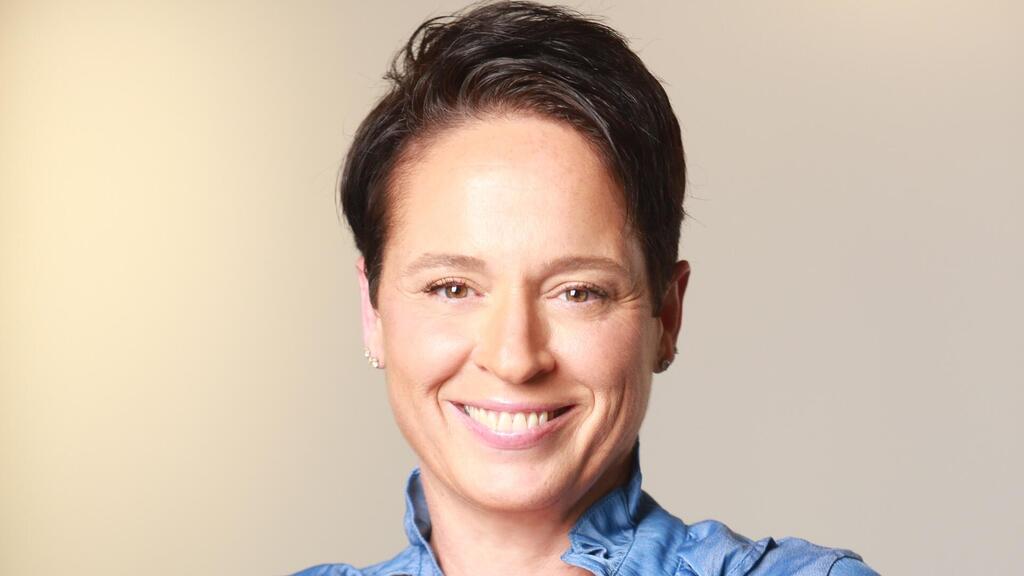
Ella Shelef-Aharoni, Head of People & Culture, AT&T Israel R&D Centre.
(Photo: Osnat Rom)
Assessing recent labor market trends, Shelef-Aharoni notes that the employer’s market “has forced greater precision.” Hiring decisions today, she explains, “are less about projected potential and far more about demonstrated capability. Consistent delivery, adaptability, accountability, and functional flexibility are no longer differentiators; they are baseline expectations.”
Ultimately, Shelef-Aharoni believes that in 2026 the people and culture profession “is no longer a background function. It is an anchor.” She adds that “in a reality defined by uncertainty, that role has never been more essential.”
You can read the entire interview below.
Company Name: AT&T Israel R&D Center
Sector: Technology & Communications
Founded: 1983
In Israel Since: 2007
Investment stage: Public
Current number of employees: About 600 in Israel
Website: https://il.att.com/
Social Media: LinkedIn, Instagram
As of March 2026, the market officially shifted into an 'employer's market'. How have your screening criteria changed, and do candidates - including senior-level ones - still hold any leverage in negotiating salaries and terms?
In 2026, conversations about work and talent often revolve around power: who holds it, who lost it, and who is negotiating from a weaker position, but this framing misses the real issue. Organizational strength today is not built on leverage, but on judgment, consistency, and the ability to operate responsibly in persistent uncertainty.
The labor market has clearly shifted toward employers, and this is no longer a temporary phase. Yet this shift has not led us to think in terms of dominance. Instead, it has forced greater precision. Hiring decisions today are less about projected potential and far more about demonstrated capability. Consistent delivery, adaptability, accountability, and functional flexibility are no longer differentiators; they are baseline expectations.
Experience alone is no longer sufficient. What matters is how that experience translates into sound decision making under pressure. Senior professionals have not lost their influence in this market. Their voices have matured. Deep domain expertise, the ability to lead people through prolonged uncertainty, and proven judgment continue to shape roles, compensation, and scope of impact. People and Culture is not about balancing power between employers and employees. It is about identifying those who can create sustainable value over time.
How have/are you managing operational continuity and recruitment while the economy navigates the emergency state triggered by the conflict with Iran? With the threat of escalation looming at any moment, how are you and have you been handling everything from interviews interrupted by sirens to managing teams thinned by massive, ongoing reserve duty?
In Israel, disruption is not an exception. It is part of organizational life. Security events, extended reserve duty, sudden interruptions, and emotional strain are realities employees carry with them into work. As a result, we do not treat operational continuity as a purely logistical challenge. We treat it as a cultural one.
We assume plans will be disrupted and teams will be stretched, and we design accordingly. Recruitment processes are intentionally human, flexible, and context aware. Interviews are grounded in empathy and realism. An interruption is not a signal of unprofessionalism; it is part of life.
Internally, resilience is built through shared ownership. Knowledge is distributed, responsibilities overlap, and managers are expected to lead both people and delivery with equal seriousness. Organizational resilience is not revealed when everything goes according to plan. It reveals itself when nothing does.
Beyond the role of empowering employees, which roles has AI eliminated over the past year, what percentage of your workforce was reskilled to avoid being phased out, and how has this impacted entry-level hiring?
AI is no longer a future discussion. It is a present day condition. At AT&T Israel R&D Center, AI is not positioned as a threat to employment, nor as a reason to eliminate roles. Over the past year, we did not reduce headcount because of AI. Instead, roles expanded.
AI is now embedded in how work is designed, measured, and delivered. The organization invests in training and accessibility, but responsibility lies with the individual. Using AI is part of professional accountability. We are not assessing who knows how to operate a tool, but who integrates AI to improve judgment, efficiency, and outcomes, and who takes ownership of improving processes rather than maintaining them.
In this sense, AI has raised the professional bar. Not by replacing people, but by demanding greater maturity, breadth, and responsibility.
Against the backdrop of the unstable security and political climate, are you seeing an increase in relocation requests or 'quiet quitting' by top-tier talent moving abroad, and what is the most proactive step you are taking to retain them in Israel?
Despite ongoing political and security instability, we are not seeing a rise in relocation requests or disengagement among our strongest contributors. Many employees are not seeking distance; they are seeking fairness, transparency, and meaning.
Our approach to retention reflects this reality. We do not rely on aggressive retention mechanisms or relocation incentives. We focus on listening, consistent communication, and respect for the complexity of people’s lives here and now. When employees are treated honestly and fairly, they tend to make deliberate choices. Often, those choices involve staying.
In an era where stability has replaced flashy perks, how are you addressing the deep mental burnout of employees torn between the professional and security fronts, and what is the most critical benefit you offer today in place of the bonuses that have vanished?
The era of flashy benefits has largely ended. What remains is more fundamental. Today, the most meaningful benefit an organization can offer is control: over time, boundaries, and personal sustainability.
Real flexibility, practiced rather than promised, has replaced slogans. Managers are expected to ask how people are truly doing and to be able to carry the answers. Burnout is not solved through bonuses or motivational messaging. It eases when culture allows people to be human rather than heroic, especially during prolonged periods of stress.
People and Culture in 2026 is no longer a background function. It is an anchor. It is where accountability meets empathy, performance coexists with humanity, and technology serves people rather than replacing them. In a reality defined by uncertainty, that role has never been more essential.



