











HR The Next Leap
Pixellot: “There's no single word for what the past year has looked like operationally”
Amid a return to an emergency state as the security situation escalates, Hadar Vaturi, SVP People at Pixellot, discusses the cumulative weight of prolonged uncertainty on the workforce, and how candidate caution surrounding AI is creating unique challenges for recruiters as part of CTech’s HR: The Next Leap series.
“There's no single word for what the past year has looked like operationally,” says Hadar Vaturi, SVP People at Pixellot, an AI-automated sports video capture, production, streaming, and analytics company. “What people are carrying today goes beyond workload.” While Vaturi has not seen a significant trend of relocation requests amid the ongoing emergency state, what she has noticed is “the cumulative weight of living and working through an extended period of uncertainty.” Further, she notes that the result of prolonged remote work is “screens that never really close, the slow erosion of boundaries between work and home,” and ultimately “a kind of low-grade exhaustion.”
“There is life and humanity beyond just work,” Vaturi continues. “We're a company that runs AI-driven sports broadcasts across time zones and live games don't pause for emergencies. But people do, and need to.”
From active and looming war threats, to AI rapidly and constantly redefining what it means to be productive, running a company in Startup Nation brings with it its own category of challenges and rewards. HR: The Next Leap takes a glimpse into the heart of Startup Nation via the HR professionals shaping its culture. We survey the executives whose jobs are more demanding and more vital than ever, as they heed the future-proofing of their workforce, while simultaneously ensuring business continuity and employee wellbeing during relentlessly unprecedented times.
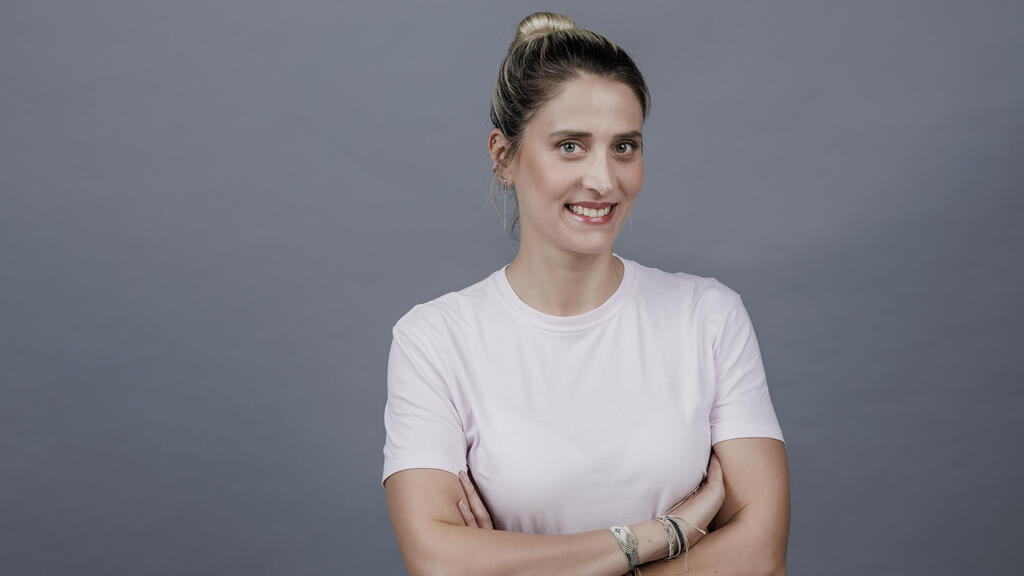
Meanwhile, focussing on recent acquisition trends, Vaturi notes that “the AI wave has introduced a very specific kind of uncertainty,” with employees consistently asking themselves, "How will this reshape what I actually do? Will my role look the same in a year?" She believes these internal questions have made candidates more cautious, and recruitment more complex. She adds: “You're not just selling a role, you're helping someone think through their professional future in a landscape that none of us can fully map yet.”
You can read the entire interview below.
Company Name: Pixellot
Sector: Media and Sports Technology
Founders: Gal Oz and Dr. Miky Tamir
Year of Founding: 2013
Investment stage: Series D
Total investment to date: $200M+
Investors: PSG (lead), others
Current number of employees: 180
Open positions: 10
Website: https://www.pixellot.tv
Social Media: LinkedIn, Instagram
As of March 2026, the market officially shifted into an 'employer's market'. How have your screening criteria changed, and do candidates - including senior-level ones - still hold any leverage in negotiating salaries and terms?
The market has shifted – that's real. But what's interesting is that while negotiation hasn't disappeared, it’s changed shape. Every candidate still negotiates, and that's healthy – it's part of the conversation. What has changed is the pace and the psychology around it.
Employees today don't leave jobs lightly. The AI wave has introduced a very specific kind of uncertainty: people are asking themselves, "How will this reshape what I actually do? Will my role look the same in a year?" That internal question makes candidates more cautious, and recruitment, as a result, more complex. You're not just selling a role, you're helping someone think through their professional future in a landscape that none of us can fully map yet.
At the same time, we're seeing layoffs across the industry, and that has opened up a meaningful talent pool we're actively and deliberately exploring. The search is precise, we know exactly what we're looking for. Someone joining Pixellot needs to understand that our world moves fast: AI cameras producing automated broadcasts, highlight reels delivered to coaches and parents within minutes of the final whistle, monetization infrastructure that gives sports organizations broadcast capabilities they couldn't have imagined owning three years ago. The people we want are the ones who find that exciting, not overwhelming.
How have/are you managing operational continuity and recruitment while the economy navigates the emergency state triggered by the conflict with Iran? With the threat of escalation looming at any moment, how are you and have you been handling everything from interviews interrupted by sirens to managing teams thinned by massive, ongoing reserve duty?
There's no single word for what the past year has looked like operationally because it has required something different from everyone, at different moments, for different reasons.
When sirens interrupted interviews, we went back to them and continued. When team members were called up for reserve duty for weeks at a time, we made sure their families weren't out of sight – care packages, check-ins, the kind of presence that says you're not forgotten while you're away. When they returned, reintegration was handled with care, not a stopwatch.
What prolonged remote work produces is something we understand by now: screens that never really close, the slow erosion of boundaries between work and home, a kind of low-grade exhaustion that builds quietly until it doesn't. Some people worked better at home, others needed the office, the physical separation, their colleagues, the act of showing up somewhere. We kept the office open and we paid attention to who needed what, without making it a mandate.
We're a company that runs AI-driven sports broadcasts across time zones and live games don't pause for emergencies. But people do, and need to. Holding both of those truths at once is what operational continuity actually looks like.
Beyond the role of empowering employees, which roles has AI eliminated over the past year, what percentage of your workforce was reskilled to avoid being phased out, and how has this impacted entry-level hiring?
At Pixellot, AI isn't a concept we're evaluating from a distance, it's woven into every product we build. Automated camera systems that capture a full football match without a single human operator. Automated production that focuses-in on all the action and can pop up ads at just the right moment to be seen yet remain unobtrusive. Highlight packages delivered to coaches' phones minutes after the final whistle. Monetization layers that turn a youth league into a profitable content publisher overnight. This is our daily reality.
So when the question of AI's impact on internal roles comes up, our answer is shaped by that context. Roles haven't been eliminated, but the work has been transformed. Engineers who once spent significant cycles on certain development tasks found those redirected toward higher-order challenges. Priorities shifted. Time frames got shorter. The work became, in many ways, richer.
What we look for in hiring has evolved accordingly. We want people who have a natural drive to get ahead, to initiate, people who are genuinely self-directed in how they develop. Not the type of person who waits for direction or a training program to tell them what the next skill is. Intellectual curiosity backed by real capability: the kind of person who sees a new agentic workflow and immediately starts thinking about how to use it. They see AI as a tool that can be used to propel things forward. At every level, from junior developers to team leads, that mindset is what we screen for.
On performance: we have a structured, goals-based plan for every eligible employee, individually calibrated, tied directly to delivery. Excellence is the standard, not as pressure, but as a shared orientation. In an environment that moves as fast as ours, knowing clearly what you're working toward is itself a form of stability.
Against the backdrop of the unstable security and political climate, are you seeing an increase in relocation requests or 'quiet quitting' by top-tier talent moving abroad, and what is the most proactive step you are taking to retain them in Israel?
We haven't seen a dramatic wave of relocation requests, and I say that without complacency. There are individual conversations. People are thinking out loud about their options, and we're glad they feel safe having those conversations openly. That trust matters.
What we do see is something quieter but just as real: the cumulative weight of living and working through an extended period of uncertainty. People carry that. Our response isn't only a retention program with a name and a brochure — it's consistent, genuine attention to the people who make Pixellot what it is.
We are deeply invested in our goals because the work is genuinely worth it. Reminding people why what they're building matters, especially when the external environment is heavy, is probably the most honest retention tool we have.
In an era where stability has replaced flashy perks, how are you addressing the deep mental burnout of employees torn between the professional and security fronts, and what is the most critical benefit you offer today in place of the bonuses that have vanished?
The era of the ping-pong table is over. That is not a loss. Perks were never a substitute for feeling seen, and pretending otherwise only added to the exhaustion.
What people are carrying today goes beyond workload. Ongoing reserve duty. A security situation with no clear end date. An industry being reshaped faster than anyone can map. A home life and work life that blurred into each other long enough that the line disappeared. That accumulates quietly, in a person, until it doesn't.
Our response starts with paying attention. A manager who notices before you have to say anything. A colleague who picks up the slack without being asked and without keeping score. Someone senior enough to sit down and say: I see what you are holding right now, and we've got you.
When a team member is called up for reserve duty for six weeks, the work gets covered and the family gets checked on. When someone hits a wall, it doesn't stay invisible long, because the people around them are the kind of people who notice and do something about it. No announcement required, no process to follow. Just people looking out for each other the way you would for someone who genuinely matters to you.
The felt sense that you are not navigating this alone, that the person next to you really cares about how you are doing, and that leadership actually knows the difference between you having a rough week and you burning out. This is the critical benefit that we offer today. There is life and humanity beyond just work.



