










The war for the developer’s keyboard
Claude Code, Codex and Gemini battle for control of the fastest-growing, and most expensive, AI market.
Some of you may remember OpenAI’s Super Bowl commercial from a year ago. At the time, it received positive reviews for presenting a sweeping narrative of human innovation, from the discovery of fire and the development of agriculture to the Industrial Revolution and the invention of the internet. The ad ended with a ChatGPT interaction and the slogan: “All progress has a starting point.”
When the commercial aired just a year ago, OpenAI’s positioning as the undisputed leader of the AI revolution seemed obvious. Since then, however, the competitive landscape has shifted dramatically. OpenAI now faces serious competition in the chatbot market, particularly from Google’s Gemini.
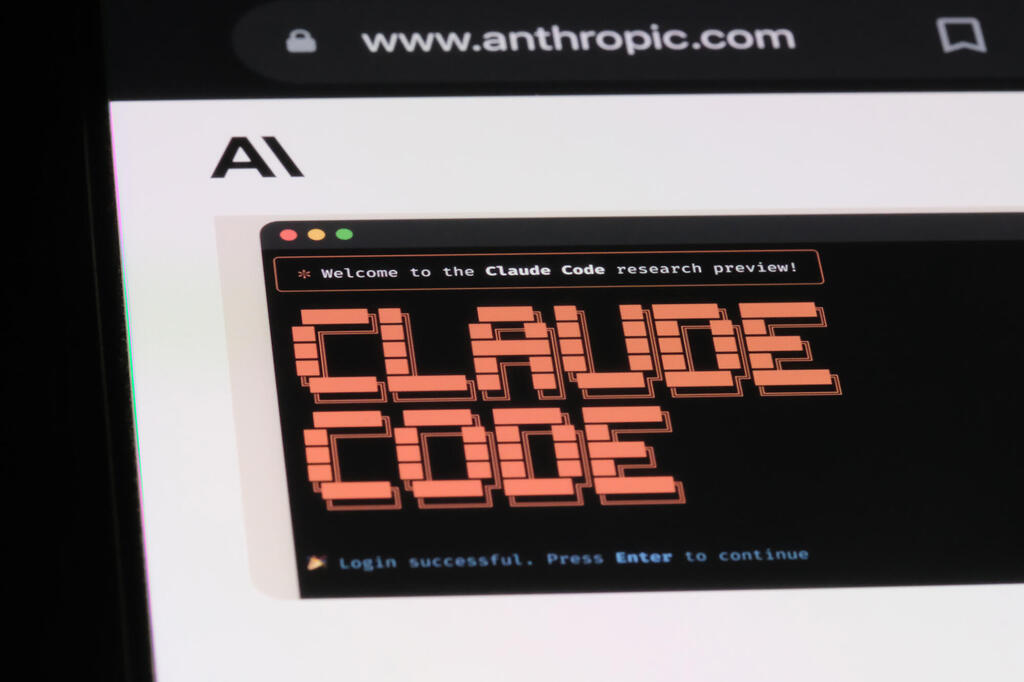
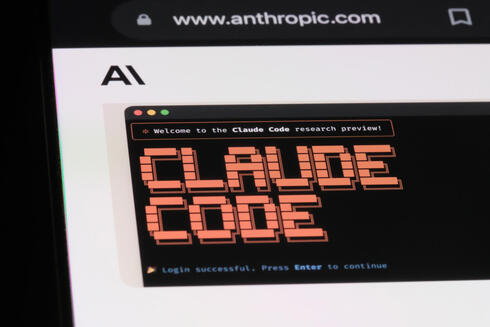
This year’s Super Bowl commercial offers clues about OpenAI’s evolving strategy. While the company continues to invest heavily in competing with Google, it chose to devote millions of dollars in advertising to promote a more specialized segment: AI-assisted coding, often referred to as “vibe coding.” OpenAI’s offering in this space is Codex, a product far less familiar to the general public than its rival that has recently generated significant buzz, Anthropic’s Claude Code.
So what exactly is vibe coding?
The term was coined by computer scientist Andrej Karpathy, one of OpenAI’s founders. It refers to writing software using AI tools. Instead of coding from scratch, users provide natural-language instructions, and the AI generates the desired code.
One of the early pioneers in this market was Microsoft’s GitHub Copilot, a plugin embedded in development environments to assist programmers. It was followed by tools such as Cursor and Replit, AI-powered code editors. More recently, platforms like Lovable and Base44 have enabled even non-developers to describe applications in plain language.
Until recently, however, these tools often fell short of expectations.
Anthropic’s Claude Code was launched in February 2025, but its real breakthrough came in November with the release of the Opus 4.5 model. The new model can analyze large and complex codebases, write and refactor code, solve multi-step problems, interpret natural language instructions and execute sophisticated tasks. Integrated into Claude Code, it functions as an autonomous coding agent capable of handling entire projects directly from a terminal or development environment.
“At first, I wasn’t very impressed with these technologies,” says Alon Oring, a researcher at Irregular and a lecturer at Reichman University. Irregular is a cybersecurity company specializing in AI tools and works with firms such as OpenAI and Anthropic. “I subscribed to various tools, saw the outputs, and frankly wasn’t enthusiastic. But around November-December, we began seeing a dramatic improvement. The models suddenly became much better at writing code.”
According to Oring, that shift explains the surge in interest. “Claude Code has been around for a year, but it didn’t receive this level of hype because the models simply weren’t good enough. Then something changed. A few weeks after Opus 4.5 launched, everyone was talking about it.” Last week, Anthropic released Opus 4.6.
“Now you can rely on Claude Code to deliver correct results in most cases,” Oring says. “If I used to work on one feature at a time, now I can assign 20 tasks simultaneously. It works independently and increases my development capacity.” In his view, this fundamentally changes the profession: “For developers who love building software, the role is shifting. They rarely need to write code manually, they need to supervise, validate and guide.”
Uri Eliabayev, an AI consultant and lecturer, agrees. “There’s no revolutionary new product here, what we’re seeing is technological maturation. For the first time, you can run AI agents that perform complex, multi-step tasks on your computer and actually trust the output.”
OpenAI’s Codex predates ChatGPT’s breakthrough and originally launched as an autocomplete tool within development environments. Its agent-based version was introduced last year, with a significant performance jump following the release of GPT-5.1 in November. Last week, on the same day Anthropic launched its new model, OpenAI unveiled GPT-5.3 specifically for Codex, a move that may signal a renewed strategic focus.
According to Oring, Codex’s capabilities are comparable to Claude Code’s. “They’re very similar overall. Some developers prefer Codex; others prefer Claude. It’s like Apple versus Samsung.” He notes subtle differences: “Codex tends to deliberate longer and produce more detailed answers, while Claude Code often responds more quickly and concisely.”
Oring attributes Claude Code’s rapid adoption partly to Anthropic’s close engagement with its user community. “Anthropic moves fast and listens carefully. Developers can publicly tag the team on social media with feature requests and receive quick responses. That creates strong loyalty and word-of-mouth momentum.”
Google remains a significant player but appears to lag in this niche. It offers two primary products: an AI-powered development environment (comparable to Cursor) and Gemini CLI, Google’s version of an AI coding agent.
According to Eliabayev, “The consensus today is that Anthropic’s and OpenAI’s models are currently stronger for coding tasks. There’s also a product design element, how the experience is packaged.” Oring adds that Gemini still makes more errors and sometimes struggles to interpret user intent. “But knowing Google, it’s likely a temporary gap. They’ll close it.”
Cost may explain OpenAI’s aggressive push into this segment.
Gemini CLI offers a free tier, but access to Claude Code and Codex requires paid subscriptions starting at roughly $20 per month. For serious developers, however, entry-level plans are insufficient. Advanced tiers can cost $200 per month, and heavy users often exceed those limits and switch to token-based pricing. Claude Code tokens, in particular, are considered expensive.
“It can quietly reach thousands of dollars per developer,” Eliabayev notes.
Until recently, organizations primarily relied on GitHub Copilot and Cursor. However, according to Oring, companies are rapidly adopting Claude Code and Codex. “Startups move faster; large enterprises take longer. But developer pressure is real. Companies that fail to adapt risk falling behind.”
Eliabayev predicts that as newer models emerge, older ones will become cheaper. “Not every task requires the most powerful model.”
Anthropic recently completed a funding round that reportedly valued the company at $380 billion. The company disclosed that Claude Code’s annualized revenue has doubled since the beginning of the year to $2.5 billion, alongside a doubling of active users. Business subscriptions have quadrupled, and enterprise customers now account for more than half of revenue.
Looking ahead, Eliabayev believes the market will expand beyond professional developers. Anthropic has already introduced a developer-free AI agent called Cowork, which can perform tasks directly on a user’s computer.
“Companies understand that there’s a much larger market beyond developers,” he says. “Many non-technical professionals want AI agents as everyday work tools. The potential there is enormous. The future lies in defining AI agents around our digital workflows.”



