











AI’s water problem is getting harder to ignore
Data centers consume billions of liters annually, fueling public opposition and forcing companies to rethink cooling systems.
An AI data center is a thirsty facility. How thirsty? According to a UN report published this week, if current trends continue, data centers could consume more drinking water by 2030 than the entire global population. The reason is straightforward: the immense computing power generated by AI data centers produces significant amounts of heat. That heat must be removed to prevent performance degradation or damage to sensitive components, and water remains one of the most effective cooling solutions.
A typical large-scale data center can consume millions of liters of water per day, comparable to the needs of a city of 50,000 residents. As a result, the construction of new facilities can significantly affect the availability and quality of water resources in nearby communities.
The race to build AI infrastructure has only intensified the problem over the past three years, as more communities encounter concerns over water availability. Technology giants are responsible for a growing share of that pressure, raising questions about whether water constraints could eventually slow the pace of data center development. In an amendment to the prospectus filed by Elon Musk’s SpaceX last week, the company warned that water scarcity, water regulations, and drought conditions could limit the pace of future data center construction.
The primary use of water is cooling servers. One common technique involves using potable water to absorb heat before sending it to cooling towers, where roughly 80% evaporates into the atmosphere and the remainder is discharged to wastewater treatment facilities. Increasing water use can help reduce energy consumption, another major challenge facing AI companies, but it comes at a significant environmental cost.
In 2024, a single Google data center in Iowa consumed 4.5 billion liters of water. That same year, researchers at the Lawrence Berkeley National Laboratory estimated that data center water consumption could reach 150 billion liters annually if operators continue relying heavily on water-based cooling systems.
The issue is also shaping public attitudes toward data centers. According to a Gallup survey published in May, 71% of Americans oppose the construction of a data center in their local area, an unusually bipartisan position. Water and energy consumption were cited as the primary reasons for opposition.
The challenge is particularly acute in regions already facing water stress. Ironically, many of these areas are attractive locations for AI infrastructure because of access to energy resources and relatively favorable regulatory environments.
As states and local authorities across the United States consider restrictions on new data center projects, companies are increasingly being forced to address residents’ concerns.
Microsoft's Water-Free Ambition
Microsoft, one of the three major cloud providers alongside Amazon and Google, has begun deploying a cooling technology designed to dramatically reduce water consumption.
The system relies on a closed-loop architecture that reuses the same water continuously. The cooling loop is filled once during construction and circulates cold water through the facility, where it absorbs heat from servers. The water is then routed to a cooling plant, cooled using large fans, and recirculated. The system handles roughly 90% of cooling requirements, while the remaining demand is met through outside air cooling, with fresh water used only as a backup during extreme weather conditions.
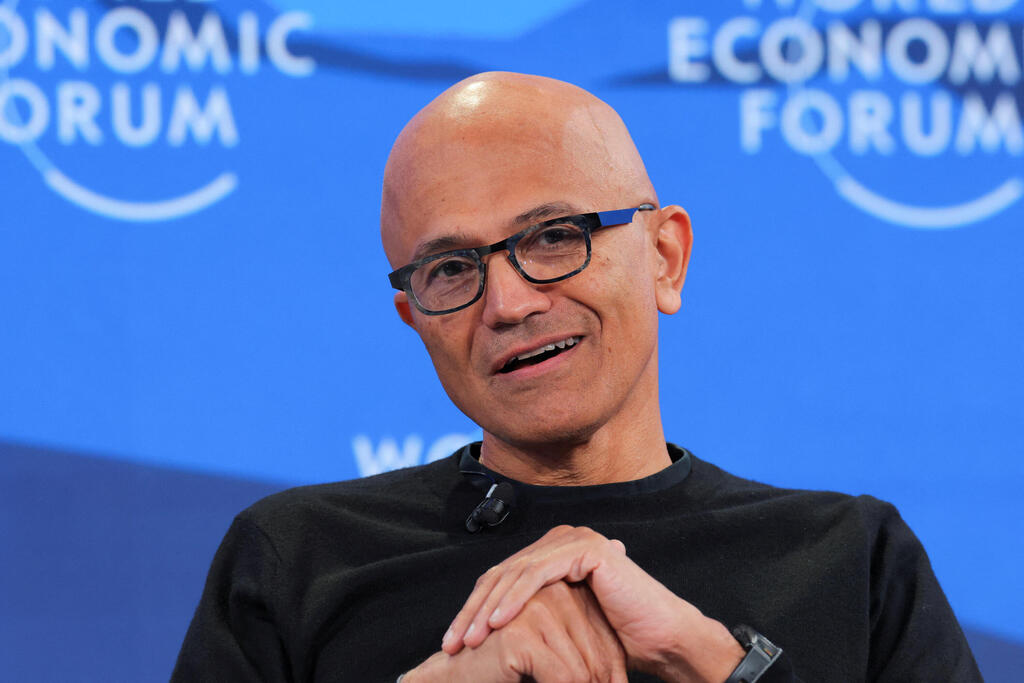
“You fill the cooling loop once, and a data center can operate with zero water consumption,” Microsoft CEO Satya Nadella said at the company’s developer conference last week. “The daily water use for an entire year is roughly equivalent to the use of one restaurant.”
Depending on its size, a restaurant may consume anywhere from hundreds of thousands to several million liters of water annually. Even at the upper end of that range, the savings compared to traditional data center cooling systems are substantial.
For now, the technology has been deployed at only one Microsoft facility in Wisconsin. However, the company says it will become part of its standard design and is already being incorporated into new facilities under construction in the United States.
The challenge is scale. Microsoft operates more than 500 data centers across 80 regions worldwide, most of which still rely on evaporative cooling systems. The company has not announced plans to retrofit its existing facilities. Moreover, closed-loop systems consume significantly more electricity than traditional water-based cooling methods.
OpenAI, Oracle, and Google's Different Approaches
In January, OpenAI pledged to reduce water consumption through closed-loop systems and other low-water technologies, stating that its facilities' water use should represent only a small fraction of total community consumption.
Yet only weeks later, CEO Sam Altman dismissed concerns about AI's water and energy requirements. He described some estimates of ChatGPT’s water consumption as exaggerated and characterized broader concerns as disconnected from reality.
Meanwhile, Oracle has unveiled a more advanced version of the closed-loop approach, cooling chips directly rather than cooling the surrounding air.
“Instead of cooling the air in the room, we remove the heat closer to where it’s created, in the servers themselves,” the company said. Oracle has already begun deploying the technology at facilities in New Mexico, Michigan, Wisconsin, and Texas.
Google has chosen a different strategy. Last week, the company announced five commitments aimed at managing water resources in communities where it operates data centers.
Among them is a pledge to replenish more drinking water than its facilities consume by 2030. Google plans to achieve this through investments in water infrastructure, increased use of air-based cooling in water-stressed regions, greater transparency regarding water consumption, and expanded use of alternative water sources such as treated wastewater.
The company says it currently supports 165 water-related projects worldwide. Last year alone, it claims to have replenished 32 billion liters of water to communities and expects that figure to exceed 86 billion liters annually by 2030.
However, Google has made clear that it will not abandon evaporative cooling entirely.



