









Kara Swisher: “The connection between Donald Trump and the tech elite is an existential threat to humanity”
The veteran tech journalist warns of a dangerous convergence of political power, money, and Silicon Valley influence shaping global decisions. In an exclusive interview with Calcalist, she summarizes what is important to understand about how narcissistic billionaires engage with the public, government, and media, and outlines the dangers we need to prepare for.
Dangerous Money
“The connection between Donald Trump and the tech elite is an existential threat to humanity,” Kara Swisher says without blinking an eye. “This is a homogeneous group of very wealthy people who control everything through money, power, and political connections, alongside a president who operates on a pay-to-play basis. It is not healthy for such an undiverse group to make decisions that affect us all, or for individuals to determine issues that should be decided globally, for example, artificial intelligence and the limits that should be placed on it.
“We all see what happened with social media, where the ship has already sailed. Governments failed to create laws that regulate these platforms, and we ended up with the toxic polarization of today. I do not know of a society in which one group controls everyone else and it ends well. Historically, it always ends badly. And now it is worse. Corruption has always existed, but there has never been such an obvious link between government power and corporate power.”
Explain your concern.
“People with autocratic tendencies, like Benjamin Netanyahu and Trump, don't want other people around them. They want to do whatever they want and then get away with it, which usually leads to corruption and all manner of illegalities. Tech people are like that too. I'm always wary of people who don't think their actions have consequences, and that mindset often comes with wealth and power.
“Everyone around them agrees with them all the time, and that leads to very bad places. It's dangerous. When everything is viewed from a single perspective, it's bad for the public. People receive too much information, but none of it is trustworthy. That is always going to be a serious problem for democracy.”
Why?
“Because money is what motivates them. We saw this in Elon Musk's lawsuit against Sam Altman and Microsoft. (Musk sued his former partners at OpenAI, claiming they violated their commitment to keep the artificial intelligence lab a nonprofit organization; he ultimately lost.)
“Elon has enough money and time to wage these wars, but in the end, everyone involved in that story seemed petty and small. It's a little worrying that this bunch of losers, that's really the only word I can think of, are running companies that are critical to the future of humanity.
“They are the richest people in the world, but they are really unhappy, and that is what stood out to me most in this entire affair. Money matters to them more than anything else.”
And hence the danger?
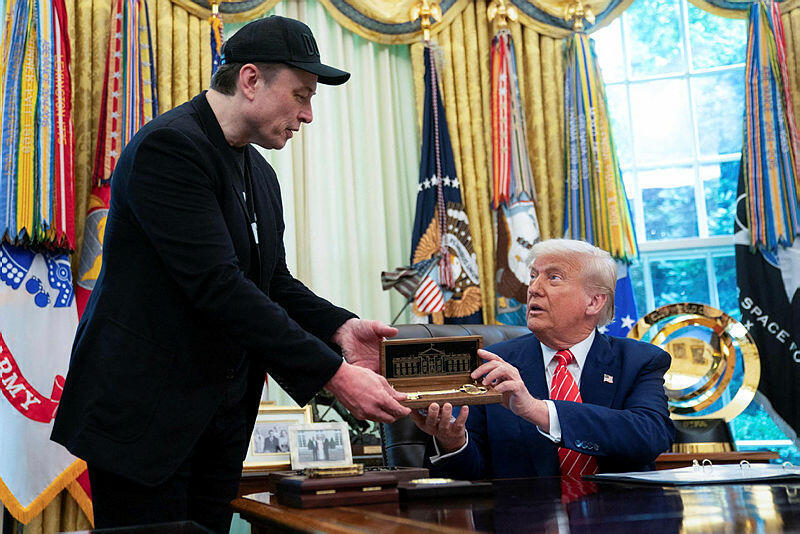
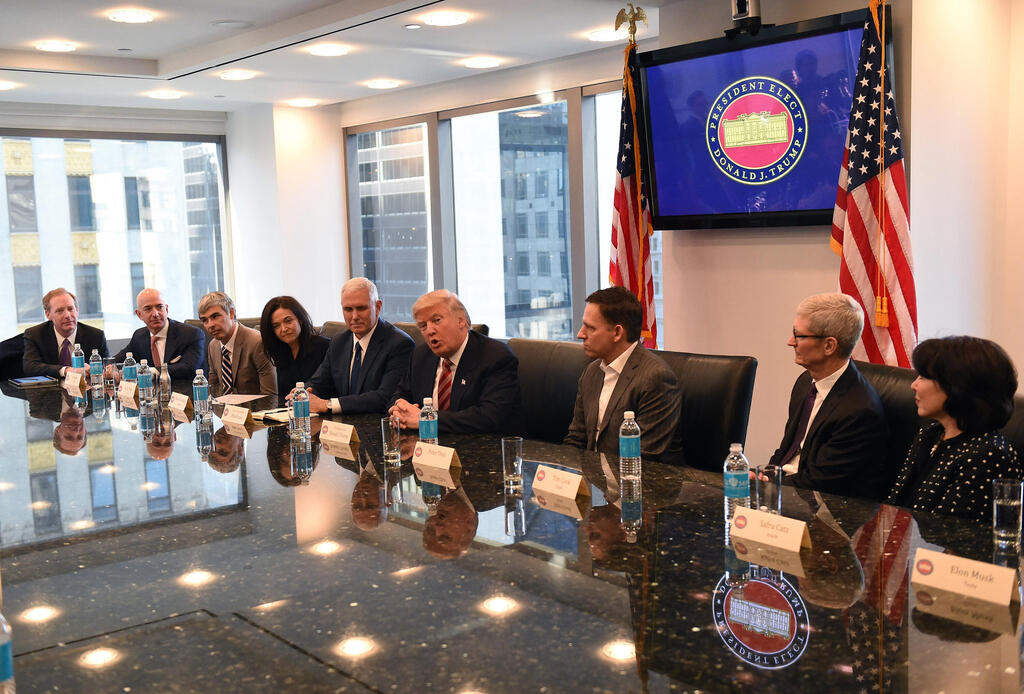
“Yes. I said it during Trump's first term, when Silicon Valley executives attended their first meeting with him. None of them, not even the immigrants among them, spoke out about Trump's immigration statements, which were pretty racist.
“In his current term, they understand much better that Trump is coin-operated, as I call it, you put money in and he does what you want, so they have all jumped in. During his first term, they wanted tax repatriations and other things that now seem relatively minor. This time, they want a share of the sweet defense money Trump is expected to hand out, and no regulations against any of their companies.
“Look at them now, accompanying him to summits, they are a bunch of unctuous toady. They are not here to help you and me. They are here to help themselves and accumulate even more money and power.
“It wouldn't be healthy even if it were a group of liberals, for that matter, but this particular group is especially autocratic and deceptive. In the end, it's all about money. Even in Israel, it seems Netanyahu really loves money, and that's at the heart of the matter.”
Tensions, Values, Frictions
Swisher is one of the world's leading experts on technology and is widely regarded as one of the most influential women in Silicon Valley. At 63, she has built an extensive career as a journalist and author. She is an award-winning writer and a member of the American Academy of Arts and Sciences.
After establishing herself at The Washington Post and The Wall Street Journal, she founded a conference and events business focused on technology executives, built a news website covering the industry, and later sold it in a successful exit. In recent years, she has focused on writing a bestselling book, hosting two successful podcasts, conducting rare and in-depth interviews with industry leaders, and producing a super hyped CNN series that aired last month.
Throughout her work, Swisher has demonstrated a sharp eye, deep industry connections, healthy skepticism, extensive experience, and a sharp tongue. Together, these qualities have enabled her not only to analyze technological and business trends in depth but also to explain their broader social implications, often with remarkable foresight. Time and again, she has anticipated where technology was headed, often more accurately than the people leading the companies themselves.
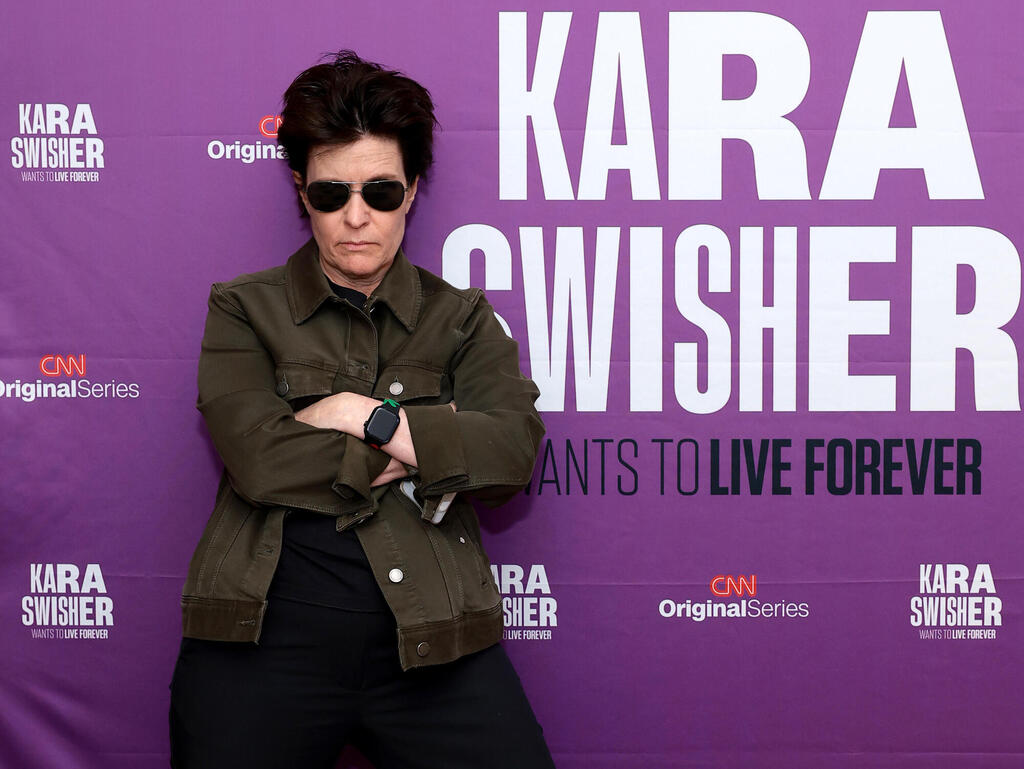
The creators of the television series Silicon Valley even cast her in a guest appearance as herself, complete with the aviator sunglasses she famously wears, even indoors. They later admitted that they knew they had to include her because “she's an icon.”
“People fear her and trust her. It's not a normal combination,” media mogul Barry Diller once said.
And in a lengthy profile published by New York Magazine in 2014, the verdict was clear: “Kara Swisher is the most feared and well-liked journalist in Silicon Valley.”
Swisher's relationships with her subjects are often long-standing and complex. Take Elon Musk, for example. In 2022, he sent her an email containing a single sentence: “You're an asshole,” and shortly after that he blocked her on Twitter. To this day, she says she has no idea what he was angry about, and it does not particularly bother her.
“He's become such a terrible person, with all the anti-LGBT rhetoric and racist views, that I don't really care anymore,” says Swisher, a lesbian who openly advocates for human rights, immigrants, feminism, and other progressive causes, in an exclusive interview with Calcalist. “I don't have time to deal with adult toddlers. I have four children of my own. Let him live his life, and I'll live mine.”
Still, she admits, “I still think he’s brilliant in many ways. He sees around corners on certain things, certainly with Starlink (SpaceX’s satellite internet network). He was also very early to recognize the potential of AI and understand where it was heading. And, of course, he transformed the automotive industry, although he has now damaged some of that momentum with the Tesla Cybertruck.”
This falling-out between Musk and Swisher came after years of direct and open communication, as she has had with many of the tech barons. In her 2024 bestseller, Burn Book: A Tech Love Story, she documents her conversations with several of them in the lead-up to their first meeting with Trump in December 2016.
“There meeting had no stated agenda, which made it clear to me that it had nothing to do with policy and everything to do with a photo op,” she writes. “‘You shouldn’t go,’ I warned him (Musk). ‘Trump’s going to screw you.’ (...) When I brought up Trump's constant divisive fearmongering and campaign promises to unravel progress on issues ranging from immigration to gay rights, Musk dismissed the threats. ‘I can convince him,’ he assured me (...) Apparently, Musk thought that his very presence would turn the fetid water into fine wine, since he had long considered himself more than just a man, but an icon, and, on some days, a god. Good luck with that, I thought to myself as we hung up.”
In Trump's current term, the relationship between Trump and Musk has grown closer, then fractured, and now appears to be warming again. Were you surprised?
“No. I think Elon simply has aims for himself and his companies, and he understands that he needs to keep Trump and his allies in power. He is particularly supportive of J.D. Vance (the vice president and currently the leading Republican candidate for the 2028 presidential election), and he is trying to secure his position so that he can influence the next election as a trillionaire.
“He is a very emotional person, and his dispute with Trump was personal and emotional. But he pulled himself together and decided that his businesses and interests, including his relationship with China and his ambition to get to Mars, align with Trump's agenda. So he swallowed his pride and came back.”
Swisher's relationship with Mark Zuckerberg is also “complex.” And the background is much the same. Swisher's engagement with technology has always been a vehicle for discussing broader issues, feminism (by highlighting gender inequality in the industry), freedom (through a constant examination of the collapse of the democratizing promise of technology and the rise of autocracy), human rights and immigration, LGBTQ rights, and also anti-Semitism, particularly Nazi propaganda, a topic that has occupied her since her student days.
With Zuckerberg, tensions escalated precisely around that issue. In a 2018 interview conducted before a live audience, Zuckerberg said that Holocaust deniers on Facebook “don't necessarily intend to lie.”
“I simply asked him why the platform didn't enforce stronger rules against hate speech when it can have such damaging consequences,” she says. “It worried me enormously. He may be younger than I am, but I find it hard to believe he doesn't understand the significance of spreading all this toxic anti-Semitism.”
Facebook only began enforcing its policies against Holocaust denial two years later. Since then, the broader situation has only deteriorated.
“Artificial intelligence is creating a very ugly reality”, she says. “It's taking the ability to spread propaganda, anti-Semitism, and racism to entirely new levels, as if the damage caused by previous technologies wasn't enough.
“Someone recently told me about Mark: he must have a button on his desk that says, ‘Today we'll do more Trump, tomorrow we'll do something else’, meaning the algorithm will give more exposure to content of Zuckerberg’s choosing. I don't think any one person should have that kind of power, and I don't care who that person is. No single person should have the power to control sentiment the way he does.”
She describes today's social media landscape as the “Wild West.”
“These people are not really interested in free speech. It's a canard. The same goes for the Trump administration, they are interested in quashing speech, or only allowing speech they like. If, for example, you are critical of the war with Iran or of Netanyahu, you're labeled a traitor. And clearly, being critical of Netanyahu does not automatically make someone anti-Semitic.
“The epidemic of anti-Semitism is ongoing, tragic, and heinous, but that still doesn't mean there can't be problems in the other direction as well. You can't look at the suffering of others and refuse to recognize it as suffering. My wife happens to be Jewish, and what is happening in Gaza is upsetting to her as a Jew, but some people would label that anti-Semitism.”
You talked about AI exacerbating anti-Semitism, but that's just one of the dangers inherent in the almost limitless possibilities the technology offers. It's no wonder that politicians in the United States, on both the right and the left, have discussed stronger government oversight of technology. What do you think should be done?
“Not nationalize it. Another council on the subject was recently established (the President’s Council of Advisors on Science and Technology, PCAST), and everyone there is an enthusiastic supporter of the technology. They are all businesspeople. They are all connected to AI companies themselves. There is no critic, no regulator, and generally no one with a substantially different perspective.
“This goes back to the lack of diversity. One of the strengths of this country is its diversity of opinion. In a healthy government, a president should welcome differing viewpoints because that's how good decisions are made.”
So what should be done as technology continues to accelerate?
“We need public-private partnership. It's critically important for governments to work with universities. The cuts to university funding are devastating, partly because all the most valuable opportunities will increasingly be captured by corporations.
“And we need institutions that bring together business leaders, academics, regulators, and people with differing viewpoints so that we can reach compromises. That's often where the best solutions emerge. There always needs to be some friction, some pushback, even if it slows progress, because that's how we arrive at healthier outcomes.”
Let there be no doubt, Swisher loves new platforms for expression and embraces them enthusiastically. She loves to be heard, but she also loves to listen, and she constantly seeks out technological tools and new frameworks that allow her to do both, always with an emphasis on the human element.
“I’m at the tail end of my career, but I’ve never been more relevant, and that’s because of my interest in innovating media,” she says. “I love change, and I love changing. Right now, I’m in a position where I can decide who I work for, and that’s because I’ve made good use of different tools to reshape my career over the years.”
Thus, in 2003, she founded D: All Things Digital, a platform for in-depth conversations and meetings with Silicon Valley executives (under the umbrella of The Wall Street Journal and together with the newspaper’s senior technology columnist at the time, Walter Mossberg). These conferences became one of the newspaper’s most significant profit drivers, generating millions of dollars annually.
In 2014, Swisher and Mossberg founded the independent technology news site Re/code, where they also launched a successful conference business. Just a year and a half later, they sold the company to Vox Media for an estimated $15 million to $20 million, receiving shares in the acquiring company, which today is valued at roughly $600 million.
In other words, Swisher knows not only how to generate attention and buzz, but also how to make journalism financially successful.
In recent years, she has focused on her highly successful podcasts at Vox: Pivot, which covers technology and business (alongside entrepreneur Scott Galloway), and On With Kara Swisher, which explores the intersection of technology, politics, and power.
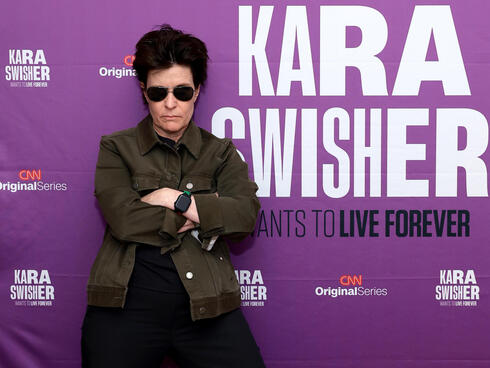
At the same time, she regularly conducts interviews for CNN (just two weeks ago, for example, she interviewed Sam Altman), and this year the network aired her own documentary-style series, Kara Swisher Wants to Live Forever, in which she follows billionaires, biohackers, and other eccentrics who are attempting to extend their lives indefinitely.
Even with these subjects, she maintained her characteristic style: sharp, direct, unsentimental, and willing to take risks. Among other things, she experimented with ketamine, weight-loss drugs, hyperbaric chambers, red-light therapy, VO2 max training equipment, and more.
All of this came up during our Zoom conversation last week, along with a small scoop.
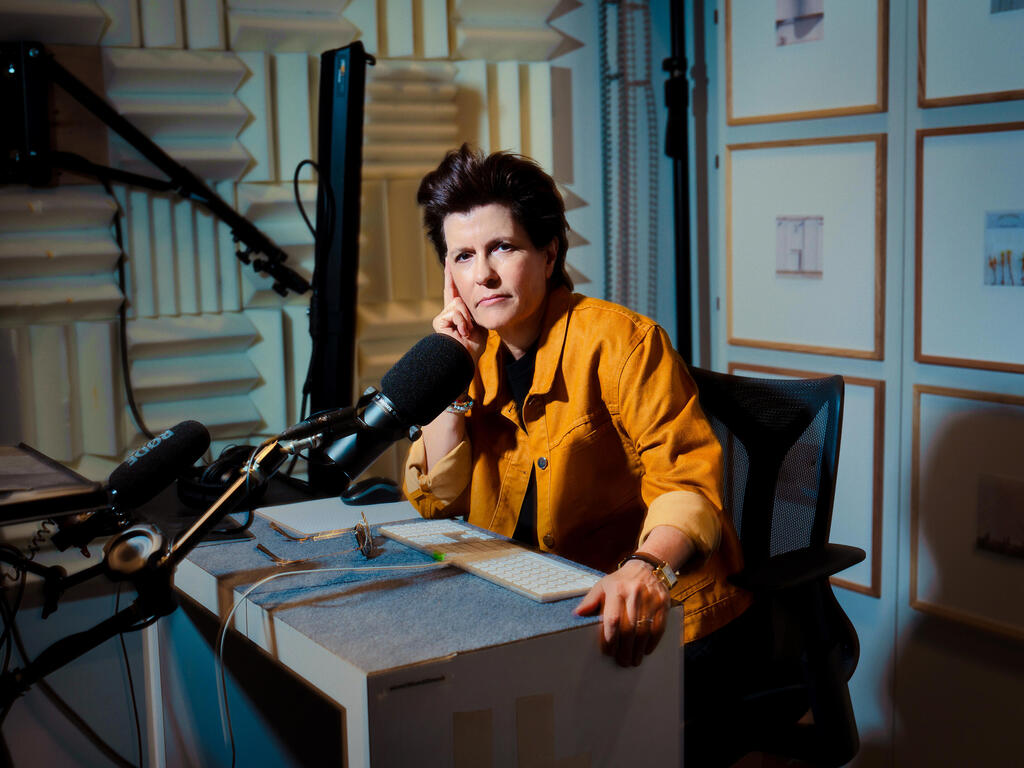
When Swisher logged on, the first thing she said was: “Yeah, what would you like to ask? I am recording a podcast right after this.”
An intimidating opening, but she quickly made up for it with candid answers and a sharp sense of humor.
Then, 34 minutes later, she glanced at a message that popped up on her phone, read it, and said: “CNN really liked my series and might want to renew it for another season.”
The next sentence immediately shifted the conversation from success to the dangers facing the media industry.
“But I don't want to work for the Ellisons, so that's a problem. Sorry, kids. Every day is a new adventure. Sorry, what were you asking?”
Larry and David Ellison, close associates of Trump (and Netanyahu), already own Paramount and are awaiting regulatory approval for additional media ambitions. Jeff Bezos already controls The Washington Post and has significantly reshaped it. This is not the journalism Swisher grew up with.
“I had the privilege of working at The Washington Post when the Graham family owned it, and they were wonderful owners for the most partt. Great owners are the ones who stay out of the way. Hush up, stand in the corner, and only intervene to protect your organization.”
And does the current wave of billionaire ownership worry you?
“Very much. I’m certainly concerned about the Ellisons and all the tech people taking over media platforms.
“Let’s be clear, over the years, many media outlets have had conservative owners, including people whose views I disagreed with. Even now, people tell me about the new owners: ‘You just don’t like their politics.’
“But that’s not the point. They can hold whatever opinions they want. If you own a media organization, however, you have to allow a wide range of views and debates. I’m concerned that the Ellisons won’t do that, and the evidence already suggests that this approach is damaging news organizations.”
If their political views aren't the issue, what is? It sounds like your criticism goes beyond ideology.
“I think they’re incompetent. That’s what bothers me most. And they hire incompetent people.
“Take Bezos. He hired Will Lewis to be publisher and CEO of The Washington Post. He’s incompetent, and I don’t think he was trying to improve the paper.
“The argument that is always used is that newspapers resist change. I say that’s simply not true. It’s nonsense. And to blame reporters for their own mismanagement is really irritating to me..”
The Ellisons already own CBS.
“Yeah, and we’re already seeing these things happen there.
“Everything they do seems stupid to me. And I really dislike stupidity when it comes to media. I have no problem with honest debate on a wide range of issues, that’s healthy. But they’re taking control of the narrative and pretending it’s ‘innovation.’
“Stop pretending. What you’re really doing is promoting one point of view over another, and you’re doing it badly. The data shows it. CBS’s numbers are down. The Washington Post’s numbers are down.
“And not simply because journalism is a declining industry. Some competitors are actually getting stronger. The problem is that the product sucks.”
Now James Murdoch is acquiring a significant stake in Vox, Swisher’s current professional home, but that appears to concern her less.
“I have met with James and his wife, Kathryn, who was also involved in the deal, and I have nothing but positive feelings about them,” she said last week on her podcast with Galloway.
“I have no positive feelings about his father (Rupert Murdoch, the conservative media mogul), and neither does he, which is well documented. We have complete freedom to do whatever we want. We own our podcasts (...) and we’ll keep doing what we want.”
Galloway added: “It is going to sound self absorbant, but it’s true: We could have killed this deal, and we didn’t. We didn’t ask for anything extra, and Jim Bankoff (Vox’s CEO) never once asked me to tone it down.”
One of Swisher’s central themes throughout her career, and especially in her podcasts and television work, has been “showing that the narcissism of the tech bros does not help the broader public; that their actions are not really intended to advance humanity, but to benefit a small group of people.
“Even when OpenAI develops medical applications, it isn’t necessarily doing so out of a desire to help more people.”
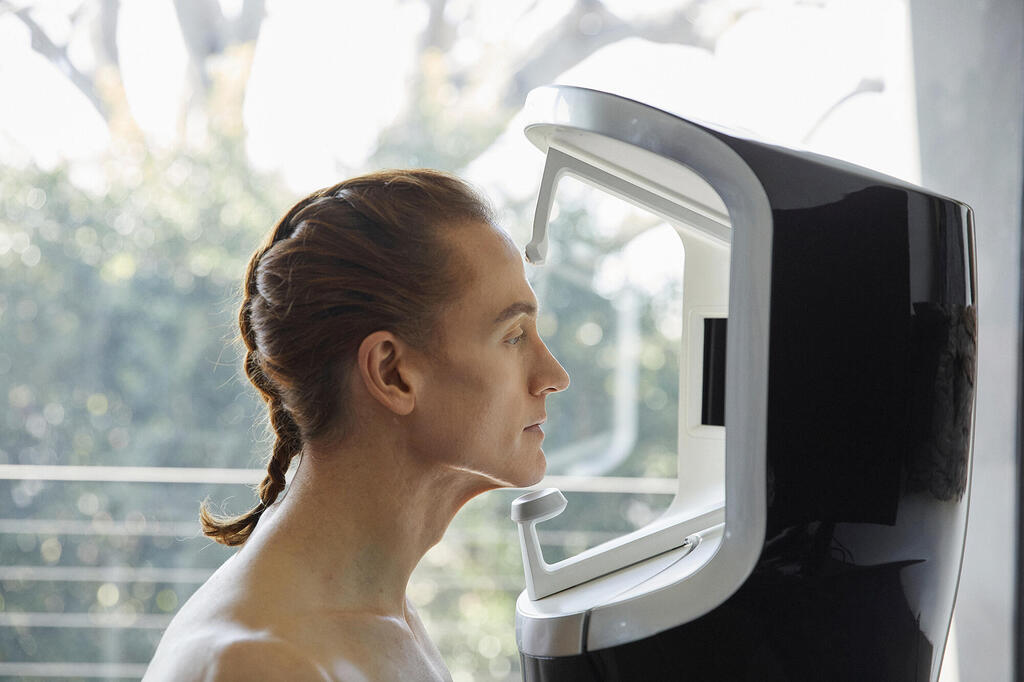
Is that what you were trying to demonstrate in your interview with tech entrepreneur and billionaire Bryan Johnson, whose current mission is to avoid death and who reportedly spends about $2 million a year pursuing that goal?
“I wanted people to hear what he had to say. I challenged him on a lot of things, but not everything he said was nonsense. I mean, olive oil really is good for you.
“But yes, it was important to me to have him speak because he is the personification of what I’m talking about, mentally .
“He thinks he’s helping everyone, but in reality he’s mostly helping himself, and not especially successfully.
“After the episode aired, he wrote to me: ‘I thought it was a fair interview, even if it wasn’t very positive toward me.’
“That was exactly what I was trying to do, challenge him and then allow people to form their own opinions.”
And what is your opinion?
“I think his experiment is ultimately an experiment on a single person.
“So good for him. If he wants to build a business around it, fine.
“But I don’t think he’s helping a broad audience, and I think he could have taken that money and done far more meaningful things for far more people.”
Old People, Step Aside
Swisher was born on Long Island in 1962, and when she was five years old, her father died. In a previous interview, she described the upheaval:
“Just imagine half of your friends dying. When you're 5, your parents are pretty much your whole world. If half of your friends suddenly died, it would be a terrible shock. But it also teaches you the capriciousness of life, that it can turn upside down in an instant, that bad things happen, and that you survive them just fine. Just keep going.”
She has also said that her early encounter with death pushed her to live life to the fullest.
Her father, a physician, had served in the U.S. Navy in his youth, and his daughter initially intended to follow in his footsteps and enlist as well. She wanted to become an intelligence analyst and studied international relations and diplomacy at Georgetown University. However, she soon discovered that the military did not want lesbians, or at least not lesbians who were open about their sexuality. It was the era of the famous “Don't Ask, Don't Tell” policy.
“I wanted them to ask, and I was compelled to tell,” she wrote years later.
When that path closed off, Swisher turned to journalism with the same audacity that would later define her career. She read a sloppy, error-ridden article in The Washington Post, called the newspaper's editor to complain, and the conversation somehow turned into a job interview. Soon afterward, she began writing professionally.
At The Washington Post and later at The Wall Street Journal, she covered the internet and technology industries from their earliest days, examining both their enormous potential and the dangers posed by concentrated power.
In 2011, she won the Gerald Loeb Award, often considered the Pulitzer Prize of business journalism, for her live blogging of a Yahoo earnings call. Over the years, she built a reputation as a reporter who consistently broke major stories. She even dubbed herself “Sherlock Homo.”
Among her scoops: Yahoo’s acquisition of Tumblr, Sheryl Sandberg’s move to Facebook, Satya Nadella’s appointment as CEO of Microsoft, and the revelation that Yahoo CEO Scott Thompson had misrepresented his academic credentials.
Her favorite scoop remains the report that Dara Khosrowshahi would become CEO of Uber, news that became public before Khosrowshahi himself had officially been informed.
Her work made her a central figure in the technology industry. When Vanity Fair published a feature in 2012 about the rise of women in Silicon Valley, Swisher was one of six women prominently featured and appeared in the group photograph alongside technology leaders such as Susan Wojcicki, one of Google's earliest employees, who was then a senior executive at the company and later became CEO of YouTube.
Technology executives view Swisher not only as a source of scoops but sometimes as a confidante, occasionally as an adviser (despite the many job offers she has declined), perhaps a friend, and sometimes a rival. As noted, her relationships with them are long-standing and complex, and they are largely responsible for her unique position in the industry.
Her marriage to Megan Smith also contributed to that status. Smith was a Google vice president and later served as Chief Technology Officer of the United States during Barack Obama's second term.
The two raised two sons together, who are now adults, before separating in 2014.
Their relationship prompted Swisher to recuse herself from coverage of Google and publish a 1,207-word “ethics statement,” which, among other things, detailed the strict separation of their financial affairs and her renunciation of any future claims on Smith's wealth.
“I am the worst gold digger ever,” she once joked.
In 2020, she married for a second time, to journalist Amanda Katz. Together they are raising two young children.
And now, after a career spanning more than four decades, with two successful podcasts and perhaps another television series on the way, Swisher is beginning to think about the end of her professional journey.
“I’ll be retiring in ten years,” she says. “I work very hard, and at some point I want to stop. I want to write, maybe historical novels, or do something else where I can sit by myself, not talk to anyone, and make things up. Maybe I’ll learn to play the banjo, become a teacher, or do something else that contributes to society.”
Why in ten years?
“Because then I’ll be too old, and I think younger people should take over. Today's policy decisions won't really affect me as much anymore, they'll affect my children. So they should be the ones running things.
“Every time I meet an older Democratic politician and he asks me, ‘What do you think we should do if we get back into power?’ I answer: ‘Retire.’
“They laugh and say, ‘you’re so funny.’
“And I say, ‘No, really. You're old. Get out of here. It doesn't really matter to you anymore.’”
Swisher is indeed funny across all the platforms on which she expresses herself, but occasionally her tone becomes less cynical and more sentimental. This tends to happen when she discusses issues that matter deeply to her, including Israel.
For example, she was asked about Elon Musk's recent remark that, when it comes to “innovation per capita,” Israel is the world leader.
“I wouldn't say Israel is number one, but in principle I agree with Elon,” says Swisher. “Israel is one of the world's leading innovation powers, punching well above its weight.
“I love that there are major innovation centers beyond the United States and China. Obviously, part of that has to do with military and security technologies, but you also have a culture that celebrates innovation.
“In all my visits to Israel, I’ve always been impressed by the enthusiasm for technology. And I really do love Israel. It's a wondrous place, an extraordinary crossroads of humanity. You really feel that when you visit.”
She recalls visiting Israel about 15 years ago with her two eldest sons and being particularly moved by visits to the Church of the Holy Sepulchre and the Old City of Jerusalem.
“We met Christians, ultra-Orthodox Jews, and Muslims there, side by side.”
She says she is now planning another visit, this time with her younger children and her Jewish spouse.
“They need to be there. It's part of their heritage. Even if the place is going through a difficult period right now, I want them to visit it. And maybe when they grow up, they'll have ideas about how to make it better.”



