










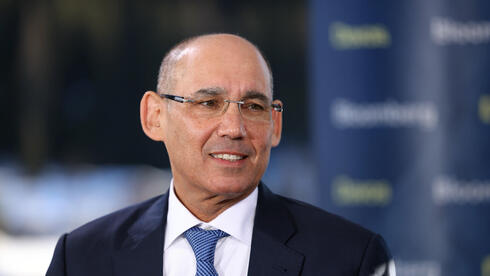
Bank of Israel cuts rates for third straight time as Yaron keeps door open to more easing
With inflation at 1.5% and the shekel remaining strong, the governor says current data justify lower rates even as geopolitical uncertainty persists.
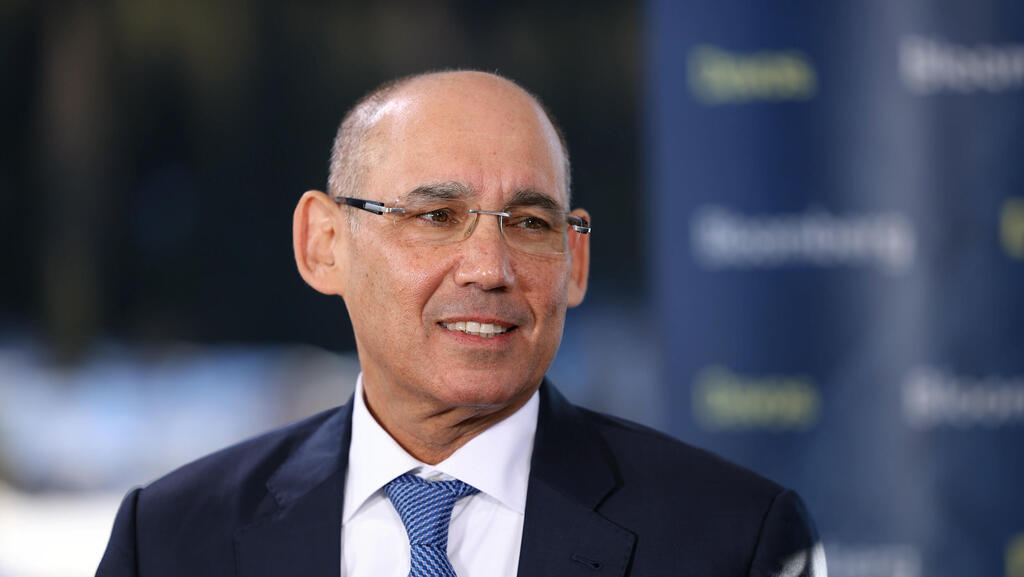
“We will continue to act solely on the data,” Bank of Israel Governor Amir Yaron told Calcalist in an interview following the Monetary Committee’s decision on Tuesday to cut the interest rate by 0.25 percentage points, its third consecutive reduction.
The cut brings the rate to 3.25%, its lowest level since November 2022. The Bank of Israel has now cut rates four times since the beginning of the year, in January, May, July and September. The last time it implemented three consecutive rate cuts was at the end of 2008, at the height of the global financial crisis, when it ultimately delivered five cuts in a row.
In announcing Tuesday’s decision, the Monetary Committee pointed to several factors supporting further monetary easing: moderating inflation; more subdued economic activity when production abroad is excluded; a slight increase in broad unemployment; a decline in Israel’s risk premium to levels seen on the eve of October 7; and a stable exchange rate reflecting a strong shekel.
Taken together, the data suggest that inflationary pressures remain limited and leave room for the Bank of Israel to consider another rate cut.
Households and businesses have welcomed the lower borrowing costs. But with Israel still facing a complicated geopolitical environment and significant fiscal uncertainty, does the decision risk placing too much weight on current economic data at the expense of future risks?
“You are right that there are risks, and we certainly took them into account,” Yaron said. “When I look at the decision, it reflects risk management as usual. There are decisions in which the range is sharply tilted in a certain direction. Today’s decision reflects a look at inflation and economic activity on the one hand, and geopolitical uncertainty on the other.”
So how did the committee decide between those competing considerations?
“You look at inflation of 1.6% in the previous month and 1.5% in the last month. And there is another core index with inflation of 1.5%. Although inflation is expected to rise in the coming months, under a wide range of scenarios, inflation should remain around the center of the target.
“This is the important pillar. The second pillar is economic activity.
“Activity excluding production abroad is more moderate, and the third quarter also shows a moderation in supply and demand constraints. And beyond that, we have the strong shekel, which we estimate has not yet exerted its full effect in moderating inflation.
“So when you put all of this against the geopolitical uncertainty, it was possible to lower the interest rate. Regarding fiscal uncertainty, we must remember that the next budget will be determined by a new government, and we will have it within months of 2027.”
Could it be that the Bank of Israel chose to cut rates now so that it would not have to make a politically sensitive decision to lower rates just four days before the election, when the next rate decision is scheduled?
“We always make decisions solely on the basis of data,” Yaron said. “Given the current inflation of 1.5%, we estimate that even if it rises, it will remain around the center of the target.
“What will happen to the interest rate in the future? Our last forecast put it at 3%, about nine months from now. That forecast reflects one more interest rate cut over the next nine months.
“We will update the forecast at the next decision, based on all the data. We will continue to act solely on the basis of the data.”
Yaron has just returned from the annual central bankers’ conference in Jackson Hole, where U.S. Federal Reserve Governor Kevin Warsh spoke forcefully about his willingness to fight inflation and, by implication, raise interest rates.
“I think that, to a large extent, we were ahead of what was happening in the world,” Yaron said. “While most central banks began to lower interest rates, we held interest rates in the face of a lot of statements against us.
“The fruits of our intelligent policy have brought us to the current situation, a situation in which inflation has been within the target for a considerable period of time and is now at 1.5%.”
Warsh and the Fed are probably on a path toward higher interest rates, Yaron said, but Israel is operating in a different environment.
“We were in a different reality until now. But we see the improvement in inflation. All the factors that I listed mean that we are on a different policy path than them.”
What about Warsh’s intention to change the Fed’s “forward guidance”, in other words, to make the central bank’s future policy signals less explicit and publish fewer forecasts?
“When I joined the Bank, the first thing I did was lead a five-year strategy,” Yaron said. “We examined the inflation target, which is what they are going to do now at the Fed. We also examined the policy of measuring all kinds of things, and it is good that they are doing that.
“Regarding the change in forward guidance, we have been emphasizing for a long time that although we are putting up a flag showing where inflation will be a year ahead, we are still very cautious and emphasize that it is just a flag. It should not be taken as a promise or a commitment.
“We used to give the predicted interest rate for a few months ahead, and now we give it a year ahead. In this sense, the structure of our forecast is consistent with what Warsh is talking about.
“The intention is to let the market figure it out on its own, rather than make immediate decisions that lock you into the future.”



