









HR The Next Leap
Navina: “The industry is moving past the phase where ‘resilience’ worked as an answer to everything”
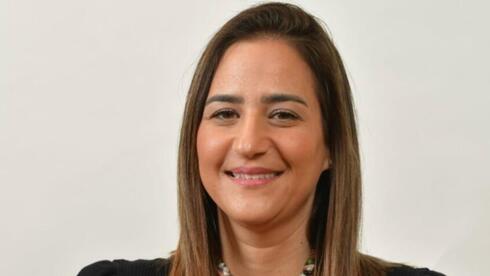
Shany Tenzer-Kessel, Chief People Officer at Navina, explains why top-tier candidates are harder to move than ever and the reality of long-term recovery following a crisis situation in Startup Nation, as part of CTech's HR: The Next Leap series.
“The industry is now moving past the phase where ‘resilience’ worked as an answer to everything; people have carried too much for too long,” says Shany Tenzer-Kessel, Chief People Officer at Israeli healthtech startup Navina. The company creates AI-based patient profiles for primary care and, at the height of the Iran escalation, had roughly 10-20% of its local team on active reserve duty. “What we've leaned into at Navina is the set of things that actually compound,” Tenzer-Kessel continues. “Meaningful work-from-home days, an increase to the Sibus benefit, and recharge days that don't compete with vacation balance because asking exhausted people to use their PTO to recover from a national emergency is tone-deaf.”
From active and looming war threats, to AI rapidly and constantly redefining what it means to be productive, running a company in Startup Nation brings with it its own category of challenges and rewards. HR: The Next Leap takes a glimpse into the heart of Startup Nation via the HR professionals shaping its culture. We survey the executives whose jobs are more demanding and more vital than ever, as they heed the future-proofing of their workforce, while simultaneously ensuring business continuity and employee wellbeing during relentlessly unprecedented times.
Examining the effect of AI on the workforce, particularly concerning entry-level hiring, Tenzer-Kessel believes that “the industry is making a strategic mistake by treating early-career talent as obsolete.”She adds: “Cutting juniors entirely creates a talent gap that's hard to close later. Where we do hire in early-career, the expectation is AI as a default tool from day one. That's not a softer bar. It's a different one.”
You can read the entire interview below.
Company Name: Navina
Sector: HealthTech
Founders: Ronen Lavi and Shay Perera
Year of Founding: 2018
Investment stage: Series C
Total investment to date: $100 million
Investors: Goldman Sachs Alternatives, Vertex Ventures Israel, Grove Ventures, ALIVE Israel HealthTech Fund, and Schusterman Family Investments.
Current number of employees: 230
Open positions: 40
Website: https://www.navina.ai/
Social Media: LinkedIn, Instagram
As of March 2026, the market officially shifted into an 'employer's market'. How have your screening criteria changed, and do candidates - including senior-level ones - still hold any leverage in negotiating salaries and terms?
There are two markets right now, and the headlines mostly cover one of them. Hiring volumes are flat to down, layoffs in Israel and abroad keep landing even at the most successful global companies, and yes, our screening is sharper. But the candidates we're actually competing for aren't on the market looking for us; they are passive talent, and that's exactly why they are so hard to capture.
We're weighted heavily toward senior hiring right now, because AI has shifted what early-career work even looks like, and the bar for every role has moved up accordingly. The candidates who clear that bar, strong AI fluency, real ownership, and deep experience, are a small group, employed and earning well, who have watched enough rounds of layoffs to stop assuming any company is permanently stable. That paradoxically makes them harder to move, not easier. So we compete on what actually matters: scope, impact, ownership, and conviction in what we're building.
How have/are you managing operational continuity and recruitment while the economy navigates the emergency state triggered by the conflict with Iran? With the threat of escalation looming at any moment, how are you and have you been handling everything from interviews interrupted by sirens to managing teams thinned by massive, ongoing reserve duty?
At the peak of the Iran escalation, roughly 10-20% of our Israeli team was on active reserve duty. You don't manage that with a continuity plan. You manage it with a team that's already decided to manage it together.
What got us through, first and foremost, was the Israeli team. The resilience, commitment, and accountability our people demonstrated through reserve duty, sirens, and genuine uncertainty about what tomorrow would bring are something you can't fully understand unless you've watched it up close. Reservists worked from wherever they could. Teammates absorbed critical-path work without being asked. People showed up for each other before they showed up for themselves. Our US team had their backs, too, picking up customer-facing work and absorbing time-zone load. But the heaviest weight, by far, was carried here.
The harder part isn't the acute event. It's what comes after when reservists return, the team that covered them is depleted, and the bill comes due in slow motion. People were burnt out, exhausted, running on fumes long after the headlines had moved on. And honestly, recovery is the part we haven't fully cracked yet, not us, not the industry. Planning for disruption is the easier problem. Planning for what comes weeks later, when people are running on empty, and there's no clean moment to "reset," is the one we're all still figuring out.
Beyond the role of empowering employees, which roles has AI eliminated over the past year, what percentage of your workforce was reskilled to avoid being phased out, and how has this impacted entry-level hiring?
I'd resist the framing that AI "eliminates roles" on a clean timeline. What we're seeing at Navina is that AI reshapes tasks, and the cumulative effect changes how roles work over time. The reskilling-percentage framing assumes a tidy before-and-after that doesn't match how this actually unfolds inside companies.
What we've done at Navina is build the infrastructure for an organization that becomes more AI-native on purpose: a dedicated AI task force, new positions to build agents and own adoption, a real budget for tools, licenses distributed well beyond R&D, and AI-adoption KPIs that managers are accountable to. The harder reality is that the pace of continuous learning isn't an aspiration anymore. It's a baseline expectation at every level.
On entry-level hiring: I think the industry is making a strategic mistake by treating early-career talent as obsolete. Cutting juniors entirely creates a talent gap that's hard to close later. Where we do hire in early-career, the expectation is AI as a default tool from day one. That's not a softer bar. It's a different one.
Against the backdrop of the unstable security and political climate, are you seeing an increase in relocation requests or 'quiet quitting' by top-tier talent moving abroad, and what is the most proactive step you are taking to retain them in Israel?
Yes, we see relocation conversations. But I want to separate the two things. The public conversation tends to collapse into one. Some employees are exploring options because of the security situation. Others are exploring options for career reasons. Those are two different conversations, and the retention strategy for each is different.
Our most concrete move has been equity refreshes and targeted retention grants for the people we cannot afford to lose, not a blanket policy or based on tenure, but based on criticality. If we're asking someone to stay through a hard period, we should be willing to put real upside on the table.
But equity alone doesn't keep anyone. What keeps people is meaningful work, real ownership, and the sense that what they're building actually matters.
In an era where stability has replaced flashy perks, how are you addressing the deep mental burnout of employees torn between the professional and security fronts, and what is the most critical benefit you offer today in place of the bonuses that have vanished?
I'd reframe the question. Bonuses haven't "vanished," they were never what held people together over the last two years. Flexibility and trust were. The industry is now moving past the phase where "resilience" worked as an answer to everything; people have carried too much for too long.
What we've leaned into at Navina is the set of things that actually compound: meaningful work-from-home days, an increase to the Sibus benefit, and recharge days that don't compete with vacation balance because asking exhausted people to use their PTO to recover from a national emergency is tone-deaf.
But the most important benefit isn't on a benefits page. It's the culture of paying close attention to how people are actually doing and being willing to reduce someone's load in real time, not just forward a wellness email. The companies that figure this out will hold their teams. The ones still relying on perks as a coping strategy won't.



