










Bank of Israel halts rate cuts as political and currency risks cloud outlook
The central bank held its benchmark rate at 3.25% after three consecutive cuts, despite easing inflation. Its new forecast projects strong headline growth, but much of it is expected to come from production abroad rather than activity within Israel.
The Bank of Israel’s Monetary Committee decided on Wednesday to leave the benchmark interest rate unchanged at 3.25%, ending a run of three consecutive cuts. The prime lending rate, which affects many loans and some mortgages, remains at 4.75%.
The decision follows four rate cuts since the beginning of the year, which brought the benchmark rate down from 4.25% to its current level. Although inflation has eased, uncertainty over the geopolitical outlook, the shekel and global financial conditions has made the central bank cautious about further reductions.
Alongside its rate decision, the Bank of Israel released an updated economic forecast projecting that the economy will grow by 5.6% in 2026 and 7.5% in 2027. However, much of that growth is expected to come from production abroad by Israeli companies, particularly multinational businesses with foreign ownership. The Bank therefore also assesses growth excluding this activity, which it considers a better measure of domestic economic performance.
1 View gallery

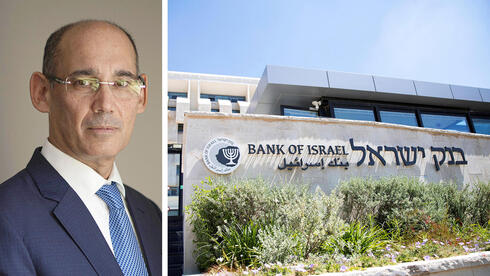
Bank of Israel headquarters in Jerusalem, alongside Governor Amir Yaron.
(Reuters/Ronen Zvulu, Yuval Chen)
By that measure, GDP is forecast to grow by 3.4% in 2026 and 5.1% in 2027. Overseas production, which accounted for nearly 6% of GDP in the second quarter, is expected to contribute 2.2 percentage points to headline growth this year and 2.4 percentage points next year.
The distinction matters because much of the income generated by this overseas production flows to foreign shareholders and does not directly translate into higher wages or household income in Israel. The Bank argues that excluding it provides a clearer picture of the domestic economy’s productive capacity and underlying conditions.
On inflation, the Research Department forecasts a rate of 2% over the four quarters ending in the third quarter of 2027, within the Bank’s 1% to 3% target range. The forecast for inflation at the end of 2026 has been revised down to 1.5%, partly reflecting recent inflation data, changes to the outlook for several components of the Consumer Price Index and a reduction in the excise tax.
Inflation is expected to rise to 2.1% by the end of 2027, driven by higher oil prices, a weaker shekel, the planned reinstatement of the excise tax and the fading impact of earlier low readings. The Bank forecasts an average benchmark interest rate of 3% in the third quarter of 2027, suggesting that it expects rates to edge lower over the coming year.
The fiscal outlook remains challenging. The Bank projects a government budget deficit of 4.4% of GDP in 2026, rising to 4.6% in 2027. The debt-to-GDP ratio is forecast to reach 68% by the end of this year before declining to 66.5% by the end of 2027.
The forecast is based on the assumption that the intensity of the conflict will remain relatively low. It does not account for possible economic effects of the upcoming election. The Bank warns that a renewed escalation of the war, a worsening confrontation with Iran or a debt crisis in the eurozone could undermine its projections.
It also identifies domestic political risks following the election, including an inconclusive result, deepening social divisions and potential threats to the independence of institutions. The Bank cautions that the outlook remains highly uncertain, particularly given the possibility of further changes in security spending and other fiscal decisions.
The decision comes after the Bank surprised markets in early September by cutting rates when many analysts had expected them to remain unchanged. In an interview with Calcalist, Governor Amir Yaron rejected speculation that the September cut was timed to avoid a decision immediately before the election, saying, “We will make all decisions based on the data.”
The latest inflation figures could, in isolation, have supported another cut. Israel’s Consumer Price Index fell by 0.5% in September, largely due to seasonal declines in airfares and tourism prices, while annual inflation remained within the Bank’s target range. The Bank’s latest announcement put annual inflation at 1.6%.
However, other factors argue for caution. Rising U.S. Treasury yields and higher global interest rates complicate the outlook for Israeli monetary policy. A rate cut could also put additional downward pressure on the shekel at a time when the currency has already weakened against the dollar since the previous rate decision.