










Israel’s arms exports reach record $19.2 billion despite global boycotts
Government-to-government deals and wartime demand drove 30% surge in 2025.
Despite negative sentiment worldwide, including boycotts and protests against defense companies and attempts to exclude them from international arms exhibitions, Israeli defense exports reached an all-time record in 2025, totaling $19.2 billion. This represents a 30% increase compared to the previous record in 2024, when exports amounted to $14.8 billion.
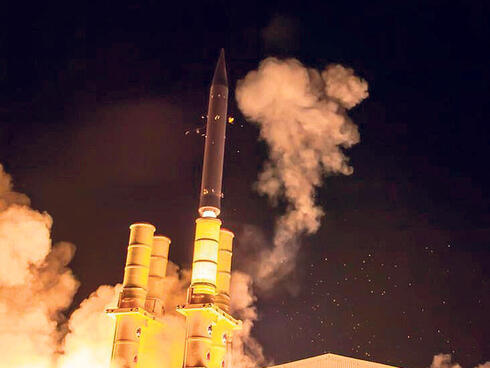
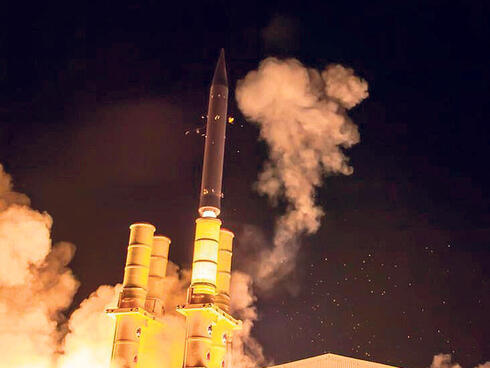
According to data from SIBAT - International Defense Cooperation, at the Ministry of Defense, approximately $10 billion, about half of total exports, came from government-to-government (GTG) deals. These agreements are characterized by short timelines, minimal bureaucracy, and arrangements in which defense companies act as subcontractors. In recent years, major sales of the Arrow 3 air defense system were structured in this format between the German and Israeli defense ministries, with Israel Aerospace Industries serving as a subcontractor.
About 85% of all Israeli arms deals in 2025 were conducted by the three largest defense companies: Israel Aerospace Industries (IAI), Rafael, and Elbit Systems. Over the past two weeks, the companies published their first-quarter financial reports, revealing a combined order backlog of approximately $90 billion.
Israeli weapons systems exported globally are primarily concentrated in air defense, rockets, and missile systems, which accounted for 29% of total sales. They were followed by surveillance and optronics systems (22%), unmanned aerial vehicles (11%), radars and electronic warfare systems (11%), ICT and communications systems (7%), and smaller shares across armored vehicles, armaments, intelligence and cyber systems, satellites and space technologies, and naval platforms.
In 2025, 53% of all defense deals were classified as “mega deals,” each exceeding $100 million. Europe was the largest destination for Israeli defense exports, accounting for 36% of total sales, driven largely by increased defense spending following Russia’s invasion of Ukraine in 2022. The Asia-Pacific region accounted for 32%. Exports to Abraham Accords countries, including Morocco, the United Arab Emirates, Bahrain, and Sudan, continued to grow, representing 15% of total exports.
According to the head of SIBAT, Yair Koles, “Many countries around the world have increased their defense budgets and are seeking Israeli solutions at the technological frontier. The defense industry has demonstrated a unique ability to supply the IDF during an ongoing military campaign while simultaneously expanding export markets globally.”
Defense Ministry Director General Amir Baram attributed the surge in exports to regulatory easing implemented as part of a broad reform of defense export controls. “The comprehensive reform we implemented last year to reduce regulation and open new markets led to major deals,” he said. He added that the increase in government-to-government agreements is also part of the reform, alongside expanded strategic partnerships with several countries.
The global arms market has surged since 2022 to levels previously considered unattainable, fueled by the war between Russia and Ukraine, which has driven European militaries into large-scale rearmament not seen since the Cold War. Ongoing conflicts in the Middle East, as well as rising tensions among major powers ahead of a potential conflict in the South China Sea, are further increasing global demand for advanced combat systems.
Security officials noted that the operational use of Israeli weapons systems by the IDF during the war following October 7 has also served as an “implicit marketing tool” for manufacturers, as foreign militaries increasingly prefer systems that have been tested in real combat conditions.



