









Mind the Tech NY
How Qumra's annual startup list became a springboard for raising $70 million
Itamar Friedman, CEO of Qodo, told Calcalist's New York 2026 conference how being included in the list of “Tomorrow’s Growth Companies” led to a tenfold increase in revenue, a doubling of the workforce, and clients like Box and Red Hat, and finally a Series B led by the fund itself. Qumra revealed the 2026 list in New York: 11 companies that proved themselves even in the shadow of war
Qumra's Tomorrow’s Growth Companies
(Qumra, Tomeriko, Full Focus)


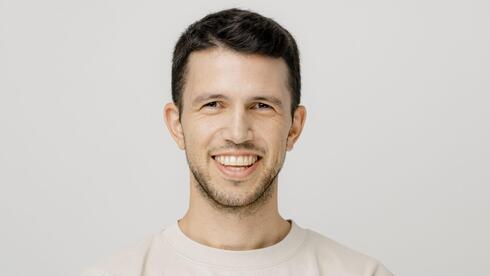
"In the end, when we started raising money, we built a lot of mutual respect, and it was not for nothing that Qumra led our last round of funding for $70 million. For me, this is a closing of the circle, after only last year Qodo was selected as one of the companies on the fund's annual list," says Itamar Friedman, CEO of Qodo, at Calcalist's New York 2026 conference. According to him, this is also proof that Qumra Capital's “Tomorrow’s Growth Companies” list has become one of the most significant markers in the Israeli technology ecosystem over the years.
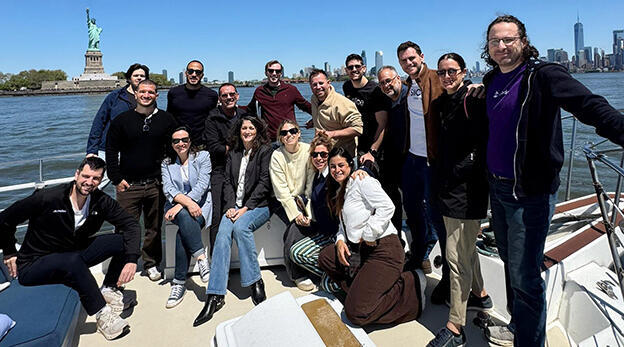
For seven years, Qumra Capital has been publishing the annual list of "Tomorrow’s Growth Companies," which identifies Israeli startups in advanced growth stages - the most promising. Over the years, the fund has built a community of about 70 leading technology companies, and it has become an indicator for identifying the companies that are expected to define the next chapter of the industry. This week, the new 2026 list was unveiled in New York at as part of the Calcalist and Leumi New York conference events. The following day, a special morning meeting was held on the Hudson River, bringing together the CEOs of the selected companies, the Qumra team, and other guests for a professional discussion on the state of the ecosystem, the challenges, and the opportunities.
According to Erez Shachar, managing partner at Qumra, compiling the list is a lengthy and meticulous process: "We start the process almost six months before the list is published, and on the way there we see hundreds of companies, ask tough questions and take our time. Accuracy is important to us."
The fund's team examines financial data in depth, holds meetings with founders, and talks to clients and investors in order to locate companies with solid business fundamentals and a product that solves a real and growing market. Beyond the numbers, Shachar emphasizes, the investment is first and foremost in people: "The founders we believe in are those who carry ambition and tenacity in equal measure, and who understand that building a company is a marathon."
The timing of this year’s list is particularly significant. The Israeli tech ecosystem is operating under pressure: navigating war, economic stress, global uncertainty. The 2026 list includes eleven companies of exceptional quality, which is a statement in itself, according to Qumra.
"These founders didn't stop," said Sharon Barzik Cohen, partner and CFO at Qumra Capital. "They built, they recruited employees, they released products. The companies on this year's list are not only promising, they are proven. They showed what they were made of under conditions that would have stopped others."
One of the most tangible examples of the value the list creates is what happened to Qodo, a company included in the 2025 list. Friedman, the company’s founder, talks about a tenfold jump in revenue in the past year, an increase in staff from 50 to 120 employees, the addition of leading American customers such as Box and Red Hat, and finally a $70 million Series B led by Qumra itself.
“Qumra’s event last year showed me that some kind of romance had begun,” he said, describing a fund that reaches a level of deep understanding of the field, the company’s positioning, and how it can help even before any deal is signed.
As someone who has already gone through the process, Friedman offers three pieces of advice to CEOs who made the list this year: First, he says, extreme focus is important: reduce the list of goals to seven main objectives and cut everything beyond that. Second, direct most of the time outward: customers, market, influencers, "and anyone who can open doors." And third, for Israeli entrepreneurs who feel stuck in Israel, he suggests physically going out: "Simply go to New York, to conferences, to acceleration programs. Open new avenues in the American market."
These are the 11 companies selected for this year's list, most of which rely on AI and cover a wide range of fields:
Alta - AI agent platform for automating the sales value chain
Dig - Real-time video analysis on social networks for brand reputation management
Groundcover - Remote cloud performance monitoring, without extracting information from client servers
Lumana - AI video security system that turns every camera into a smart agent
Matia - DataOps platform for centralizing organizational data in preparation for AI adoption
Notch - Autonomous AI agents for managing workflows in regulated industries (banking, insurance)
Orchid Security - Securing organizational identities through application synchronization with IAM tools
Remepy - "hybrid drugs" that combine traditional drug therapy with digital clinical protocols
Slice - Automatic and global management of capital and shares (Cap Table) in accordance with tax regulations
Twofold - AI layer for legacy medical systems, Operational efficiency without infrastructure replacement
QuantHealth - AI simulations of clinical trials to shorten drug development times
Watch the presentations of all the startups on the list in the video above.



