











Debunking the myths of the brain drain and the "employer's market"
CTech's "HR: The Next Leap" survey consulted 31 Israeli offices across the high-tech landscape, from entrepreneurs to VCs, to map the most salient trends affecting Startup Nation today. Here, we break down the defining characteristics of the new talent economy.
"We have not seen a brain drain as a result of the situation," said Adi Ickovic, VP HR at Payoneer. "If anything, we have experienced the opposite."
Indeed, fears of a brain drain in Startup Nation are proving to be more of a myth than a reality. At least, that is according to the latest iteration of our “HR In” series, HR: The Next Leap. Apart from debunking the narrative of a mass talent exodus, our respondents delineated the state of the new talent economy through a number of common characteristics. They revealed how top-tier talent is exempt from the recent swing to an "employer's market," even if bidding wars have subsided, and detailed to what extent AI is hindering the screening process.

Conducted between May and June 2026, we surveyed a new round of executives whose roles are more demanding and vital than ever. From active war threats to AI rapidly redefining what it means to be productive, running a high-tech company in Israel comes with its own caliber of challenges and rewards. During these relentlessly unprecedented times, the country’s people professionals have been tasked with future-proofing their workforce while simultaneously ensuring business continuity against extraordinary circumstances.
HR: The Next Leap gives us a glimpse into the heart of this local tech ecosystem through the professionals actively shaping its culture. Through their responses, we gauged the most salient trends defining the current Startup Nation workplace. Here, we’re diving into the key characteristics of the new talent economy.
The truth about the dreaded "brain drain"
From the survey responses, it appears concerns surrounding a mass exodus of top talent from Israel as a result of its rolling state of emergency have not materialized. While there has been an increase in conversations around relocation, HR leaders report that employees are mostly testing their options as a comfort mechanism, while others note these moves are driven by personal lifestyle choices agnostic of the security situation. In fact, 58% (18 out of 31 companies) specifically refuted the "brain drain" or relocation trend.
“Relocation requests are up, we won't pretend otherwise. But we think the narrative of mass exodus is somewhat overstated,” said Noa Mindlin and Anna Nuriel, Co-VPs of HR at BioCatch. “What we're mostly seeing is people stress-testing their options. They want to know the door exists, not necessarily that they'll walk through it.”
What is just as noteworthy is that many of these leaders conversely report employees displaying a hardened resolve to stay, fueled by a sense of commitment to the country.

"The prevailing trend is not one of departure, but rather a strengthening desire to remain in Israel," said Lee Winstock, Head of HR at ImageSat International (ISI). "We see growing commitment, loyalty, and motivation to contribute to the local economy and society... Ultimately, people stay where they feel connected professionally, personally, and in terms of values."
"Many core employees and top talents look at the startups they are working in as an essential training ground for their own future ventures," explained Gye Cohen, Director of Operations at YL Ventures. "For them, being physically present in Israel, embedded in the local ecosystem, and absorbing every aspect of the company’s evolution, far beyond R&D work, is critical to their own professional roadmap."

Some companies, like Lightricks, even experienced what Noa Rosenberg Segalovitz, VP of HR and General Counsel, described as a “counter-trend”. Said Rosenberg Segalovitz: “We have had a number of talented individuals who had moved abroad choosing to return to Israel. Essentially, we are not experiencing a talent exodus."
The "employer’s market" doesn't apply to A-players
As of March this year, the labor market appeared to swing in favor of employers. However, 87% (27 out of 31 companies) of respondents explicitly stated that significant negotiation leverage and choice are still maintained by senior talent. HR executives agreed the labor market doesn’t tend to fit cleanly into binary categories, as exceptional candidates will always hold onto their bargaining chips.
“It was never really a candidate's market or an employer's market. It's always been an A-player market,” said Limor Kidron, VP of HR at Bright Data. "Truly remarkable, excellent people, across almost any profession, will always find demand.”
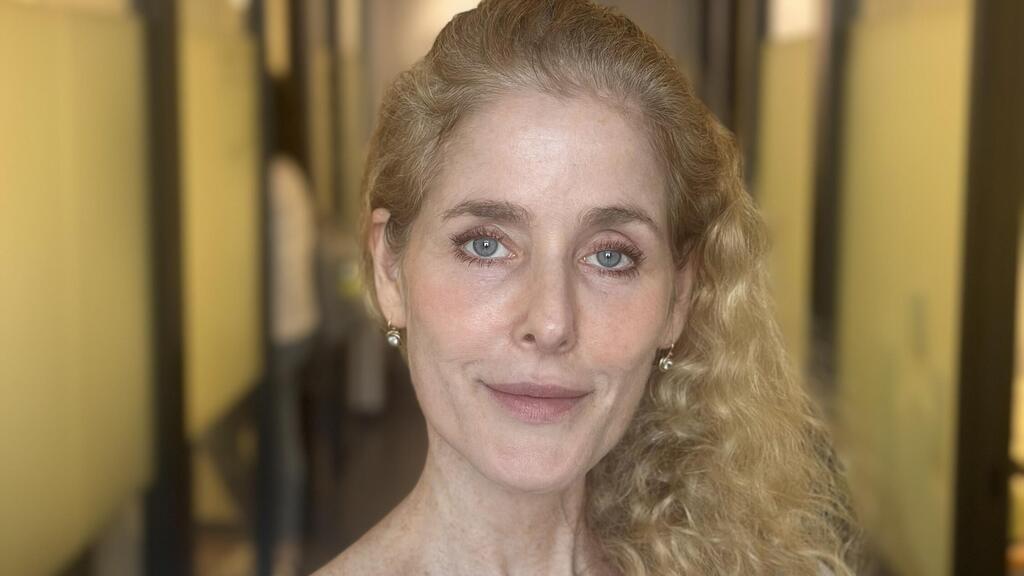
"The market has always been about talent. I've seen this through wars, financial crises, everything," noted Nurit Shiber, Chief People Officer at Axonius. "The candidates who know how to articulate what they've actually accomplished, what they've moved the needle on, they're the ones with leverage. That's been true for twenty years, and it will stay true."
Still, while the pursuit of such A-grade talent remains highly competitive, the days of pay battles are cooling, in what some have described as a market correction.
“A year ago, we would lose a great candidate because we took one extra day to decide. That's mostly gone," admitted Yaeli Alev, the HR Director at Oasis Security. “We have more strong candidates than open roles right now, which means we can take our time and be more careful about who we bring in.”

“But leverage isn't dead, it's just different now. Senior people, the ones who've actually built and shipped real things, still negotiate well. They should. What's changed is the expectations. We've stopped getting into bidding wars. We've kept paying fairly for the people we actually want.”
Some respondents described how current economic conditions mean founders are under more pressure than ever to extract maximum value from every new addition to their team. “The bar for talent hasn't dropped at all, and securing the best people still requires a highly competitive and collaborative negotiation,” said Gye Cohen, Director of Operations at YL Ventures. “Today, that pressure is even higher due to local economic shifts which drive founders to seek maximum capital efficiency.”
AI-generated resumes are complicating recruitment
Thanks to the AI revolution, recruiters are inundated with perfectly polished submissions. Much to the chagrin of many of these professionals, this has come at the cost of being able to truthfully approximate the fit of potential candidates. Ultimately, AI has only made these early screening stages significantly more difficult.
In fact, 10% (3 out of 31 companies) specifically highlighted how generative AI is breaking this process thanks to homogenous, AI generated applications assets that ultimately reveal very little about the actual person.
"What has changed is the volume. We are receiving significantly more applications per role than before," observed Mindlin and Nuriel. "But more CVs do not automatically mean more suitable candidates. One trend we are noticing is that AI tools are making it easier for candidates to tailor their applications. While that sounds helpful, in practice it creates a wave of CVs that often look very similar to one another, making it harder to identify the candidate’s authentic voice and what truly sets them apart."
"When candidates use LLMs to craft a flawless, but unrealistic version of themselves, it puts recruiters in an impossible position during those earliest screening stages before any real human interaction occurs," said Cohen. "Distinguishing what's genuine from what's generated is incredibly difficult. While experienced HR professionals know exactly how to look past the algorithmic polish and cut through the noise, the sheer volume of AI-inflated applications has naturally bred greater skepticism and selectivity."

As a result, recruiters are jumping off the page and relying more on conversation to assess a candidate's true aptitudes. "AI changed the recruiting landscape completely. Everyone now has a polished CV, perfectly written answers, and optimized LinkedIn profiles. Ironically, that makes authenticity much more valuable," shared Vik Rozenshtrom, Head of People at Echo.
" We spend less time evaluating how candidates present themselves, and more time understanding how they think. We’ve become much more conversation-driven in our hiring process. We care about depth, judgment, curiosity, and ownership, not just whether someone knows how to interview well."



