










Heat, war and Trump's threats push Iran toward an electricity crisis
Power shortages are already forcing blackouts and industrial restrictions, while damage to infrastructure and the risk of further strikes threaten to deepen the country's economic challenges.
Iran is entering the most critical weeks of summer as its electricity system comes under mounting strain from three converging pressures: an intense heat wave, a structural shortfall of thousands of megawatts between electricity generation and demand, and damage to infrastructure sustained during the recent war.
Power outages have already begun in Tehran, manufacturers are reporting electricity restrictions two days a week, and the national electricity company is warning of exceptional demand on the grid. Adding to the pressure is a direct U.S. threat. President Donald Trump recently declared that unless Iran returns to negotiations with Washington, its power plants and bridges could become targets of U.S. military strikes in the coming days.
1 View gallery
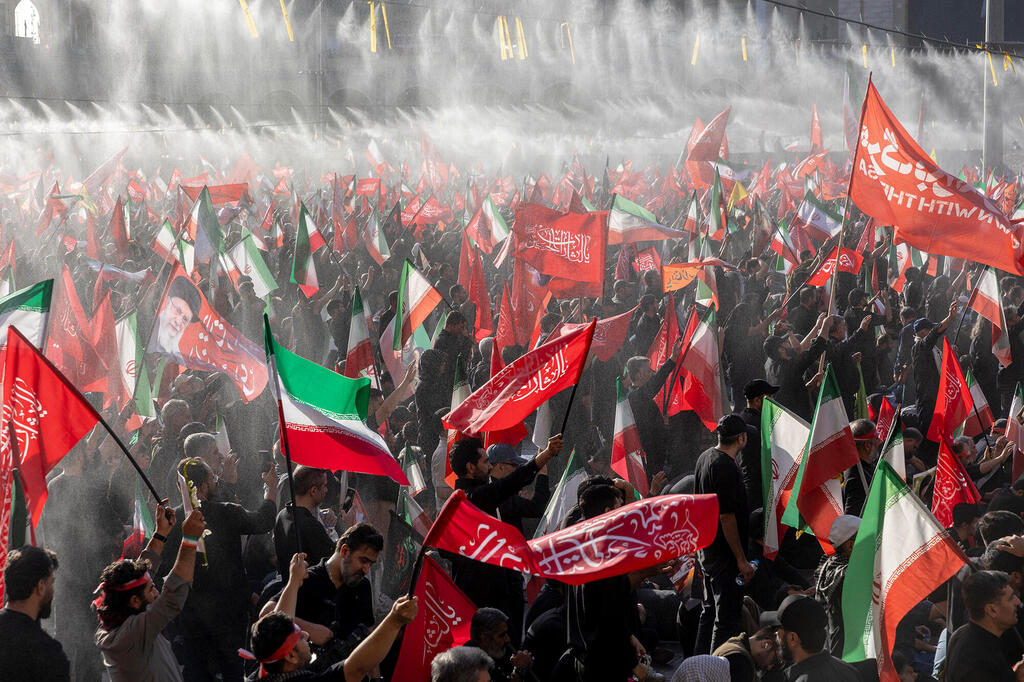
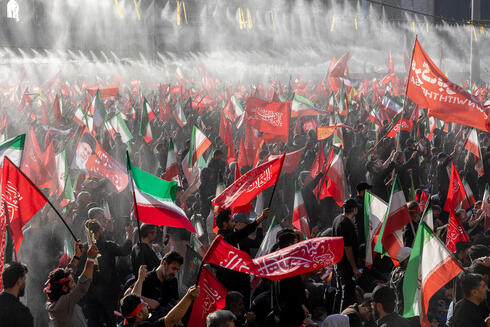
A spray system cools the crowd at Ayatollah Ali Khamenei's funeral in Tehran
(Majid Saeedi/ Getty Images)
According to Iranian media reports, the Tehran Electricity Distribution Company began implementing scheduled power restrictions in the capital last Wednesday, citing soaring temperatures and rising electricity consumption. Residents were instructed to consult the utility's website and hotlines to determine outage schedules in their neighborhoods.
At the same time, the Tehran Electricity Company issued a public denial of unofficial blackout schedules circulating online, highlighting growing public anxiety and uncertainty over the scope of the outages.
The crisis extends well beyond the capital. The Fars News Agency reported power outages in surrounding cities, in some cases without advance warning. Officials attributed the disruptions either to "technical malfunctions" or to planned load-management measures.
The significance of the report lies in its source. Fars is closely aligned with Iran's conservative establishment, suggesting that even pro-government media are finding it difficult to portray the electricity crisis as an isolated issue or dismiss it as foreign propaganda.
Official figures illustrate the scale of the challenge.
Ardeshir Mozquori, CEO of Iran's Grid Management Company, described the period between July 6 and August 6 as the electricity sector's most critical month. On July 7 alone, electricity demand jumped by 3,500 megawatts, reaching 70,400 MW. Between July 14 and July 18, average temperatures climbed to around 41°C (106°F), pushing demand above 75,500 MW.
Iran's electricity grid is already operating close to its maximum capacity.
According to an analysis by the Iranian Parliament Research Center, the country's peak summer electricity deficit is expected to reach approximately 13,640 MW. The report estimates available generating capacity at around 68,420 MW, while peak demand could exceed 81,000 MW.
Although this year's projected shortfall is roughly 1,100 MW smaller than last year's, the imbalance remains large enough to require demand management, scheduled blackouts and restrictions on major industrial consumers.
The challenge becomes even greater after sunset.
Part of Iran's strategy to narrow the supply gap relies on expanding solar generation. But while solar power eases pressure during daylight hours, generation falls sharply in the evening just as air-conditioning demand remains high.
Iranian officials have therefore warned of "the continued danger of nighttime power outages."
Such outages affect far more than households. Continuous-production factories, refrigeration systems, food and pharmaceutical storage facilities, and water infrastructure all depend on uninterrupted electricity supplies.
Industry is already paying a significant price.
The ISNA news agency reported that many industrial facilities are now facing electricity restrictions two days each week.
Arman Khalqi, Secretary-General of Iran's Chamber of Industry, Mines and Commerce, said electricity rationing has expanded and, as in 2025, may increasingly extend into the evening and overnight hours.
At the same time, the Mehr news agency quoted a senior electricity official as saying that electricity supplied to industry has increased by 13% compared with the same period last year.
Taken together, the figures suggest Iran is attempting to prioritize industrial users while still lacking sufficient capacity to avoid widespread restrictions.
The government itself has also been forced to conserve electricity.
Government ministries and public institutions in Tehran have been ordered to reduce electricity consumption by at least 30% during working hours and by 70% after offices close.
Meanwhile, Tavanir, Iran's state electricity company, announced that a campaign to combat illegal electricity consumption had removed 118 MW of unauthorized load from the grid, saving more than 19 million kilowatt-hours of electricity.
The figure is relatively modest compared with Iran's overall electricity deficit, but officials presented it as a significant achievement, an indication of how urgently the authorities are searching for every available source of demand reduction.
Adding to Iran's structural electricity shortage is the damage caused by the recent conflict.
Mohammad Allah-Dad, CEO of Tavanir, said military strikes reduced available generating capacity by approximately 4,200 MW and damaged more than 2,000 electricity infrastructure sites.
Those losses fundamentally change the risk profile.
A structural shortfall of 13,640 MW already requires planned load management. Removing another 4,200 MW of capacity because of war transforms a chronic imbalance into an acute operational crisis.
The damage reportedly includes transmission lines, substations, transformers and control systems, assets that are difficult to repair quickly under sanctions, foreign currency shortages and continuing security pressures.
The broader U.S. pressure campaign further complicates Iran's ability to stabilize its electricity system.
Unlike countries that rely heavily on imported fuel, Iran generates around 85% of its electricity using natural gas, according to the U.S. Energy Information Administration.
That means sanctions do not directly threaten fuel supplies for power generation. Instead, their impact is indirect but substantial.
Reduced oil exports limit foreign currency earnings, making it harder to purchase spare parts, finance maintenance, secure shipping and insurance, and repair damaged infrastructure.
When electricity supply is already falling thousands of megawatts short of demand, even relatively small maintenance delays can translate directly into additional blackouts.
Trump added another layer of uncertainty last week when he warned that "next week" power plants and bridges could become targets if Iran failed to reach an agreement with Washington.
From the U.S. perspective, the threat is intended to increase pressure on Tehran.
For Iran, however, it represents a direct threat to critical civilian infrastructure at a time when the electricity system is already strained by extreme heat, wartime damage and mandatory industrial rationing.
An attack on major generating facilities could push the country beyond scheduled outages into a full-scale electricity crisis, forcing authorities to determine which industries continue operating and which are forced offline.
The risks extend well beyond the power sector.
Electricity shortages disrupt water pumping, food production, refrigeration, mining, steel manufacturing, petrochemicals and urban transportation.
Industrial disruption reduces government revenues, raises production costs, fuels inflationary pressures and further limits Tehran's ability to finance repairs.
As sanctions constrain foreign exchange earnings, maintenance becomes more difficult. As maintenance is delayed, outages become more frequent. Breaking that cycle may become one of Iran's biggest economic challenges this summer.
The expected power cuts are therefore more than a temporary consequence of extreme weather. They reflect a deeper structural crisis marked by chronic electricity shortages, war-damaged infrastructure, industrial production losses, government-imposed conservation measures and sanctions that complicate recovery efforts.
If Trump's threat to target power plants is ultimately carried out, Iran could shift from managing electricity shortages to confronting a partial paralysis of its economy at the height of the summer.



