











HR The Next Leap
Viber: “Many tech companies used 2025 as a year for ‘efficiency layoffs’”
Michal Perry, SVP HR at Rakuten Viber, discusses why the company rejected efficiency layoffs amid the AI revolution, and how it supports its largest global hub in Israel throughout the fluctuating state of crisis, as part of CTech’s HR: The Next Leap series.
“While many tech companies used 2025 as a year for 'efficiency layoffs' and AI-driven displacement, Viber continues to grow,” says Michal Perry, SVP HR at Rakuten Viber, noting that the cross-platform messaging app company closed 2025 with a 30% increase in headcount. Further, regarding the current state of the employer-leaning job market, Perry believes that “top-tier talent and senior-level candidates still hold significant bargaining power,” warning that as a general recruitment ethos, “‘winning’ a negotiation by lowballing a candidate only leads to poor retention and diminished trust.”
From active and looming war threats, to AI rapidly and constantly redefining what it means to be productive, running a company in Startup Nation brings with it its own category of challenges and rewards. HR: The Next Leap takes a glimpse into the heart of Startup Nation via the HR professionals shaping its culture. We survey the executives whose jobs are more demanding and more vital than ever, as they heed the future-proofing of their workforce, while simultaneously ensuring business continuity and employee wellbeing during relentlessly unprecedented times.
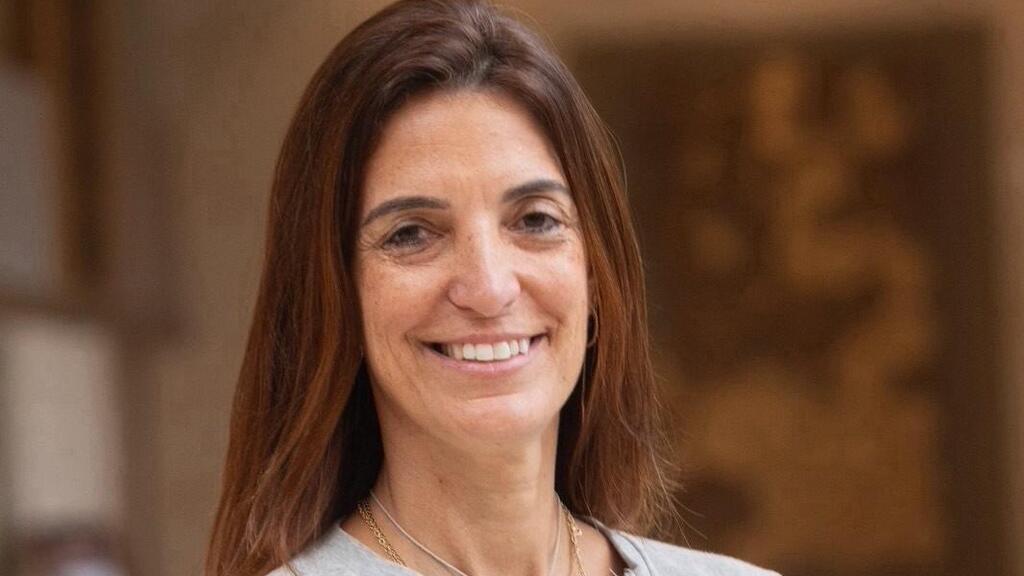
While Viber was acquired in 2014 by Japanese tech giant Rakuten, and subsequently relocated its headquarters to Cyprus, the Israeli-founded company still maintains a local presence, out of which a significant portion of its Research and Development (R&D) efforts are carried out. “While Viber is a global tech company… The Israeli office remains our largest hub with over 200 employees,” says Perry. Amid the trying on-and-off state of emergency that has categorized the past few years, Perry comments: “Our people are choosing to stay in Israel despite the challenges.”
You can read the entire interview below.
Company Name: Rakuten Viber
Sector: Tech, Communication app
Founders: Talmon Marco and Igor Magazinnik
Year of Founding: 2010
Investment stage: Acquired by the Japanese Rakuten Group in 2014 for $900M
Current number of employees: 600
Website: https://www.viber.com/en/
Social Media: LinkedIn
In March 2026, as the market has officially shifted into an 'employer's market,' how have your screening criteria changed, and do candidates - including senior-level ones - still hold any leverage in negotiating salaries and terms?
Despite the shift toward an "employer's market" in March 2026, our philosophy remains rooted in long-term partnership rather than short-term opportunism. We refuse to exploit the current economic climate; our screening process remains respectful, concise, and candidate-friendly.
While the macro-leverage may have shifted, top-tier talent and senior-level candidates still hold significant bargaining power. For us, compensation is based on the value a professional brings to the table, not the desperation of the market. We continue to offer competitive salaries and flexible terms because we believe that "winning" a negotiation by lowballing a candidate only leads to poor retention and diminished trust.
How have/are you managing operational continuity and recruitment while the economy navigates the emergency state triggered by the conflict with Iran? With the threat of escalation looming at any moment, how are you and have you been handling everything from interviews interrupted by sirens to managing teams thinned by massive, ongoing reserve duty?
We have prioritized our people’s safety and well-being above all else during the state of emergency. When the Home Front Command authorized a return to offices, we made physical attendance entirely voluntary, recognizing the danger of commuting during sirens and the lack of childcare frameworks.
Our team is highly proficient in remote work, allowing us to maintain operational continuity and conduct recruitment with maximum sensitivity, pausing interviews for alerts and supporting those on reserve duty without pressure.
Our focus remains on flexibility and empathy, ensuring everyone stays safe while we continue to deliver results.
Beyond the role of empowering employees, which roles has AI eliminated over the past year, what percentage of your workforce was reskilled to avoid being phased out, and how has this impacted entry-level hiring?
While many tech companies used 2025 as a year for "efficiency layoffs" and AI-driven displacement, Viber continues to grow. We closed 2025 with a 30% increase in headcount, reaching nearly 600 employees.
Rather than eliminating roles, we focused on augmentation: 100% of our team is being trained in AI literacy, with deep reskilling to transition from routine tasks to high-level strategy.
Against the backdrop of the unstable security and political climate, are you seeing an increase in relocation requests or 'quiet quitting' by top-tier talent moving abroad, and what is the most proactive step you are taking to retain them in Israel?
We aren't seeing an increase in relocation requests or "quiet quitting". Our people are choosing to stay in Israel despite the challenges. While Viber is a global tech company with other sites in London, Warsaw, Minsk, Tbilisi, Sofia, Manila etc., our Israeli office remains our largest hub with over 200 employees.
Our most proactive retention tool has been providing unwavering stability and flexibility. During the war with Iran, we made the conscious choice to stand by our employees by refusing to place anyone on unpaid leave (Halat), ensuring financial security. In addition, we fully embraced remote work, allowing our team to work from home to avoid dangerous commutes and stay near protected spaces with their families.
By prioritizing their physical and financial safety over office presence, we have built a deep-rooted trust that keeps our top talent committed to the company and to Israel.
In an era where stability has replaced flashy perks, how are you addressing the deep mental burnout of employees torn between the professional and security fronts, and what is the most critical benefit you offer today in place of the bonuses that have vanished?
To address deep mental burnout, we have replaced flashy perks with a commitment to genuine recovery. Both during the initial conflict in June 2025 and again following the ceasefire in April 2026, we proactively closed our Tel Aviv office for collective "recharge days." These are fully paid days off for the entire company simultaneously, ensuring no one feels the pressure to "catch up" while others are working.
This gift of time to breathe without guilt has proven far more valuable than traditional bonuses. To further ease the daily burden, we provide food delivery vouchers to our employees and those serving in the reserves, helping to lighten the load at home during these intense times. By seeing our team as humans first and providing these tangible moments of rest and support, we are building the long-term resilience necessary to navigate this era.



