










HR The Next Leap
Payoneer: “Burnout isn't resolved by any single benefit”
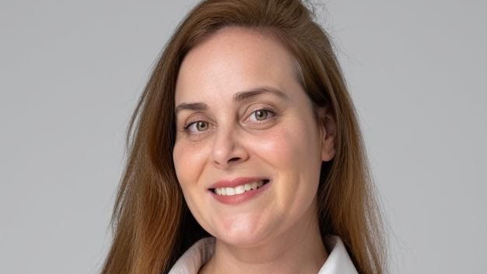
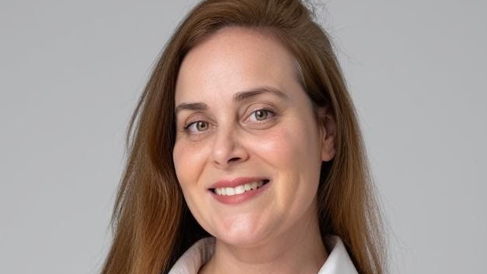
Adi Ickovic, VP HR at Payoneer, explains what it takes to provide employees with genuine stability amid regional turmoil, and how the global payment platform is upskilling its teams for an AI-first future, as part of CTech’s HR: The Next Leap series.
“Burnout isn't resolved by any single benefit,” says Adi Ickovic, VP HR at Payoneer, an Israeli fintech company that provides cross-border payment solutions for small and medium-sized businesses. “It's addressed through a comprehensive, coherent retention strategy, one that combines professional development, a strong employee experience, and a genuine sense of meaning and impact.”
From active and looming war threats, to AI rapidly and constantly redefining what it means to be productive, running a company in Startup Nation brings with it its own category of challenges and rewards. HR: The Next Leap takes a glimpse into the heart of Startup Nation via the HR professionals shaping its culture. We survey the executives whose jobs are more demanding and more vital than ever, as they heed the future-proofing of their workforce, while simultaneously ensuring business continuity and employee wellbeing during relentlessly unprecedented times.
Despite the security turmoil across Startup Nation over the past few years, which has sparked fears of talent jumping ship, Ickovic maintains that at Payoneer, “we have not seen a brain drain as a result of the situation. If anything, we have experienced the opposite.” She adds that “employees have genuinely valued the support and flexibility we extended, and many see the workplace as an anchor of stability during a deeply uncertain time.”
You can read the entire interview below.
Company Name: Payoneer
Sector: FinTech
Founders: Yuval Tal
Year of Founding: 2005
Investment stage: Payoneer debuted as a publicly traded company on NASDAQ on June 28, 2021
Current number of employees: ~2500
Website: https://www.payoneer.com/
Social Media: LinkedIn
As of March 2026, the market officially shifted into an 'employer's market'. How have your screening criteria changed, and do candidates - including senior-level ones - still hold any leverage in negotiating salaries and terms?
Our focus (and this isn't just a reflection of current market conditions) is on recruiting strong, highly professional talent who can create meaningful impact for the organization, integrate well into our culture, and demonstrate adaptability and resilience in a dynamic, constantly evolving environment.
We also place significant weight on AI literacy and an AI-first mindset. We care about how people approach these tools – whether they are curious, whether they reach for them naturally, and whether they think about driving better outcomes through augmentation. We are rolling out company-wide AI training and seeing bottom-up adoption across engineering, product, compliance, and customer success. The candidates who thrive are the ones who lean into that.
Strong talent knows its own value. That's exactly the kind of person we want at Payoneer. The offers we extend are competitive and calibrated to reflect the contribution and impact we expect.
How have/are you managing operational continuity and recruitment while the economy navigates the emergency state triggered by the conflict with Iran? With the threat of escalation looming at any moment, how are you and have you been handling everything from interviews interrupted by sirens to managing teams thinned by massive, ongoing reserve duty?
We have been operating in a highly complex security reality and have been navigating conditions that require resilience, composure, responsibility, and a genuine sense of mutual support – at home, in our communities, and in the workplace.
We recognize that the situation has affected every person differently. Some have children at home as schools were shut. Others lack access to a nearby protected space. Many are carrying a significant emotional burden on top of their day-to-day responsibilities. In response, we enabled broad flexibility and equipped managers with the tools and training to support their teams accordingly: easing workloads, reprioritizing tasks, and leading with sensitivity.
We also opened our new state-of-the-art office space in Glilot during the conflict. This was a strategic investment in building the teams and environment that drive our innovation and AI-first approach – a signal that Payoneer's center of gravity in Israel isn't going anywhere.
On the recruitment side, the first weeks were difficult for everyone, managers and candidates alike, and interview volume dropped, which was entirely understandable. Once it was clear the situation would be ongoing, most interviews resumed in a standard format, with flexibility and accommodations where necessary. We continued conducting virtual interviews and made it clear to candidates that if an interview was interrupted by a siren, they would always get another opportunity.
Beyond the role of empowering employees, which roles has AI eliminated over the past year, what percentage of your workforce was reskilled to avoid being phased out, and how has this impacted entry-level hiring?
AI is reshaping how work gets done, and for us the lens is augmentation, enabling our teams to do more and operate more effectively. We continuously assess roles and required skills across the organization; while investing in learning, upskilling, and reskilling so our people can adapt quickly and continue to deliver impact.
As part of that journey, we are embedding AI across key processes and functions – from tech and product to sales, operations, and corporate teams – building toward operating as a genuinely AI-native organization. That also means rethinking how we develop our people. We are actively revamping our employee training programs to build stronger AI fluency across the board - equipping teams not just to use AI tools, but to integrate them effectively into how they work day-to-day.
On entry-level hiring: our approach is straightforward. We hire people with the skills to drive Payoneer toward its targets and who reflect how we work. If that's an entry-level candidate, they're relevant to Payoneer.
Against the backdrop of the unstable security and political climate, are you seeing an increase in relocation requests or 'quiet quitting' by top-tier talent moving abroad, and what is the most proactive step you are taking to retain them in Israel?
We have not seen a brain drain as a result of the situation. If anything, we have experienced the opposite. Employees have genuinely valued the support and flexibility we extended, and many see the workplace as an anchor of stability during a deeply uncertain time.
Throughout this period, we took a wide range of concrete actions to support employees and their families: psychological support services, activities for employees' children, employer-funded time off, an increased Cibus allowance, a "host home" initiative for employees without access to protected spaces, funding hotel accommodations for those who needed them, and sending care packages to employees serving in reserve duty, their partners, and the broader employee population.
Our offices stayed open, but attendance was entirely optional. Employees felt the care and sensitivity we showed and during a period as complex as this, that has only deepened the sense of mutual commitment between people and the organization. Our move to the new office spaces in Glilot was also an integral part of our retention strategy, generating real excitement among employees and giving them a space that reflects how we think about work: collaborative, flexible, and built for the long term.
In an era where stability has replaced flashy perks, how are you addressing the deep mental burnout of employees torn between the professional and security fronts, and what is the most critical benefit you offer today in place of the bonuses that have vanished?
The current period has been genuinely demanding. Employees are managing professional workloads alongside ongoing security pressures – a combination that can produce real emotional strain and, in some cases, burnout. Our aim is to always act proactively to mitigate these issues, but our response starts with managerial presence and active listening, supported by flexibility and honest reprioritization of what matters most right now. We recognize that sustained, uninterrupted output isn't always realistic in this environment, and we've structured our support accordingly.
At the same time, the phase Payoneer is in right now is generating something real for a lot of employees: a sense of pride and purpose. We're in the middle of a meaningful technological transformation, with a clear focus on completing our transition to an AI-native company. Our investment in people and AI, the hiring of dozens of new employees, and the move to Glilot as part of our expanding Israel operations all reflect a long-term commitment to positioning Payoneer as a global fintech innovation hub.
On the question of perks and compensation: burnout isn't resolved by any single benefit. It's addressed through a comprehensive, coherent retention strategy – one that combines professional development, a strong employee experience, and a genuine sense of meaning and impact. Compensation is also part of that picture, which is why, even this year, we chose not to forgo annual bonuses. That reflects a balanced approach that recognizes achievement, effort, and the ongoing commitment of our people.



