





Israel and the US continue attacks in Iran; Supreme Leader Ali Khamenei killed in IDF strike; Hezbollah enters fray
Defense minister, IRGC commander and nuclear program leaders reported among dead.
Updates
Tel Aviv stocks and shekel rally despite escalation with Iran
Two days into a war with Iran, Israel’s financial markets are sending a signal few would have predicted.
Instead of retreating in the face of geopolitical escalation, the Tel Aviv Stock Exchange is surging and the shekel is strengthening sharply against the dollar, even as the greenback rises globally as a traditional safe-haven asset.
The benchmark TA-35 index climbed 3.8%, while the broader TA-125 advanced roughly 4%, marking a powerful vote of confidence from investors at the very moment the country entered active hostilities.
In the currency market, the reaction was equally striking. The dollar fell 2% locally and is trading at around 3.07 shekels. The euro declined 2.5% to 3.61 shekels. The move reflects strong buying of the Israeli currency by foreign exchange investors in the first market response to the Israeli-American attack on Iran.
show more
Iranian missile damage outpaces reconstruction as Israel’s rebuilding efforts advance slowly
The “Roaring Lion” war began on Saturday, and on the same day Israel suffered its first severe blow in Tel Aviv, followed by another devastating strike on Sunday in Beit Shemesh. Residents were killed in both attacks, and dozens of homes joined the growing list of buildings requiring either extensive reconstruction or demolition and rebuilding.
About nine months have passed since the outbreak of the “Rising Lion” war, and as is evident on the ground, the areas that sustained heavy damage remain far from recovery. The state’s response has been slow, bureaucratic, and ineffective, prolonging the suffering of affected residents.
show more
Israel’s Iron Beam laser system enters combat as rockets fly from Lebanon
As rockets were launched from Lebanon toward the Haifa area early Monday, the first such attack since a ceasefire took effect in November 2024, Israel responded not only with airstrikes on Hezbollah targets in Beirut and southern Lebanon, but also with a new layer of defense: its Iron Beam laser system.
The Israel Defense Forces said it carried out targeted strikes against senior Hezbollah figures in Beirut and a “central Hezbollah terrorist” in southern Lebanon in response to the rocket fire. Lebanese media reported fatalities in Dahieh, a Hezbollah stronghold in Beirut, where footage showed extensive destruction and at least one apartment engulfed in flames. Roads in southern Lebanon and the capital were reportedly congested with civilians fleeing north.
show more
Arrow not used against Iranian missile that killed nine; other interceptor failed
Security officials said Sunday night that attempts were made to intercept the Iranian missile that struck a residential shelter in Beit Shemesh, but the interceptor missed.
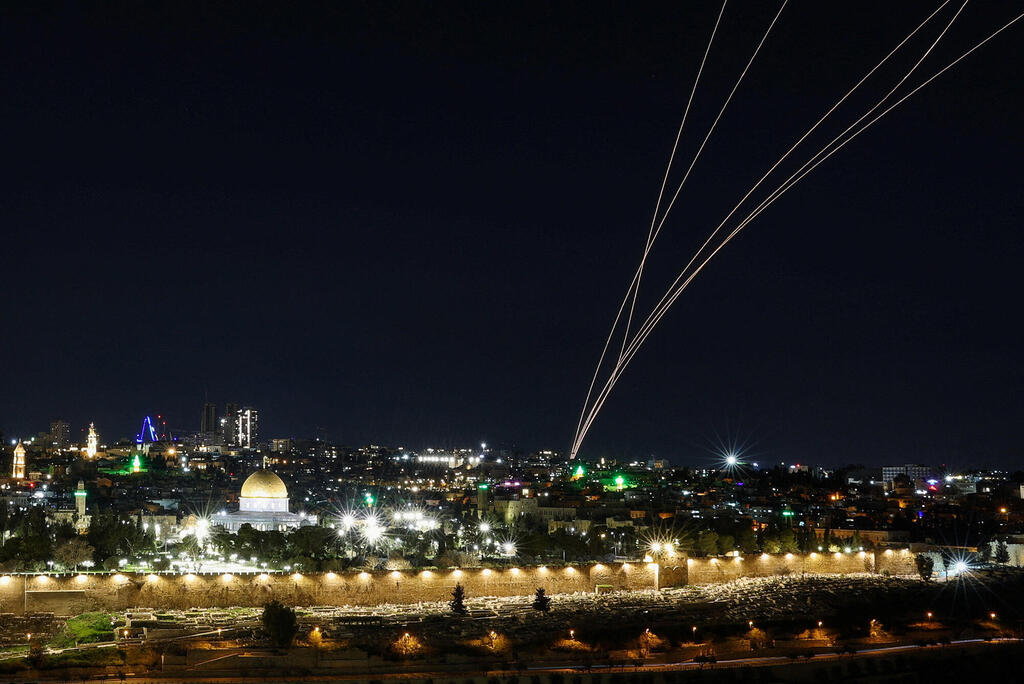
Interceptors in action over Jerusalem.
(Photo: REUTERS/Ammar Awad)
Senior officials later said that the Israeli Air Force did not deploy an Arrow interceptor against the ballistic missile that struck a building in Beit Shemesh, killing nine people. They added that the probability of a successful interception by the Arrow system, considered to have one of the highest success rates in the world against ballistic threats, would have been significantly higher than that of the interceptor launched from another system. An IDF official said several interceptors were fired at the missile but failed to bring it down.
show more
Cyberattacks accompany U.S.-Israeli strikes on Iran, targeting apps, websites and internet access
A wave of cyber-enabled operations took place early Saturday morning alongside the joint U.S.-Israeli attack on targets across Iran, according to cybersecurity experts and observers.
The operations included the hacking of multiple news websites to display various messages and the hack of BadeSaba, a religious calendar app with more than 5 million downloads, which displayed messages telling users “It’s time for reckoning” and urging armed forces to give up weapons and join the people.
show more
War with Iran poses a bigger threat to US debt than to its military
The launch of Operation “Roaring Lion” on Saturday morning, the combined attack by the US Air Force and Army on Iran, and the Iranian counterattack that struck American bases in the Gulf raise serious questions about the cost of war with Iran for the United States and the consequences for the global economy. The greatest danger is that these questions will be reduced to narrow technical issues such as the daily cost of operating an aircraft carrier, the price of a cruise missile, or the expense of deploying additional squadrons to the region. In reality, it is critical to examine this event from a broader, long-term perspective. Wars do not financially collapse economies on the first day, nor even in the first year.
The real danger is that war slowly erodes the fiscal capacity of the world’s largest power, whose debt is already at historic highs at a time when interest rates are no longer near zero. This is how a security event can evolve into a macroeconomic event. This is not theoretical, it is exactly what happened to the United States after 2001. Going further back, it is also the lesson of declining empires. Spain and Britain both held reserve currencies and dominant economic positions and came to believe that global trust in their finances was unlimited. They financed prolonged wars through debt, assuming markets would absorb it indefinitely. Trust erodes slowly, and when it does, it does not necessarily collapse overnight, but its consequences are profound.
show more
Energy markets brace for fallout as Hormuz disruption spreads
Shipping through the Strait of Hormuz has come to a near standstill, particularly for Western-flagged vessels, after insurers warned they would cancel coverage and sharply raise premiums, the Financial Times reported. A small number of oil tankers transited the strait overnight, but most ships are stopping before entering or turning back, increasing the risk of disruption to global energy supplies.
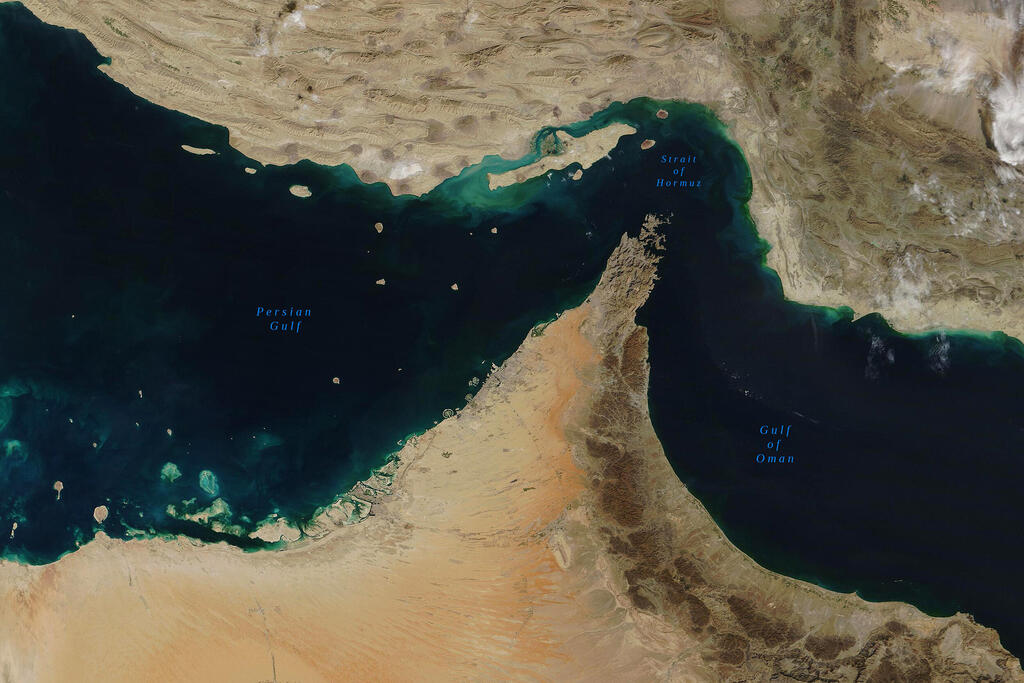
Strait of Hormuz.
(Photo: Shutterstock)
Hours after the start of the joint Israeli and U.S. strikes on Iran, Iran’s Revolutionary Guards reportedly sent a blunt warning to vessels in the region via maritime communications, declaring that passage through the Strait of Hormuz was not possible. Even without a physical blockade, such messages can have immediate market consequences. Tanker owners, energy companies and commodity traders have begun suspending shipments of oil, refined products and liquefied natural gas (LNG) through the strait rather than risk exposure. At the same time, ship-tracking data show vessels gathering near major regional ports, including Fujairah in the United Arab Emirates, with ships waiting offshore instead of entering what has become an increasingly uncertain maritime chokepoint.
show more
Polymarket under scrutiny as traders profit from Iran war predictions
Contracts related to Iran on the Polymarket betting platform have reached a total volume of $529 million. An analysis by analytics firm Bubblemaps found that several users appear to have generated unusually large profits, raising concerns about potential insider trading. The main findings were first reported by Bloomberg.
Polymarket operates as a hybrid between a stock exchange and a crypto trading platform, allowing users to place bets on real-world events. Each bet is binary, with a simple yes-or-no outcome. Questions range from geopolitics to sports and entertainment, for example, whether a ceasefire will be declared in Iran by a specific date, whether a particular film will win an Oscar, or whether a certain team will win a match.
show more
“If Iran’s status changes dramatically, the economic impact could be huge”
The war launched by Israel and the United States against Iran, which began on Saturday with a powerful opening strike by the Israel Defense Forces, is expected to weigh heavily on Israel’s capital markets and broader economy in the near term, and potentially beyond.
Historical patterns suggest a complex dynamic. In past conflicts, the Israeli market has often delivered excess returns relative to global markets within a year after hostilities ended. More recently, the Tel Aviv Stock Exchange has been on a strong upward trajectory since the October 7 war, and also following the previous direct confrontation with Iran about eight months ago during Operation Rising Lion last June. During that campaign, Israeli equities rose even as fighting was ongoing, reflecting investor expectations that the operation would ultimately reduce the Iranian threat.
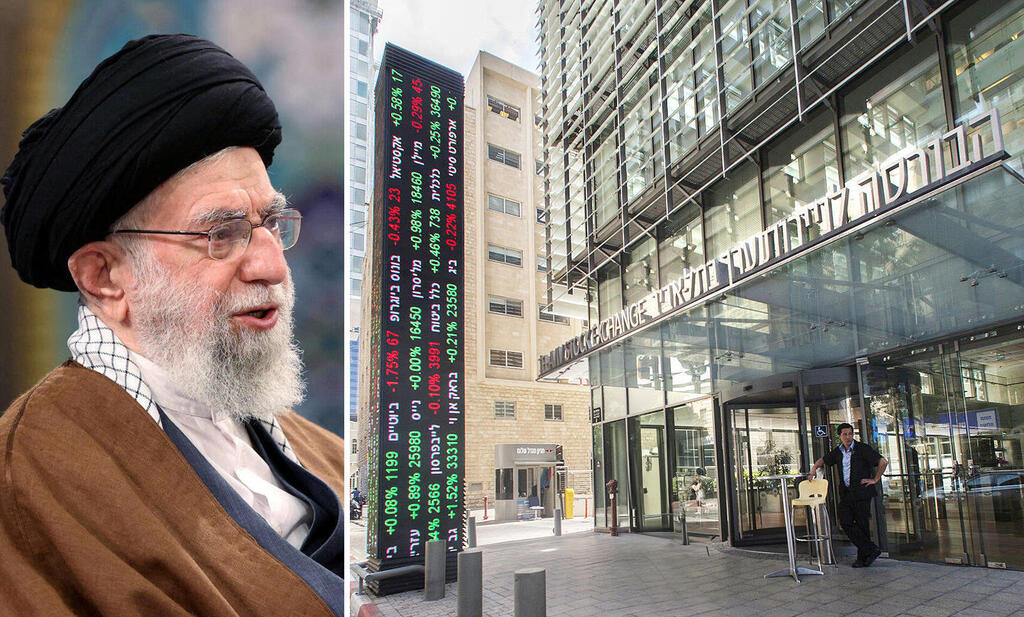
Khamenei and TASE.
(Photos: Reuters and Bloomberg)
Investors are now asking whether history will repeat itself, or whether the current war represents a fundamentally different economic and financial scenario.
Amit Attar, Deputy CIO at More Mutual Funds, who is soon to become co-CEO, said the rally on the Tel Aviv Stock Exchange reflects investor expectations that a confrontation with Iran could ultimately reduce geopolitical risk.
“Since last June’s events, we have seen a very impressive upward trend in the local stock market, with January being particularly strong,” Attar said. “There is no doubt that part of the gains in recent months reflected expectations of progress in dealing with the Iranian threat, whether jointly with the United States or otherwise. In a certain sense, the market had already priced in a scenario of reduced Iranian risk, and now we are seeing that scenario begin to materialize.”
show more
Israel quietly upgraded a critical missile defense layer before war with Iran erupted
About two weeks ago, while the United States was still building up its forces in the Middle East in preparation for a possible campaign against Iran, Israel’s defense establishment announced it had completed a series of tests demonstrating significant improvements to the David’s Sling air defense system. The system is designed to intercept a range of aerial threats, including ballistic missiles, cruise missiles, fighter aircraft, and drones.
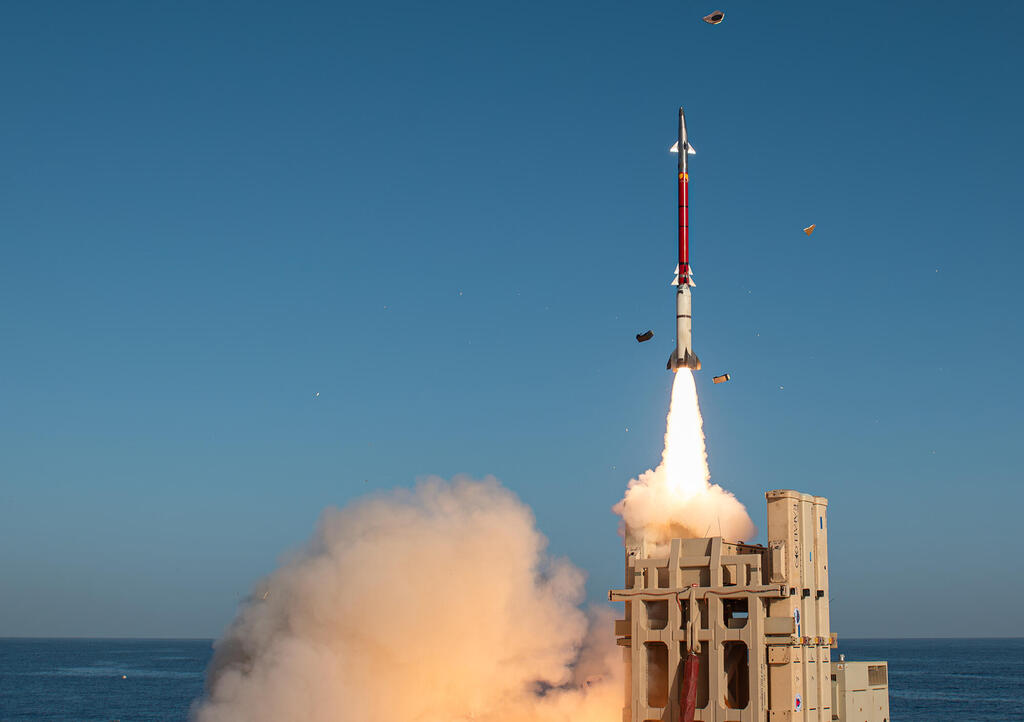
David's Sling.
(Photo: Ministry of Defense)
The defense establishment declined to disclose the specific nature of the upgrades, instead describing the tests in general terms as adaptations to enable the system to cope with a wider range of complex and challenging scenarios. Officials characterized the improvements as “significant,” noting that they were based on operational lessons learned since the outbreak of the October 7 war.
David’s Sling, developed and manufactured by Rafael Advanced Defense Systems, serves as the middle tier of Israel’s multi-layered missile defense architecture. It is designed to intercept threats at ranges of up to approximately 300 kilometers. The system sits between the short- and medium-range interception capabilities of Iron Dome and the long-range ballistic missile interception provided by the Arrow 2 system, developed by Israel Aerospace Industries.
Originally, David’s Sling was intended to counter heavy rockets and missiles, particularly those seen as threats from Hezbollah in Lebanon and Syria. However, during the 12-Day War, the Israeli Air Force’s air defense network used the system against missile barrages launched directly from Iran. Operational experience from that campaign, roughly eight and a half months ago, likely informed the improvements validated in the recent tests.
Enhancing David’s Sling’s ability to intercept threats originating from Iran could ease the burden on the Arrow system, which remains Israel’s primary defense against long-range ballistic missiles from the Islamic Republic and those launched by Iran-backed Houthi forces in Yemen. Expanding David’s Sling’s capabilities to intercept ballistic missiles could also help preserve interceptor stockpiles. This is particularly significant in light of recent assessments that Iran has rapidly restored and expanded its missile production capabilities following damage sustained during the 12-Day War.
At the same time, Israel’s defense industry has accelerated its own interceptor production. Defense sources told Calcalist that the production rate of Arrow 3 interceptors at Israel Aerospace Industries has tripled compared with prewar levels. Two major contracts to supply Arrow 3 systems to Germany, valued at approximately $6.5 billion, have supported the expansion of production infrastructure and will not come at the expense of supply commitments to the Israeli military.
Meanwhile, the Israeli Air Force has continued development of the next generation of Arrow interceptors. The Arrow 4 is intended to complement the Arrow 3 and will eventually replace the older Arrow 2 system. Further ahead, development is planned for the Arrow 5, which is expected to expand interception capabilities even further.
Israel’s air defense network has also been reinforced by the deployment of the American THAAD missile defense system, produced by Lockheed Martin, which was stationed in Israel as part of preparations for possible missile attacks. THAAD operates alongside the Aegis missile defense system deployed on U.S. Navy destroyers, which use SM-3 interceptors against ballistic threats.
By contrast, the Iron Beam laser system, supplied by Rafael at the end of 2025, is not designed to intercept ballistic missiles and is not expected to play a role in defending against such threats. With an estimated range of about 10 kilometers, it is intended primarily to counter drones, mortar fire, and short-range rockets.
Separately, Elbit Systems is developing a more advanced airborne laser system intended to intercept ballistic and hypersonic missiles from high altitude. The concept envisions mounting the system on a fighter jet or dedicated aircraft, enabling it to engage threats quickly and at lower cost than traditional interceptor missiles.
In the near term, however, Iron Beam could see operational use against drones launched toward Israel by Iran or its regional proxy groups, including the Houthis in Yemen.
During the previous war, approximately 550 ballistic missiles were launched at Israel. Most were intercepted before reaching their targets, but dozens penetrated the defenses, striking communities and infrastructure across the country. The attacks caused widespread damage and killed 30 people. According to the Ministry of Defense and the Israel Defense Forces, approximately 85 percent of the missiles were successfully intercepted.
show more
Iran’s chain of command shattered as Israeli strikes kill senior security chiefs
Israel said its opening strikes inside Tehran killed several of Iran’s most senior military and defense officials, targeting a high-level leadership meeting and further dismantling the country’s security command structure.
According to the Israeli military, the operation began with a surprise attack after military intelligence identified two locations in Tehran where top figures in Iran’s security establishment had gathered. The strikes, carried out early in the morning, were described as a deliberate attempt to eliminate senior decision-makers responsible for Iran’s military operations and weapons programs.
Among those Israel said were killed was Ali Shamkhani, a veteran commander who previously led Iran’s Revolutionary Guard naval forces and later served as head of the Iranian army. Shamkhani had remained a key figure in Iran’s leadership circle as a senior adviser to Khamenei. Israel said it had attempted to kill him during last June’s war and initially believed he had died at that time.
Also killed was Mohammad Pakpour, identified by Israel as the commander of Iran’s Islamic Revolutionary Guard Corps. The Israeli military said Pakpour oversaw Iran’s missile and drone operations targeting Israel and directed support for Iranian proxy forces across the region. It also said he played a central role in suppressing recent domestic protests.
Another senior casualty was Salah Asadi, who led intelligence operations within Iran’s military emergency command structure and served as a senior intelligence officer on the armed forces’ general staff. Israel said he was involved in strategic planning against Israel.
The strikes also killed Mohammad Shirazi, who had served since 1989 as the head of the supreme leader’s military bureau. In that role, he functioned as a critical intermediary between Iran’s armed forces and the country’s highest political authority, coordinating communication between commanders and the leadership.
Israel said it had also eliminated Aziz Nasirzadeh, Iran’s defense minister and a former air force chief. According to the Israeli military, Nasirzadeh oversaw weapons development, including long-range missile production and transfers of arms to allied groups. He was also linked to supervision of SPND, an Iranian organization Israel said worked on advanced weapons projects.
Two additional figures associated with SPND were also reported killed: Hossein Jabal‑Amelian and Reza Mozafari‑Nia. Israel said both had played key roles in advancing weapons development programs, including efforts tied to nuclear, biological, and chemical capabilities.
The deaths come on top of the killing of Supreme Leader Ali Khamenei, marking an unprecedented dismantling of Iran’s military and defense leadership.
show more
Senior Israeli official: Iran’s Supreme Leader Ali Khamenei killed in IDF strike
The end of the dictator who ruled Iran for 36 consecutive years with a harsh and brutal hand: A senior Israeli official has confirmed that the Supreme Leader of the Islamic Republic, Ali Khamenei, was killed in the opening strike of Operation Roar of the Lions.
The 86-year-old Khamenei had reportedly been in poor health, and for years there had been speculation in Iran and abroad about who would succeed him. In recent months, since Operation Rising Lion, reports indicated that he had been hiding in a bunker in Tehran with his family. Prime Minister Benjamin Netanyahu said in a statement this evening that the compound where Khamenei was staying had been destroyed and that “it is possible that the dictator is gone.” Shortly afterward, a senior official said that a body believed to be his had been found.
Khamenei was born in Mashhad. As a young man, he studied at the religious seminary in Qom and was engaged in teaching Islamic studies. Among his teachers was Ruhollah Khomeini. Due to his political activities against the Shah’s government, he was arrested several times during the 1960s by security forces. After his release, he was barred from teaching.
He remained close to Khomeini during his exile in France and assisted him during the Iranian Revolution. Following Khomeini’s return to Iran, Khamenei was appointed to several senior positions, including Deputy Minister of Defense, member of the Revolutionary Council, and Khomeini’s representative on the Supreme Defense Council.
show more
Israel deploys 200 fighter jets in unprecedented air campaign over Iran
About 200 fighter jets took part in what the military described on Saturday as the largest strike formation in the history of the Israeli Air Force, attacking roughly 500 targets across Iran in the opening hours of Operation Roaring Lion.
The military said the strikes focused on Iran’s missile array and air defense systems in the western and central parts of the country, delivering what it called a broad and coordinated blow to key military infrastructure.
According to the military, the operation followed detailed planning based on high-quality intelligence and involved the synchronization of hundreds of aircraft operating simultaneously. Fighter jets dropped hundreds of munitions on approximately 500 targets, including surface-to-surface missile launchers and air defense batteries in multiple regions.
“Strikes on the air defense systems enabled the expansion of air superiority in Iranian skies and severely damaged the regime’s most central offensive capability, the launch sites in western Iran,” the military said.
Among the targets was a missile launch site near Tabriz. The site was used by a surface-to-surface missile unit that, according to the military, had planned to fire dozens of missiles toward Israel’s civilian areas.
The military also detailed several of the air defense systems that were struck. These included the SA-59, described as a system with a range of about 300 kilometers modeled on the Russian S-300; the SA-63, with a range of approximately 105 kilometers; and the short-range SA-65 system, with a range of about 24 kilometers.
The Air Force commander, Tomer Bar, oversaw the strikes from the Air Force command center.
“The completed strike formation neutralized numerous threats to Air Force aircraft and to the Israeli home front,” the military said in a statement summarizing the results of the opening wave of attacks.
show more
Israel and the US attack in Iran; Explosions in Tehran and other cities across the country
The IDF and the US military are attacking targets of the Iranian regime and military targets in waves. Explosions were also heard in Tabriz. Simultaneously, it was reported that the sites attacked in Tehran include the Ministry of Intelligence, the Ministry of Defense, the office of Supreme Leader Ali Khamenei, the Atomic Energy Organization of Iran, and others.
The official name given in Israel to the operation in Iran is "Roar of the Lion."
The Ministry of Health has instructed all hospitals in Israel to rise to the highest level of alertness, move to protected areas, and relocate to protected underground complexes in accordance with preliminary instructions provided in advance.
Following an extensive wave of Israeli-American strikes, the Saudi network "Al-Arabiya" reported, citing sources, that an explosion was also heard in eastern Tehran "near several Revolutionary Guard bases." Additionally, they reported that "explosions were heard near Iranian Intelligence in Tehran." Amid the reports of the strike in the areas of Supreme Leader Ali Khamenei's offices, the Reuters news agency reported that he is not in Tehran at all—but has been moved to a secure location, according to official sources.
show more
Shekel falls after U.S. authorizes departure of personnel from Israel
The shekel weakened at midday on Friday after the United States updated its travel advisory for Israel and authorized the departure of non-essential government employees and their families “due to security risks.” At the same time, the leading indices on the Tel Aviv Stock Exchange also turned negative, although the later recovered.
The dollar strengthened by 0.4% against the shekel, contrary to the slight global weakening of the U.S. currency, and traded at 3.14 shekels. The euro rose by 0.1% to 3.7 shekels, while the pound slipped by 0.1% to 4.22 shekels.
The dollar index, which measures the U.S. currency against a basket of major currencies, fell by 0.1% to 97.74 points.
show more
U.S. authorizes departure of Embassy staff in Israel amid rising Iran tensions
The U.S. State Department on Friday issued an updated travel advisory authorizing the departure of nonessential government employees and their family members from the United States mission in Israel, citing security risks.
In a statement, the department said the decision was made in light of recent security incidents and an updated assessment of the situation.
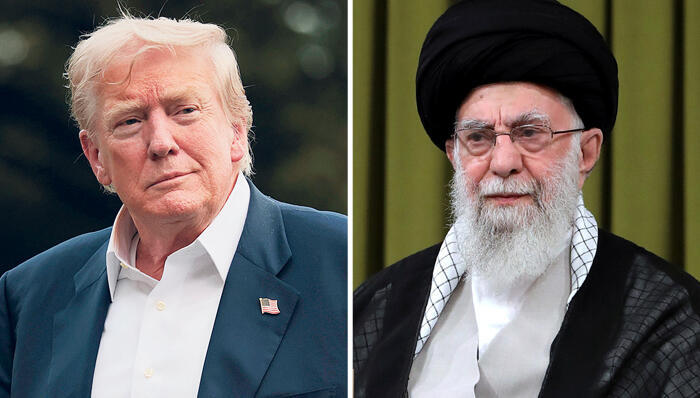
Ali Khamenei (right) and Donald Trump.
(Photos: Getty Images / Anna Moneymaker, AP)
The statement added that the U.S. Embassy in Jerusalem may impose additional restrictions or prohibit travel by American personnel and their family members to certain areas of Israel, the Old City of Jerusalem and the West Bank, sometimes without prior notice.
U.S. citizens currently in Israel were urged to consider departing the country while commercial flights continue to operate.
According to The New York Times, U.S. Ambassador to Israel Mike Huckabee wrote in a follow-up email to embassy staff that those wishing to leave “should do so TODAY,” and must find a flight from Ben Gurion Airport to any destination for which they can secure a booking.
He said the embassy’s move “will likely result in high demand for airline seats today. Focus on getting a seat to anyplace from which you can then continue travel to DC, but the first priority will be getting expeditiously out of country.” Huckabee added that while additional outbound flights may be available in the coming days, that may not necessarily be the case.
At the same time, Huckabee clarified to staff that “There is no need to panic, but for those desiring to leave, it’s important to make plans to depart sooner rather than later.”
show more
First published: 13:25, 27.02.26